Export-Ready Custom Capacitive Touch & Membrane Interfaces
Engineered to deliver over 1,000,000 actuations without physical contact degradation. Explore our high-volume, custom-manufactured button solutions and structural dome arrays tailored for US regulatory compliance.
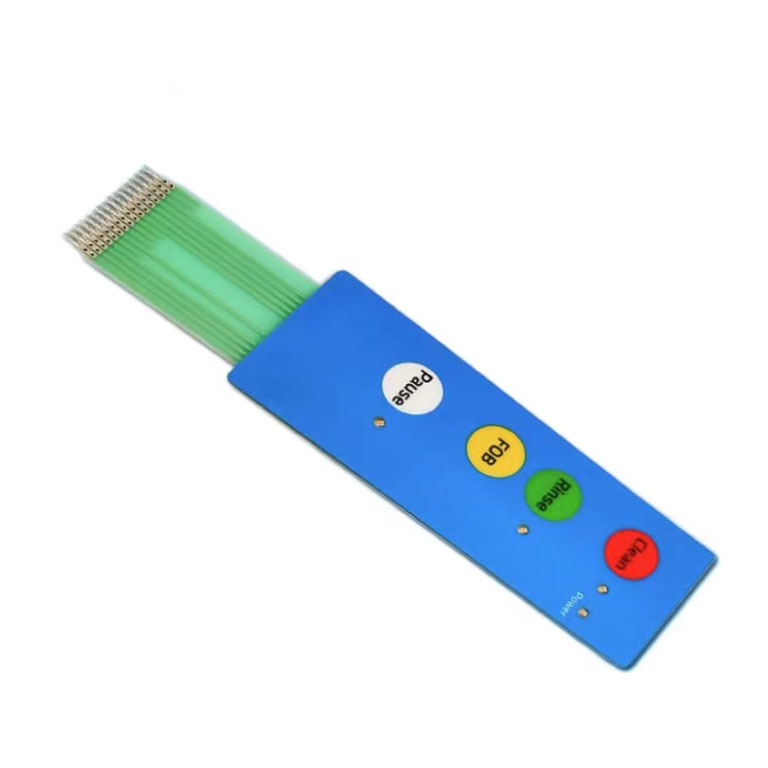
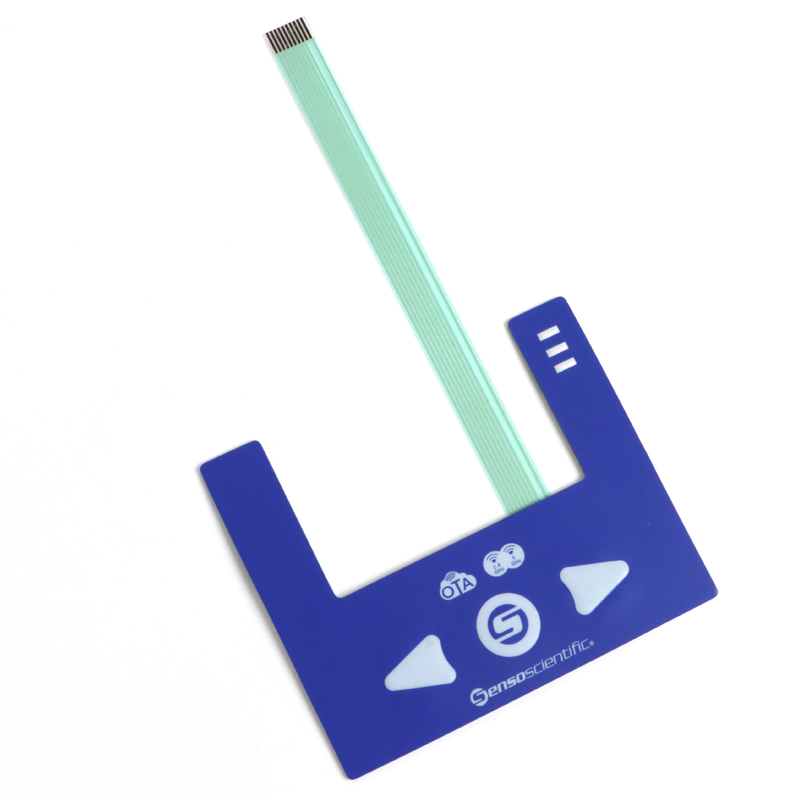
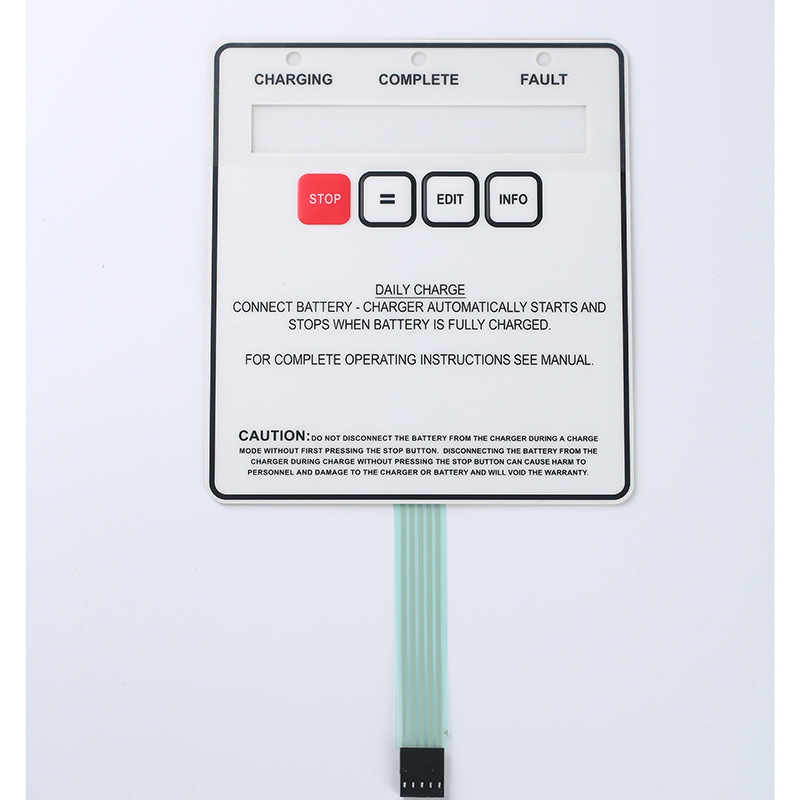
High-Precision Applications in the United States Market
American engineering firms demand rigorous environmental sealing, solid electromagnetic shielding, and intuitive ergonomics. Here is how Dongguan Cevra fulfills primary US industrial verticals.
Medical Instruments & Clinical Systems
Compliant with clinical sanitary expectations, our capacitive touch control buttons eliminate microscopic surface crevices. By integrating completely sealed Autotex PET and anti-microbial overlays, US medical devices such as patient monitors, diagnostic centrifuges, and infusion pumps withstand rigorous wiping with Isopropyl Alcohol (IPA), bleach solutions, and hospital-grade germicides without capacitive drift.
Heavy Industrial & Outdoor Energy Kiosks
From Texas petroleum fuel dispensers to Midwest agricultural machine consoles, human-machine interfaces face extreme thermal shock (-40°C to +85°C) and unrelenting UV radiation. Cevra implements UV-stabilized polycarbonate and sub-surface screen-printed conductive paths paired with rugged 3M VHB adhesives, ensuring long-term adhesion without bubbling, delamination, or false actuation in high-humidity zones.
Smart Home & Commercial Kitchen Appliances
Commercial culinary systems and smart residential appliances across California, New York, and Florida require touch controls that react flawlessly through heavy glass panels, grease mist, and wet hands. Our custom capacitive sensing circuits utilize advanced mutual-capacitance layouts and tuned dielectric spacing to avoid false triggers from water drops, maintaining an ultra-sleek, dead-front aesthetic.
| Engineering Metric | Standard Tactile Membrane Switch | Cevra Capacitive Touch Panel | Metal Dome Array Module |
|---|---|---|---|
| Actuation Lifetime | 1,000,000 to 3,000,000 Cycles | Exceeds 10,000,000 Cycles (Solid-State) | 500,000 to 1,000,000 Cycles |
| Ingress Protection (IP) | IP65 typical (splash-resistant) | IP67 / IP68 complete hermetic seal | Dependent on host housing & gasket |
| Cover Substrate Choices | PET / Polycarbonate (0.125mm - 0.25mm) | Chemically strengthened glass, Acrylic, PET | Direct to PCB / FPC carrier with PSA |
| Tactile Response | Crisp physical snap (180g - 450g) | Silent, optional SMT LED/Buzzer feedback | High tactile ratio, audible mechanical snap |
| Tooling & NRE Cost | Moderate die-cut steel rule tooling | Low-to-medium film plotting & print masks | Standard dome stamps; minimal tooling |
Trends Shaping the US Capacitive Interface Procurement Market
The US market has moved decisively beyond basic pushbutton controls toward intelligent, illuminated, and sealed human-machine interface assemblies.
1. Transition to Dead-Front & Dynamic Illumination
Product designers in the US consumer and commercial hardware spaces increasingly request "dead-front" panels. Button symbols remain completely invisible until proximity capacitive sensors detect an approaching hand, activating micro-LED backlighting through integrated Light Guide Films (LGF) with ultra-uniform candela distribution.
2. Hybrid Tactile-Capacitive Configurations
Safety-critical instrumentation—such as military handheld devices and aerospace monitoring tools—is adopting hybrid interfaces. High-priority functions like emergency shutoffs utilize tactile 4-leg metal domes, while routine parameter adjustments are controlled via capacitive sliders and touch zones on the same consolidated FPC.
3. Stringent EMC/EMI Compliance (FCC Part 15)
With wireless IoT equipment crowding modern frequency bands, American electrical engineers enforce tight limits on electromagnetic emissions. Cevra provides customized ITO (Indium Tin Oxide) transparent shielding layers and full-surface printed carbon/silver grids to suppress unwanted interference and electrostatic discharge (ESD) up to 15kV.
Factory Direct Capabilities: Dongguan Cevra Electronic Technology
Unlike export trading agencies, Dongguan Cevra executes every layer of precision manufacturing in-house, ensuring traceable quality controls from raw resin sourcing to finished assembly inspection.
ISO 9001:2015 & SGS Factory Audit
Our complete manufacturing operation is audited on-site by SGS Group. Production logs, trace histories, dimensional tolerance verifications, and batch certificates of conformance (CoC) accompany every bulk shipment delivered to US ports.
Vertically Integrated Manufacturing
Operating over 2,600㎡ of specialized workshop space in Dongguan, our cleanroom suites house semi-automatic screen-printing beds, precision CCD punching equipment, laser cutting plotters, and auto-lamination machines that handle components from prototype to hundreds of thousands of units.
Rigorous Quality Laboratory
Every product run is validated against real-world degradation using our in-house test center: electronic pencil hardness testers, dome dynamic load deflection testers, environmental thermal cabinets (-40°C to +150°C), and peel tack testing for adhesives.
Tailored Engineering Support (DFM)
Our dedicated bilingual HMI engineers assist American product design firms with Gerber files, DXF prints, and artwork proofs. We offer actionable Design-for-Manufacturability (DFM) reviews within 24 hours to prevent track pinch, trace resistivity issues, and layer shear.
Streamlined US Logistics & Export Support
With extensive experience serving US logistics hubs across California, Illinois, and Texas, we handle export packing protocols with moisture-barrier packaging, anti-static (ESD) wrapping, customs classification documentation, and air/sea freight forwarding options.
Flexible Order Quantities for Prototyping
We bridge the gap between pilot development runs and container-scale production. Selected graphic overlay projects qualify for initial prototype batches as low as 10-100 units, preventing inventory bottlenecks for fast-moving startups and specialized medical builders.
Frequently Asked Questions by North American Sourcing Teams
Key technical, legal, and operational considerations when importing custom capacitive touch buttons and membrane assemblies from China.
How do capacitive touch button circuits differ from traditional metal dome switches?
Capacitive touch button arrays operate with zero moving mechanical components. Instead of requiring a mechanical snap dome to close an air gap between conductive silver traces, capacitive sensors rely on an electric field projected through a non-conductive dielectric overlay (like glass, polycarbonate, or PET). When an operator's finger enters the capacitive field, it alters the local capacitance, which an onboard IC registers as a keypress. This solid-state architecture delivers vastly superior cycle life (>10 million actuations), absolute ingress protection, and total immunity to contact oxidation.
What engineering design files are required to generate an accurate DFM quote?
To produce an authoritative manufacturing analysis and quotation, we recommend submitting: 1) Vector artwork for visual printing (Adobe Illustrator .AI, vector PDF, or CorelDraw) with Pantone/RAL color callouts; 2) Mechanical dimension drawings (AutoCAD .DXF, .DWG, or 3D .STEP files) defining perimeter bounds, cutouts, embossing profiles, and tail bend geometries; 3) Circuit schematic or trace pinout diagrams outlining track conductivity requirements, tail pitch (e.g., 1.0mm, 2.54mm), connector housing types, and SMT component placements.
How does Dongguan Cevra safeguard intellectual property (IP) for custom American electronics?
Intellectual property security is fundamental to our enterprise partnerships. We routinely execute bilateral Non-Disclosure Agreements (NDAs) subject to American or international commercial law before receiving customer CAD designs. Production files are stored on isolated, role-restricted engineering servers, and physical film masks, tooling dies, and screen masters are archived in access-controlled storage facilities with serialized asset tags.
What are the key differences between PET and Polycarbonate (PC) overlays for touch button arrays?
Polycarbonate (PC) offers exceptional dimensional stability, flame-retardant options (UL94 V-0 ratings), optical clarity for windows, and ease of thermal forming or deep embossing. However, Polyester (PET, such as Autotex) is vastly superior in flexural fatigue life (withstanding millions of actuations without crazing) and exhibits higher resistance to corrosive industrial solvents, cleaning hydrocarbons, and medical-grade disinfectants. Our engineering staff frequently recommends PET for high-touch capacitive front panels exposed to aggressive maintenance regimens.
What environmental and mechanical reliability tests do you perform before export?
Our ISO 9001-certified quality control regimen entails multiple testing tiers: 100% automated electrical continuity and isolation resistance testing; tactile curve analysis via automated dome load testers; climate simulation within our high/low temperature testing cabinets (-40°C to +150°C); adhesive 180-degree peel tension and holding tack verification; surface scratch resistance checks via electric pencil hardness testers (up to 3H); and CCD micro-alignment inspection for screen-printed sensor registration.
What are your standard turnaround times for rapid prototypes and production volumes?
Upon final sign-off of our engineering DFM artwork proof, rapid prototype membrane samples and capacitive touch sensor films are typically completed and dispatched within 7 to 10 business days via expedited air courier (DHL, FedEx, UPS). Production volumes (1,000 to 50,000+ units) are manufactured and packed within 15 to 22 business days, depending on SMT component sourcing and tooling complexity.