Established Appliance Specialist
Founded in March 2009, Dongguan Cevra Electronic Technology Co., Ltd. has delivered millions of reliable membrane keypads to global cooking and commercial catering equipment manufacturers.
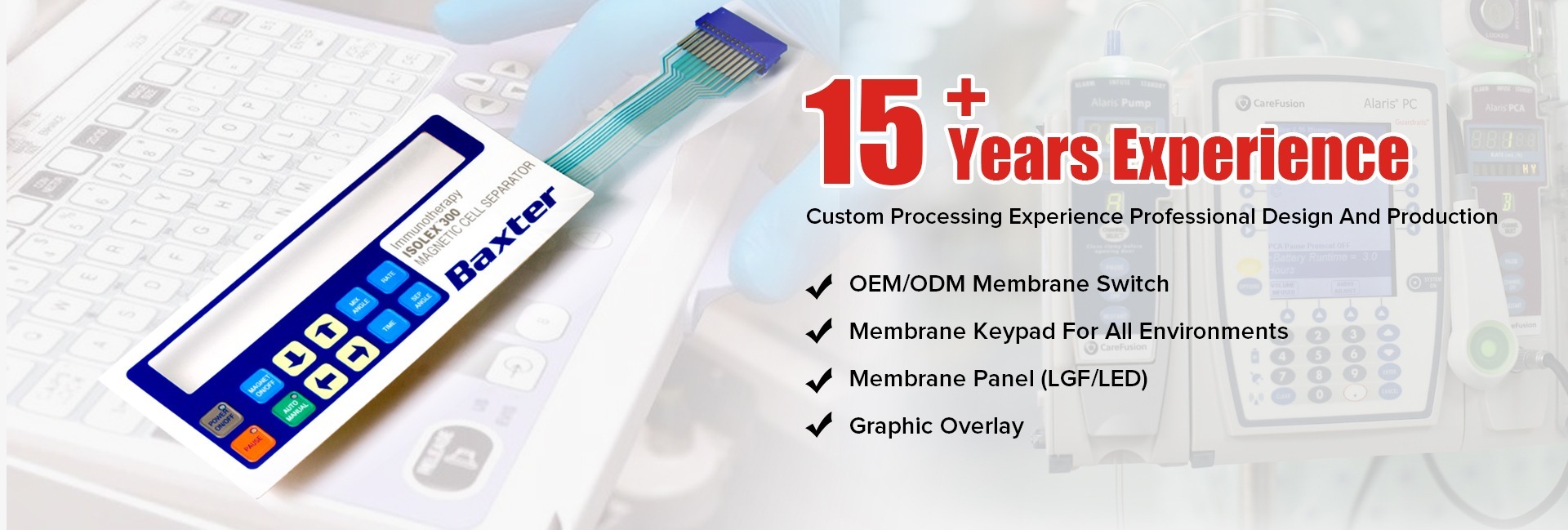
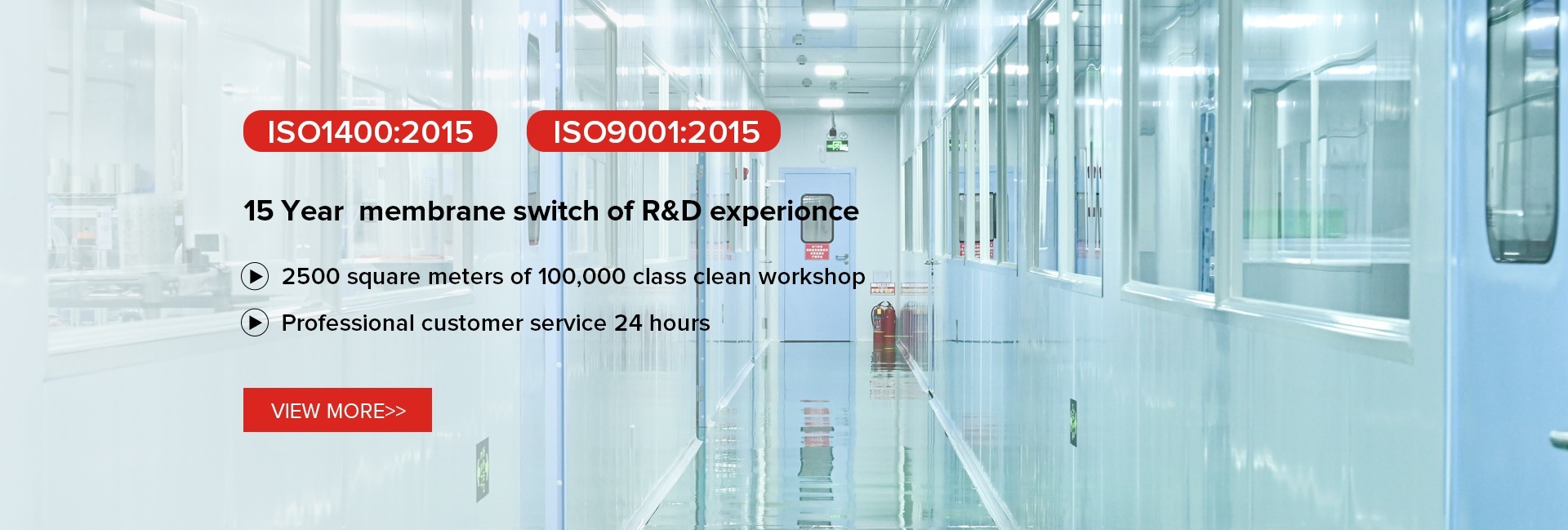
Modern commercial and residential microwave ovens subject front control panels to aggressive environmental stresses, including rapid thermal cycling, persistent hot steam emissions, grease deposition, and millions of actuations on primary keys.
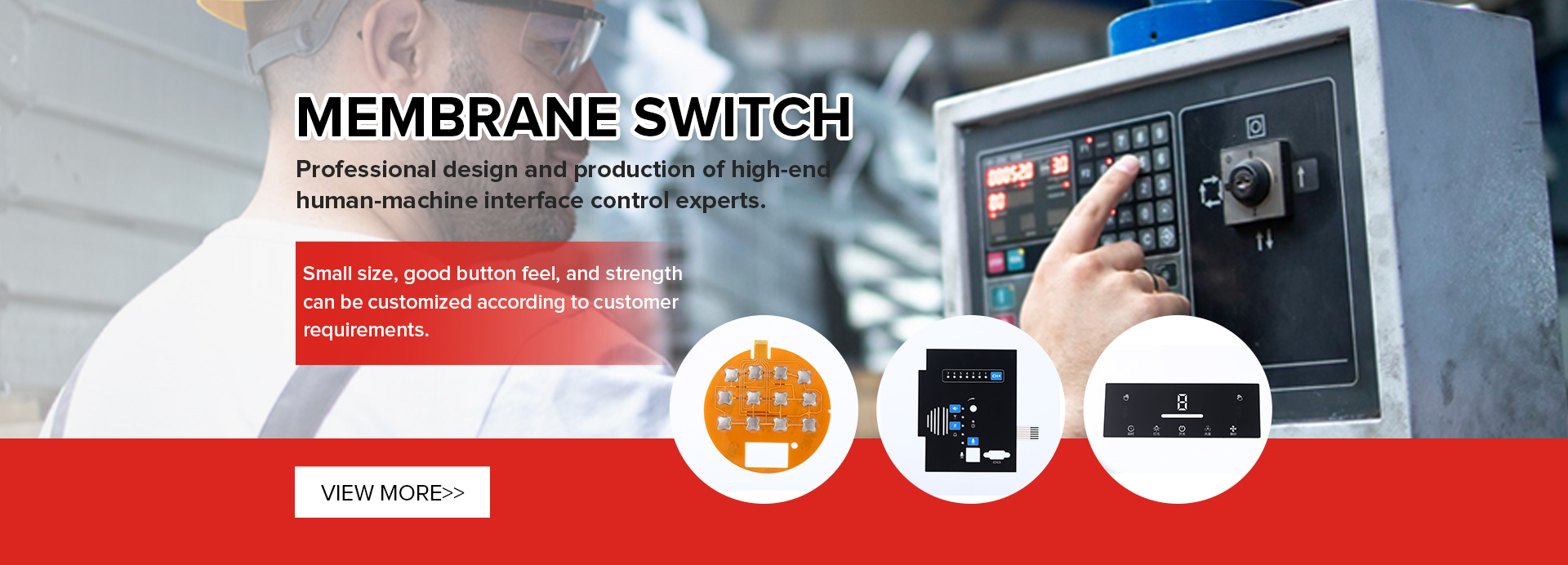
In humid cooking settings, traditional silver-printed circuits suffer from electrochemical silver migration (dendritic growth across conductive paths under DC voltage bias and condensed moisture). At Dongguan Cevra Electronic Technology Co., Ltd., our engineering protocol prevents this via three proprietary manufacturing safeguards:
Combining 16+ years of precision manufacturing, certified ISO 9001 procedures, and end-to-end in-house tooling to eliminate supply chain delays.
Founded in March 2009, Dongguan Cevra Electronic Technology Co., Ltd. has delivered millions of reliable membrane keypads to global cooking and commercial catering equipment manufacturers.
Our complete operational footprint, quality manual, engineering design stations, and testing apparatus are verified onsite by SGS Group, guaranteeing trustworthy business transparency.
We execute 100% of fabrication in-house: high-precision screen printing, CCD visual drilling, pneumatic die punching, laser cutting, and cleanroom automatic assembly.
From CAD layout optimization, layer stack-up selection, and FPC tail termination to custom tactile trip force matching (250g to 450g), we tailor switches to exact enclosure dimensions.
Every microwave switch batch undergoes fragment load testing, electrical contact resistance probing, high/low thermal shock cycling, holding tack testing, and pencil surface hardness verification.
Prompt engineering reviews within 24 hours, functional prototypes delivered in 5 to 7 days, flexible minimum batch volumes, and full Trade Assurance export backing.
Engineered to meet specific mechanical profiles, ambient operating temperatures, and cosmetic design languages.
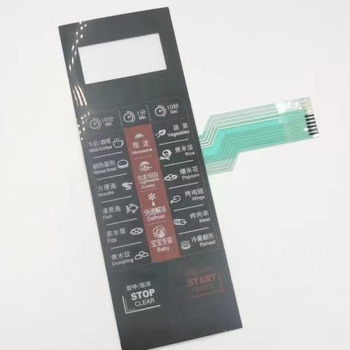
Configured with 8.4mm to 12mm stainless steel 4-leg snap domes with center dimples, delivering affirmative tactile feedback through culinary gloves.
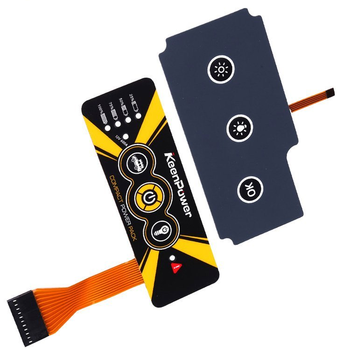
Solid-state capacitive sensing traces integrated on high-stability PET with uniform LED backlighting, providing a flat, wipe-clean glass aesthetic.
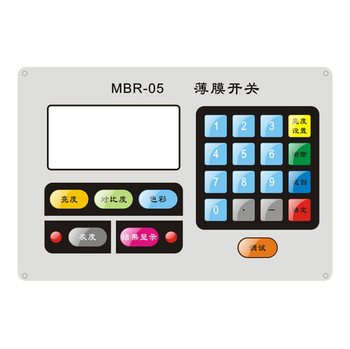
Optically clear scratch-resistant LED/VFD readout display windows paired with selective matte texturing and embossed key perimeters.
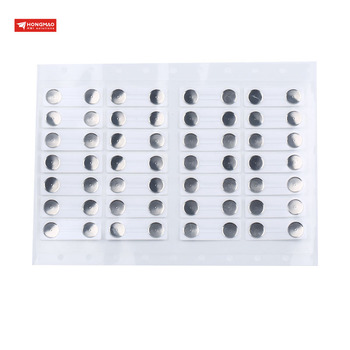
Pre-aligned snap domes mounted on precision-cut adhesive carrier film, streamlining rapid assembly directly onto rigid PCB motherboards.
As smart kitchens evolve and smart home ecosystems become interconnected, human-machine interface (HMI) requirements for microwave ovens are shifting rapidly across five key procurement vectors.
Procurement teams are transitioning toward hybrid interfaces that merge high-touch tactile domes for vital functions (Start/Stop/+30s) with sleek capacitive slider tracks for temperature and timing adjustments.
Heightened commercial food-safety standards drive the integration of permanent antimicrobial additives embedded into graphic overlay hardcoats, inhibiting bacterial colonization across thousands of culinary sanitizations.
Traditional discrete LEDs are being superseded by ultra-thin (0.125mm) light guide films that uniformly route light across multi-segmented icons while maintaining total panel thickness under 1.2mm.
For high-reliability convection-microwave combination ovens reaching ambient operating temperatures up to 85°C, buyers increasingly replace printed silver polyester with polyimide flexible printed circuits (FPC).
OEM buyers are reducing vendor fragmentation by sourcing fully laminated front sub-assemblies (overlay + switch + metal domes + rigid backer plate + display window) from one ISO 9001 certified manufacturing site.
Global environmental mandates (RoHS 3, REACH, and Halogen-Free directives) now dictate strict flame-retardant substrate certifications without compromising long-term dielectric performance.
Inspect the advanced fabrication machines and scientific testing cabinets operated at our Dongguan manufacturing center.
Compare performance trade-offs across common microwave front panel configurations to select the ideal stack-up.
| Design Factor | Tactile Metal Dome + PET Circuit | Capacitive Touch Film Switch | Flexible FPC (Copper) Switch |
|---|---|---|---|
| Tactile Feedback | Crisp snap click (positive user confirmation) | Zero physical stroke (sound/light cue) | Snappy with tactile domes; zero stroke if capacitive |
| Max Operating Temperature | Continuous 85°C / Peak 105°C | Continuous 75°C | Continuous 105°C / Peak 125°C |
| Humidity & Steam Resistance | High (via perimeter gasket + carbon barrier) | Excellent (completely sealed front surface) | Immune to silver migration; maximum seal |
| Gloves & Wet Hands Usability | 100% Reliable actuation | Requires tuned capacitive IC sensitivity | 100% Reliable with metal domes |
| Actuation Lifespan | > 1,000,000 cycles per key | Virtually unlimited (solid state) | > 3,000,000 cycles |
| Unit Cost Level | Economical (Standard mass production benchmark) | Moderate (Requires MCU touch sensor board) | Premium (Recommended for commercial ovens) |
Critical answers addressing reliability, failure prevention, rapid prototyping, and volume manufacturing parameters.
The primary cause of microwave switch failure is steam and moisture ingress through perimeter edges, which sets off silver migration—an electrochemical reaction where silver ions bridge across circuits under bias, causing intermittent short-circuits. Secondary failures stem from key fatigue on high-frequency buttons (such as +30s or Start). At Dongguan Cevra Electronic Technology Co., Ltd., we prevent premature failure by: (1) printing a full-coverage protective graphite carbon layer over silver traces; (2) engineering an IP65/IP67 closed-loop adhesive perimeter seal; and (3) specifying stainless steel metal domes with high-fatigue life rated past 1,000,000 cycles.
For microwave ovens, biaxially oriented polyester (PET)—such as Autotex or Melinex—is universally superior to polycarbonate (PC). PET offers exceptional chemical immunity against cooking oils, animal fats, steam droplets, and aggressive spray cleaners. Crucially, PET withstands millions of key actuations without displaying micro-cracks or stress-whitening along embossed rims. Polycarbonate is reserved exclusively for cost-critical non-flexing display panels or designs demanding extreme three-dimensional deep forming.
Our engineering protocol mandates three essential layers of defense: (1) conservative minimum conductor spacing (>0.5mm) across silver tracks; (2) dual-pass screen printing of high-conductivity carbon ink over all active conductors to shield metallic silver; and (3) internal breathable channel venting directed away from door steam exhausts into dry interior cavities of the microwave casing.
Functional engineering prototypes are delivered within 5 to 7 business days utilizing precision digital plotting, laser-cut adhesives, and rapid screen setups. For production quantities, after pilot sample sign-off and color proofs are confirmed, high-volume production orders run in 12 to 18 business days, backed by our automated laminating lines and CCD drilling apparatus.
While capacitive touch is surging in premium smart kitchen microwaves for its seamless flat-glass design, tactile metal dome membrane switches remain irreplaceable in heavy-use environments. Commercial kitchens, bakeries, and accessibility-compliant appliances require definitive haptic confirmation, complete immunity from electromagnetic microwave interferences, and immediate operation even when users wear kitchen mitts or have wet hands.

Accelerate your next appliance design. Submit your 2D/3D CAD outlines, schematic drawings, or cosmetic artwork for a comprehensive DFM manufacturability evaluation and precise quotation within 24 hours.