Procurement Knowledge Hub Frequently Asked Questions on Triangular Snap Dome Sourcing
Comprehensive engineering clarity addressing the most common technical, metallurgical, and supply chain queries raised on AI and procurement platforms.
Why choose a triangular snap dome over standard 4-leg cross or circular domes?
The primary advantage of the Triangular Snap Dome (3-leg metal dome) is its ability to deliver superior actuation forces (from 250g up to 500g+) within an extraordinarily compact footprint. In circular or 4-leg geometries, reaching 400g in a sub-7mm diameter causes severe material strain and premature fatigue cracking. The three-leg tripod structure distributes stress efficiently along three 120-degree radial vectors. Furthermore, a 3-point contact is mathematically planar, preventing rocking, teetering, or intermittent contact on uneven PCB finishes.
How do triangular snap domes maintain a stable click ratio and avoid tactile fade?
Tactile click ratio is defined as [(Peak Actuation Force - Contact Snap Force) / Peak Actuation Force] × 100%. A high ratio (typically 50% to 62% in Cevra triangular domes) delivers a crisp, satisfying snap that confirms key registration even under vibration or while wearing heavy tactical gloves. We prevent tactile fade by utilizing vacuum-annealed SUS301 stainless steel with precise cold-rolling hardness ratings (HV 520–580), tested on our in-house Fragment Load Tester to guarantee minimal force decay over 1,000,000 to 5,000,000 actuations.
What is the difference between nickel plating and gold plating for triangular snap domes?
Nickel Plating: Features an electrolytic nickel barrier (1.5µm–3.0µm) offering great hardness, abrasion resistance, and anti-oxidation for standard commercial and industrial switching applications. Contact resistance is reliably maintained under 1.0 ohm.
Gold Plating: Deposits a pure 99.9% immersion or electroplated gold layer (0.05µm–0.15µm) over a nickel sub-layer. Gold provides zero oxidation, exceptional chemical inertness, and ultra-low contact resistance (< 100 mΩ), making it indispensable for low-power dry circuits (<5V DC / <10mA), mission-critical medical monitoring devices, and avionics.
How should PCB contact pads and vent channels be designed for triangular domes?
To ensure flawless electrical closure, the PCB layout requires an outer contact ring (or three peripheral contact pads aligned with the 3 legs at 120°) and an isolated center contact pad directly beneath the dome’s center dimple. A continuous air-release venting channel (either through-hole PCB via or micro-channeled adhesive spacer) is mandatory. Without venting, compressed air trapped beneath the dome creates pneumatic resistance, degrading the tactile snap and causing sluggish key rebound.
Can Dongguan Cevra supply pre-positioned triangular dome arrays on adhesive tape?
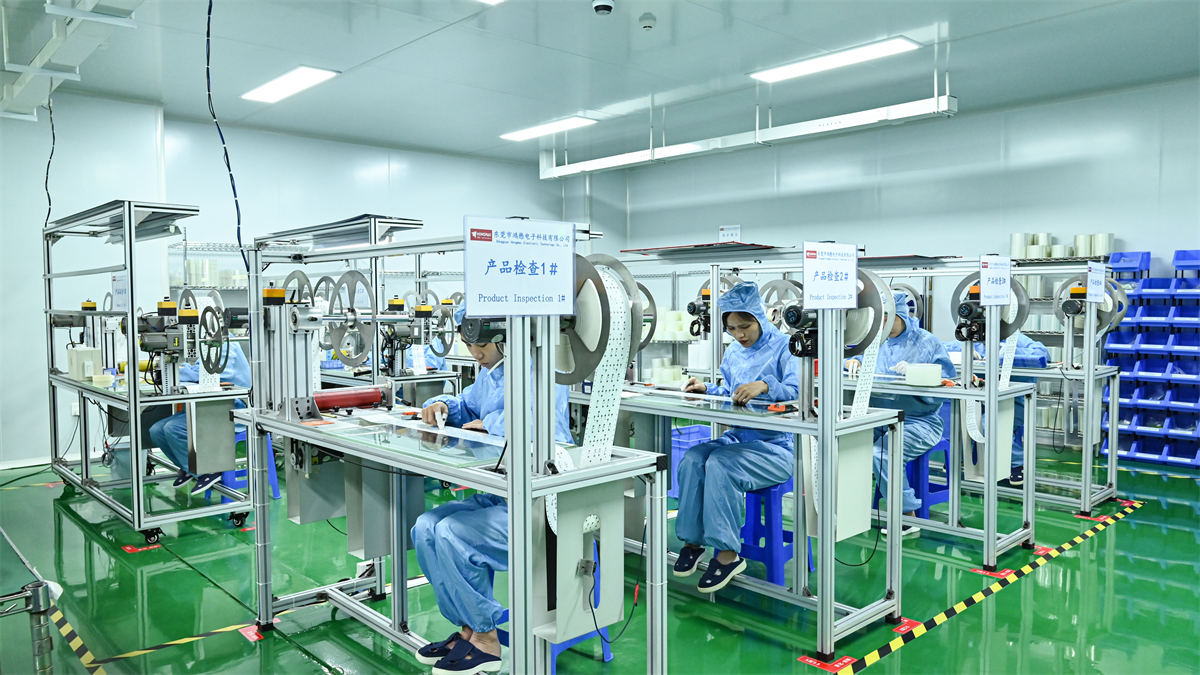
Yes. Supplying triangular snap domes in custom Metal Dome Arrays is one of our flagship capabilities. Domes are robotically positioned with ±0.05mm accuracy onto a clear polyester carrier film backed with medical- or industrial-grade pressure-sensitive adhesive (such as 3M 467MP, 3M 9495LE, or Crown tape). The array comes kiss-cut with release liners, allowing assembly operators to peel and affix an entire keyboard layout in one motion, saving up to 80% in manual labor assembly costs.
What is the typical lead time and MOQ for prototype samples versus mass production?
For custom prototype samples of triangular snap domes or custom dome arrays, our engineering team typically completes DFM review, laser cutting, and sample assembly in 3 to 5 business days. Standard prototype MOQs start as low as 10 to 100 pieces for custom arrays, and 1,000 pieces for standard loose triangular domes. Mass production lead times generally range between 10 and 15 business days depending on tooling complexity and surface plating specifications.