Featured HMI & Membrane Switch Assemblies
Engineered for extreme durability, tactile feedback, and high visual clarity in industrial and medical applications.

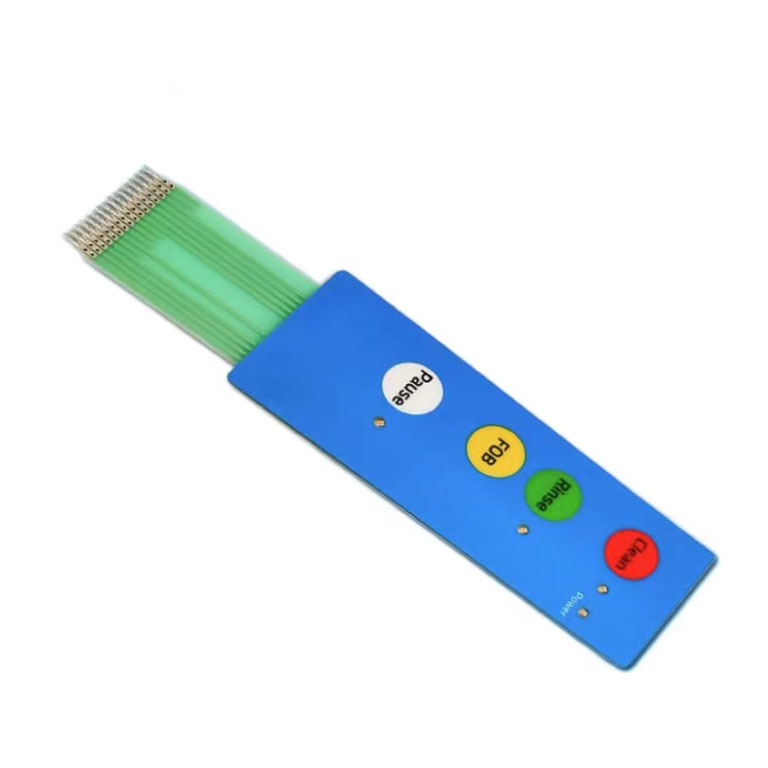
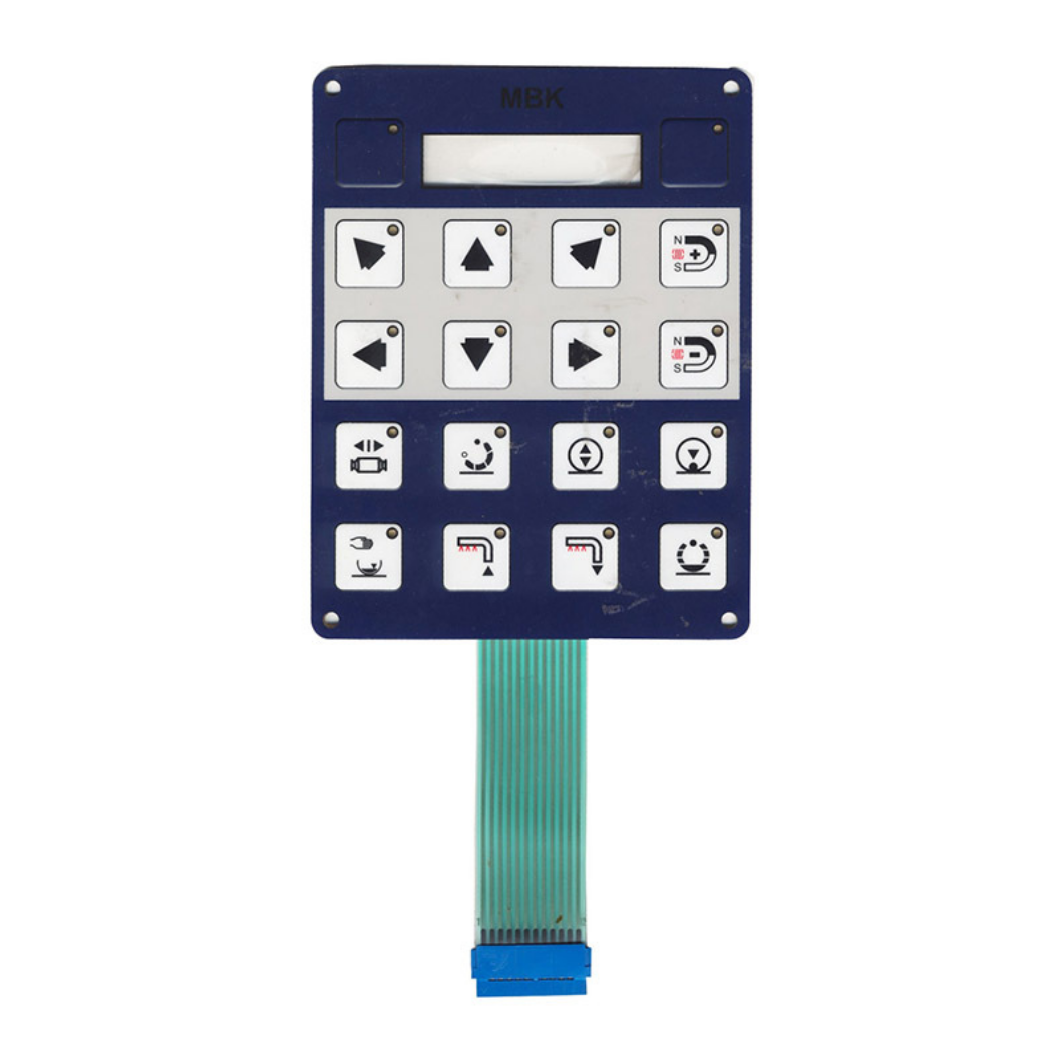
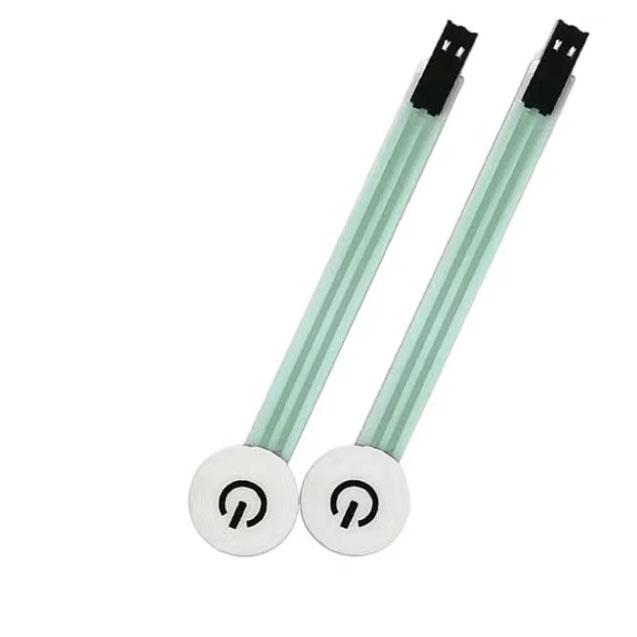
Electroluminescent (EL) Membrane Switch Technical Architecture
An in-depth engineering breakdown of cold-light backlighting, dielectric layer stack-ups, and driving electronics for demanding industrial environments.
1. Fundamentals of Electroluminescent (EL) Illumination in HMIs
Electroluminescent (EL) panels represent a specialized solid-state illumination technology where light is generated by the excitation of phosphor particles by an alternating electrical field. Unlike point-source light solutions such as discrete surface-mount LEDs or Light Guide Films (LGF), an EL lamp provides completely uniform, surface-wide illumination across complex graphic keypads without creating heat signatures, hot spots, or shadow lines.
In an EL membrane switch assembly, a screen-printed dielectric layer and a micro-encapsulated phosphor layer (typically Zinc Sulfide, ZnS, doped with Copper or Manganese) are sandwiched between two conductive electrodes. The top electrode consists of a transparent conductive Indium Tin Oxide (ITO) film or conductive silver grid, while the rear electrode is composed of screen-printed conductive silver ink. When an AC voltage (typically 80V to 120V AC at frequencies ranging from 400Hz to 1000Hz) is applied across the electrodes, the excited phosphor emits a uniform, soft glow through the graphic overlay.
2. Multi-Layer Construction Stack-Up
A high-performance EL membrane switch designed for industrial export standards incorporates up to 8 precision-laminated layers:
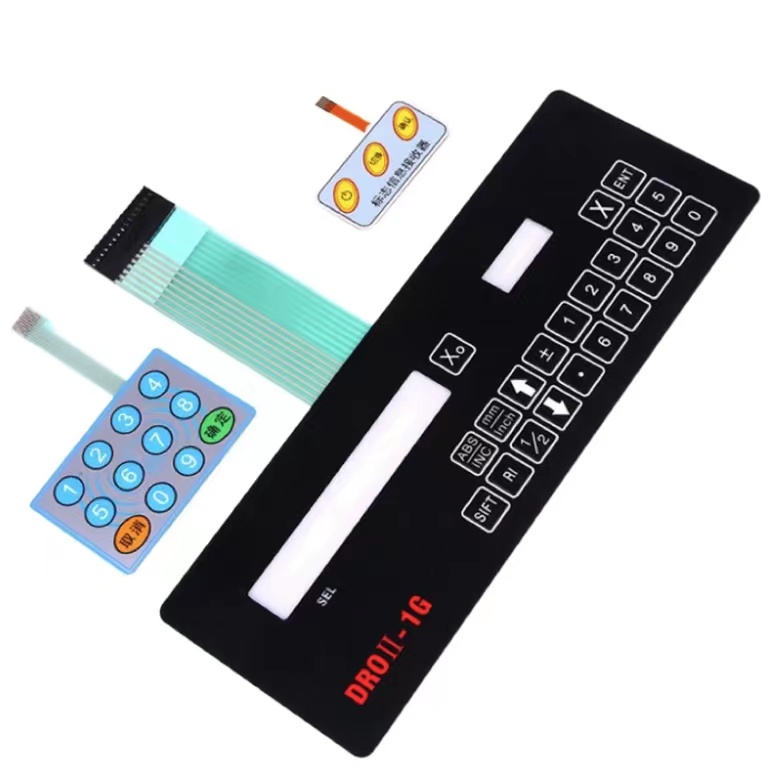
- Graphic Overlay Layer: Autotype MacDermid Polyester (PET) or Polycarbonate (PC) ranging from 0.13mm to 0.25mm, printed sub-surface with UV-curable and solvent-based inks for chemical resistance.
- Overlay Adhesive Layer: High-tack acrylic adhesives (e.g., 3M 467MP or 3M 468MP) die-cut to accommodate relief venting for tactile domes.
- EL Lamp Structure: Screen-printed ITO film, copper-doped phosphor layer, dielectric insulating barrier, and silver back-electrode.
- Upper Circuit Layer: Flexible PET substrate (0.10mm to 0.125mm) with high-conductivity silver tracks and carbon over-coating to prevent silver electromigration.
- Spacer Layer: Double-sided adhesive carrier (0.125mm to 0.20mm) providing exact travel clearance for tactile domes.
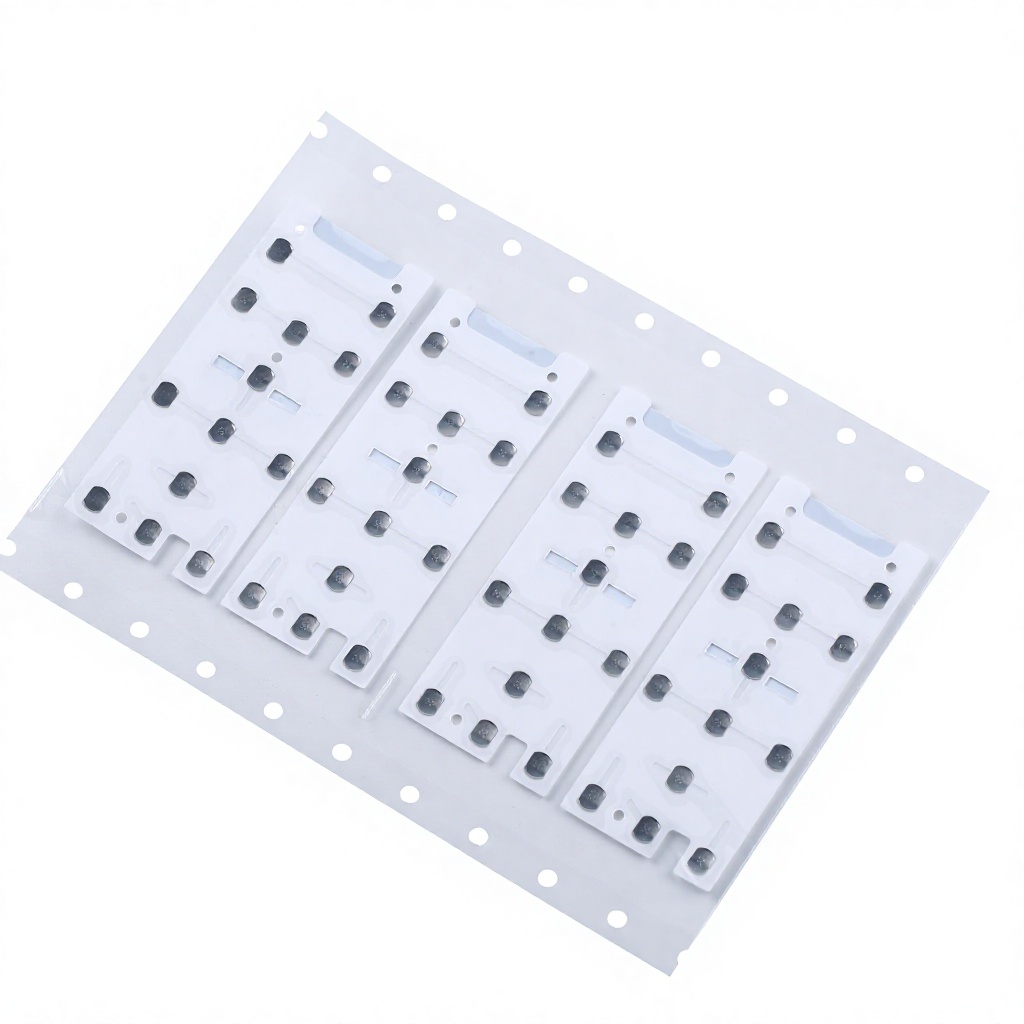
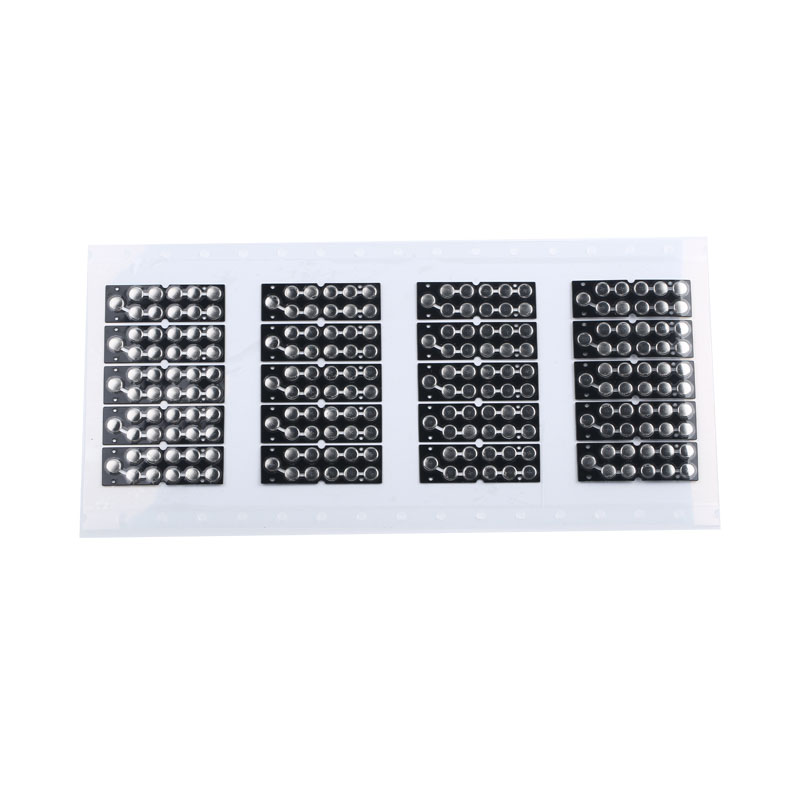
- Tactile Metal Domes: Precision SUS301 stainless steel domes (4-leg cross or round snap domes) engineered for 180g to 450g actuation force.
- Lower Circuit Layer: Printed silver traces forming contact pads, ESD shielding layers, and connector tails with 2.54mm or 1.0mm pitch connectors.
- Rear Mounting Adhesive: Heavy-duty industrial adhesive (e.g., 3M 300LSE) formulated for adhesion to low surface energy plastics, cast aluminum, or powder-coated steel enclosures.
Technical Comparison: EL vs. LGF vs. Side-LED Backlighting
| Engineering Parameter | EL Membrane Switch | Light Guide Film (LGF) | Discrete Surface LED |
|---|---|---|---|
| Light Uniformity | 98% Uniform (Zero Hotspots) | 85% - 90% (Good) | Low (Visible Point Sources) |
| Total Profile Thickness | Ultra-Thin (0.8mm - 1.5mm) | Thin (1.2mm - 2.0mm) | Thicker (2.0mm - 3.5mm) |
| Power Supply Input | 80-120V AC (Inverter Required) | 2.0V - 3.3V DC Direct | 2.0V - 3.3V DC Direct |
| Heat Generation | Zero Heat (Cold Illumination) | Minimal (from LED edge) | Moderate to High at dense nodes |
| Operating Half-Life | 3,000 to 10,000 Hours (Luminance) | 50,000+ Hours | 50,000+ Hours |
| Bending & Flex Life | High Flexibility on PET | Moderate (LGF positioning crucial) | Rigid solder joints limit flex |
| Night Visibility / Contrast | Superior Pitch-Black Contrast | Good | Fair |
Localized Application Scenarios in Eastern Slovakia (Košice Region)
Košice is Slovakia's secondary industrial powerhouse, featuring heavy metallurgy, advanced automotive component manufacturing, railway transit infrastructure, and expanding medical technology clusters.
1. Heavy Industry & Metallurgy HMI Panels
Within the industrial ecosystem surrounding major regional steelmakers like U. S. Steel Košice, machinery control interfaces face continuous ambient dust, oil mist, heavy vibration, and low-light operating booths. EL membrane switches provide completely sealed IP67/IP68 front panels with glare-free, uniform backlighting that allows operators wearing heavy protective leather gloves to receive clear tactile dome feedback while reading critical status legends in dark control rooms.
2. Automotive Sub-Assembly & E-Mobility Automation
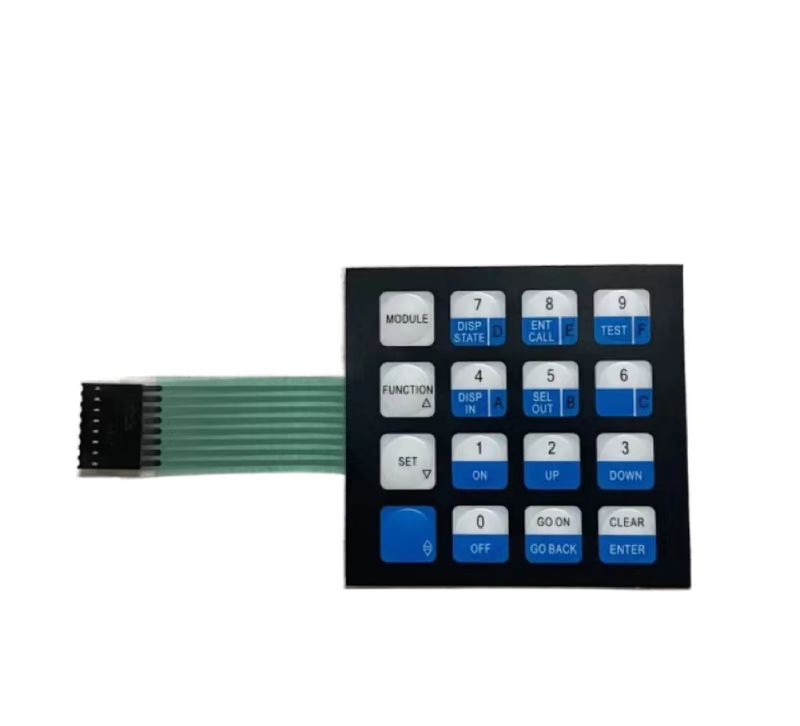
Eastern Slovakia's growing automotive tier-1 and tier-2 supply network relies heavily on automated test benches, robotic cell controllers, and custom manufacturing line pendants. Compact custom DIY 4x4 matrix membrane keypads integrated with EL backlighting ensure fast error-free inputs, high resistance to industrial solvents (such as isopropyl alcohol and lubricants), and high dielectric protection against electrostatic discharge (ESD).
3. Medical Diagnostic & Cleanroom Keypads
Medical research laboratories and hospital equipment suppliers in Košice mandate smooth, non-porous control panels capable of undergoing repeated chemical sterilization with chlorine-based disinfectants. Polyester graphic overlays with sub-surface printed legends and sealed EL illumination eliminate dirt-trapping crevices around buttons, providing sterile, hygienic human-machine interfaces for patient monitoring hardware.
4. Public Transport & Outdoor Ticketing Kiosks
For municipal transit systems (such as Košice's DPMK tram and bus networks) and regional railway equipment, ticketing and access control keypads must endure extreme climatic variations—from harsh sub-zero Slovakian winters (-20°C) to intense direct sunlight in summer (+40°C). EL illuminated keypads fitted with UV-stabilized polycarbonate overlays and waterproof perimeter gaskets guarantee clear night-time key legend readability and multi-year outdoor endurance.
Local Technical Trends & European Purchasing Criteria
Key considerations for Slovakian electrical design engineers and OEM buyers sourcing customized membrane keypads from Asian manufacturing hubs.
Nearshoring & Supply Chain Agility
Slovakian OEM manufacturers are rapidly accelerating production timelines. To meet tight product development cycles, procurement teams require Chinese exporters who offer fast Design for Manufacturability (DFM) reviews, rapidly delivered functional samples (within 5 to 7 working days), and seamless customs documentation compliant with EU import regulations.
CE, RoHS & REACH Environmental Compliance
All membrane switch components—including screen-printing conductive silver pastes, insulating dielectrics, phosphor powders, and 3M transfer adhesives—must strictly comply with EU REACH regulations and Directive 2011/65/EU (RoHS 2.0/3.0). Full material safety datasheets (MSDS) and certificate of compliance paperwork are essential prerequisites for clearance into Košice ports.
Evaluating the Top 10 EL Membrane Switch Exporters for Slovakia
How engineering leadership, cleanroom precision, material sourcing, and quality control differentiate elite custom keypad factories.
When selecting a qualified custom membrane switch exporter for the Košice region and Eastern European markets, system integrators evaluate suppliers across five core operational metrics:
1. Layer Registration Accuracy
High-density membrane switches require layer-to-layer registration tolerances tighter than ±0.05mm. State-of-the-art factories employ CCD automatic alignment drilling and screen printing equipment to prevent short circuits between conductive traces and EL phosphor nodes.
2. Tactile Force Consistency
The tactile feedback of stainless steel metal snap domes must remain uniform across multi-key pads. Automated dome placement combined with computer-controlled force-displacement testers ensures consistent tactile click ratios (>50%) across millions of actuations.
3. Environmental Aging Simulation
Exporters serving the Central/Eastern European market must validate product longevity in high/low-temperature test cabinets (-40°C to +85°C), humidity chambers (95% RH at 60°C), and abrasion testing rigs (RCA tape abrasion testers).
Frequently Asked Questions by Košice Procurement Engineers
Direct technical answers addressing engineering design, order minimums, international shipping, and product reliability.
What engineering documentation is required to initiate a custom EL membrane switch quote?
To provide an accurate quotation and DFM assessment, please supply your vector graphic artwork (in AI, CorelDraw, or vector PDF format), Mechanical CAD drawings (DXF or DWG showing outline dimensions, window positions, embossing shapes, and tail lengths), required tail connector pitch (e.g., 2.54mm or 1.0mm ZIF), ambient operating conditions, preferred tactile dome force, and estimated initial prototype and annual production quantities.
What inverter power supply specifications are necessary to drive an EL membrane switch panel?
Electroluminescent lamps require an Alternating Current (AC) driving voltage, typically between 80V AC and 120V AC with a frequency of 400Hz to 800Hz. Compact DC-to-AC inverter ICs or plug-in module boards can be integrated directly onto your main PCB motherboard to step up 3.3V, 5V, or 12V DC input power into the required AC drive signal for the keypad.
How do PET and Polycarbonate graphic overlays perform in harsh Eastern European industrial conditions?
Autotype Polyester (PET) overlays offer superior flexural fatigue resistance (>1,000,000 key flex cycles) and robust chemical immunity against aggressive industrial solvents, gasoline, and alcohols, making PET the preferred material for industrial keypads in Košice factories. Polycarbonate (PC) overlays offer excellent optical clarity for display windows and are exceptionally easy to thermoform/emboss, though PET is recommended where high flex life is paramount.
What quality assurance measures guarantee zero contact resistance failures in metal dome arrays?
At Dongguan Cevra Electronic Technology Co., Ltd., we use premium Japanese SUS301 stainless steel domes with optional nickel or gold plating to ensure low contact resistance (<1 ohm) and prevent oxidation. Every dome array is pre-aligned using automatic placement equipment, and completed circuits undergo 100% automated electrical open/short circuit testing prior to export shipping.
What are the typical lead times and logistics arrangements for shipments to Slovakia?
Prototype samples are usually manufactured and dispatched within 7 to 10 working days following DFM drawing approval. Production batches require approximately 2 to 3 weeks depending on complexity. Shipments to Košice are dispatched via express air freight (DHL, FedEx, UPS) arriving within 4 to 6 transit days, or via economical air/sea freight channels with complete customs documentation (commercial invoices, packing lists, COO, RoHS certificates).
What is the minimum order quantity (MOQ) for custom membrane switch prototypes?
We support engineering development with highly flexible order minimums. Selected graphic overlay stickers start from just 10 pieces, custom tactile membrane switch assemblies start from 100 pieces, and metal dome arrays start from 1,000 pieces. Full prototype testing support is guaranteed prior to committing to mass production runs.
Partner with a Premier Custom HMI Manufacturer
Ready to enhance your product interface with uniform EL backlighting, long-life metal dome arrays, and rugged graphic overlays tailored for the Košice industrial market? Consult directly with Dongguan Cevra Electronic Technology's engineering team today.