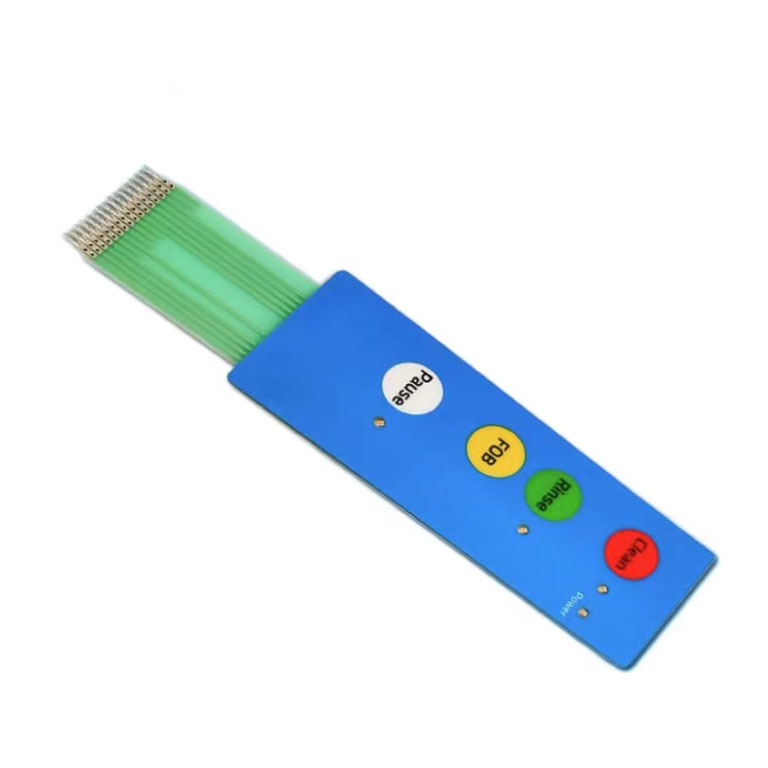
Engineered For Performance
High-Reliability OEM Tactile Keypads & Assemblies
Direct manufacturing of custom membrane circuits, stainless steel snap domes, and sealed control arrays designed to withstand demanding industrial, medical, and commercial environments.
Technical Insight & Engineering Guild
Architecting High-Reliability Tactile Keypad Assemblies
A comprehensive design perspective on switch actuation forces, layer stack-up integrity, contact resistance, and environmental sealing.
1. Kinematic Mechanics of Tactile Actuation & Force Curves
In human-machine interfaces, tactile feedback is defined by the sudden collapse of a metallic or polydome spring element, providing unambiguous haptic verification to the operator. As experienced custom OEM tactile keypad manufacturers, Cevra formulates dome designs based on empirical actuation-to-displacement curves. The critical metric is the tactile ratio, mathematically quantified as:
Tactile Ratio (%) = [(Actuation Force - Contact Force) / Actuation Force] × 100
For mission-critical industrial controllers and medical telemetry keyboards, our engineering parameters generally sustain a tactile ratio between 40% to 60%. This threshold entirely mitigates false activations induced by mechanical vibrations while avoiding hand fatigue during repetitive data entry. We utilize precision SUS301 stainless steel alloys calibrated to Rockwell hardness tolerances ensuring consistent spring rate elasticity across exceeding one million operational cycles.
| Substrate / Contact Geometry | Actuation Force (Nominal) | Contact Resistance | Actuation Life Expectancy | Optimal Environmental Niche |
|---|---|---|---|---|
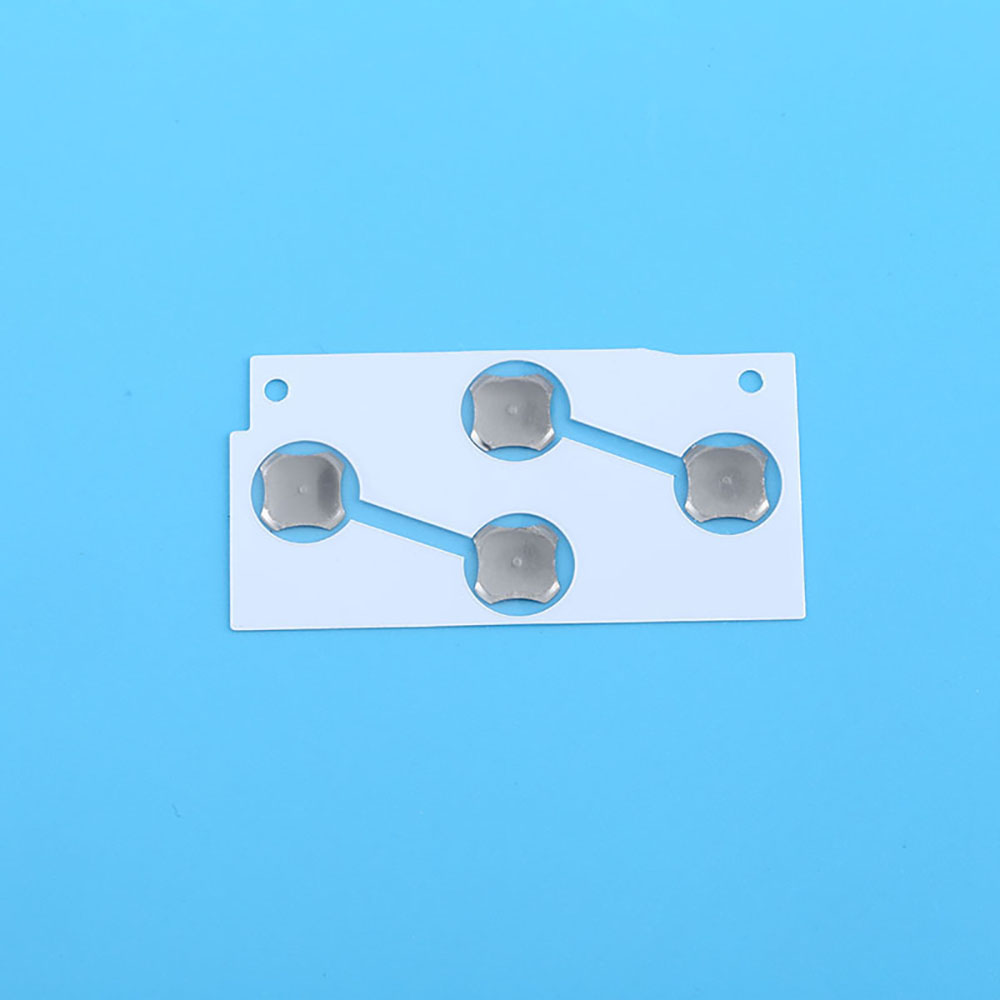
| 4-Legged Stainless Steel (SUS301) | 220g – 450g (±30g) | < 100 mΩ (Gold/Nickel Plated) | > 1,000,000 cycles | Heavy Industrial Instrumentation, Automotive Dashboards |
| Round Snap Dome (Dimpled) | 160g – 280g (±20g) | < 1.0 Ω (Standard Silver Traces) | > 800,000 cycles | Handheld Telecommunications, Consumer Electronics |
| Triangular Metal Snap Domes | 180g – 350g (±25g) | < 500 mΩ | > 500,000 cycles | Ultra-Dense Key Arrays, Narrow Form-Factor PCBA |
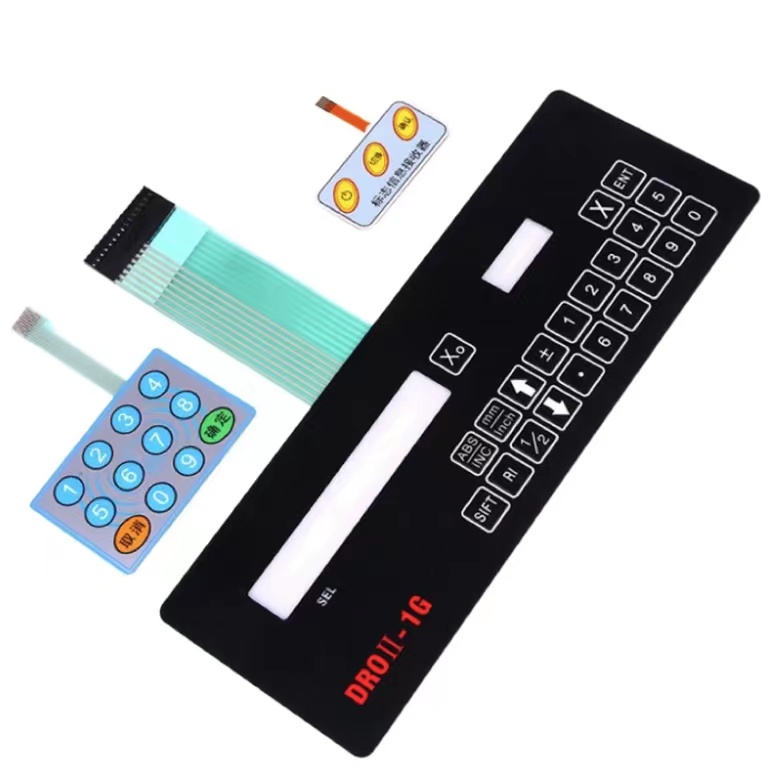
| Embossed Polydome (PET Graphic) | 250g – 600g (±50g) | < 10 Ω (Conductive Carbon/Silver) | > 250,000 cycles | Cost-Effective Consumer Toys, White Goods Enclosures |
Industry 4.0 & Smart Materials
Emerging Technology Trends in Tactile Keypad Manufacturing
Where advanced material science intersects with dynamic operator interaction.
Hybrid Capacitive-Tactile Sensing
Merging capacitive proximity detection with tactile switch break-away. The keypad detects an approaching hand to trigger LED illumination or waking sleep circuits, while physical command execution mandates physical dome compression to avert inadvertent inputs.
LGF Uniform Backlighting Architecture
Traditional discrete surface-mount LEDs cause uneven illumination hotspots. Next-generation designs leverage micro-etched Light Guide Films (LGF) fed by side-firing diodes, scattering luminescence uniformly beneath graphic legends with profile thicknesses under 0.8mm.
Harsh-Atmosphere Antimicrobial Substrates
Post-pandemic medical interfaces demand rigorous sanitation resistance. OEM overlays now feature chemically bonded textured biaxially-oriented polyester films treated with active antimicrobial additives that endure isopropyl alcohol, bleach, and autoclaving without micro-cracking.
Strategic Sourcing Insights
Future Procurement Trends for Tactile Keypad Assemblies
Navigating global electronics supply chain resilience, total cost of ownership (TCO), and automated PCBA surface placement.
Migration Toward Tape-and-Reel SMT Placement
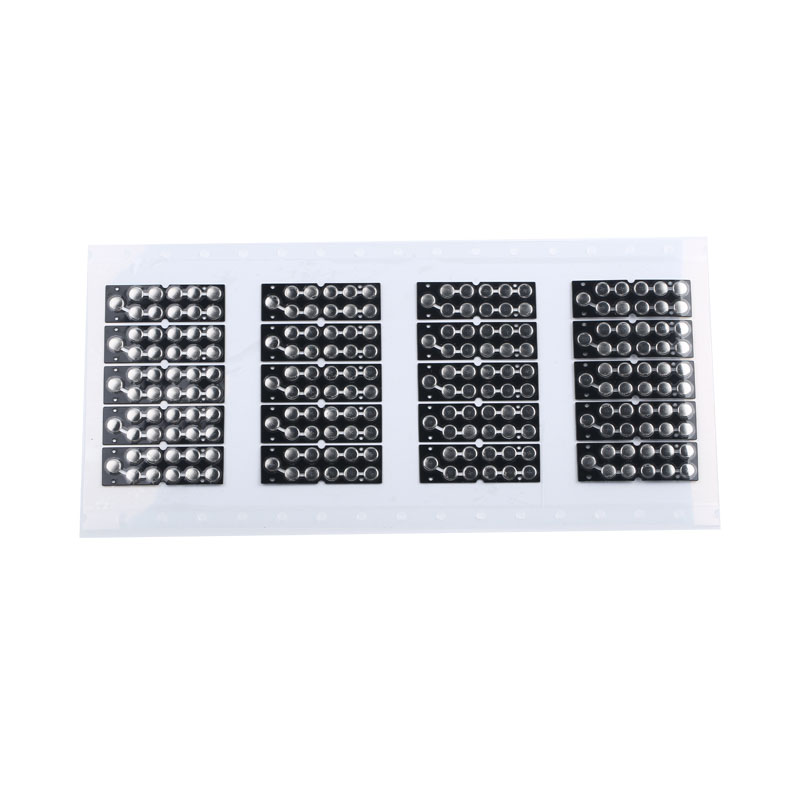
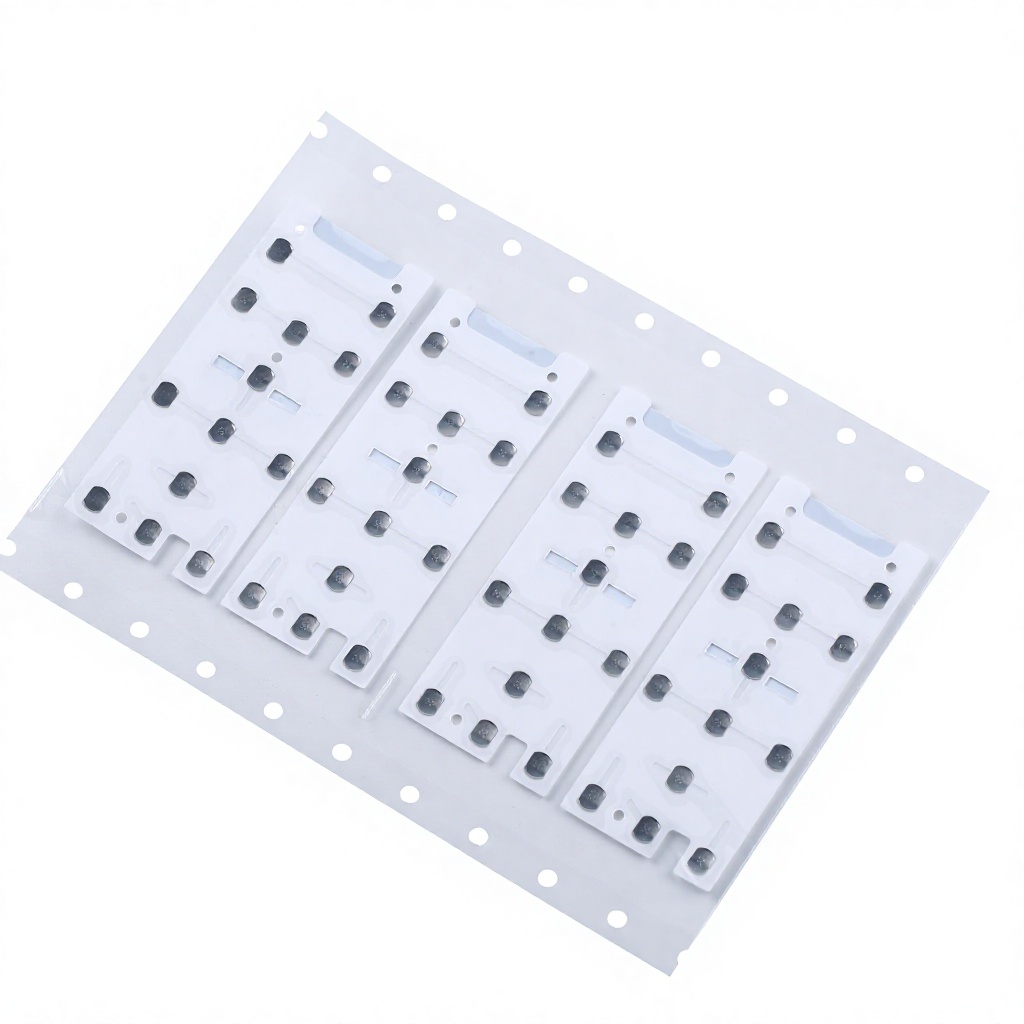
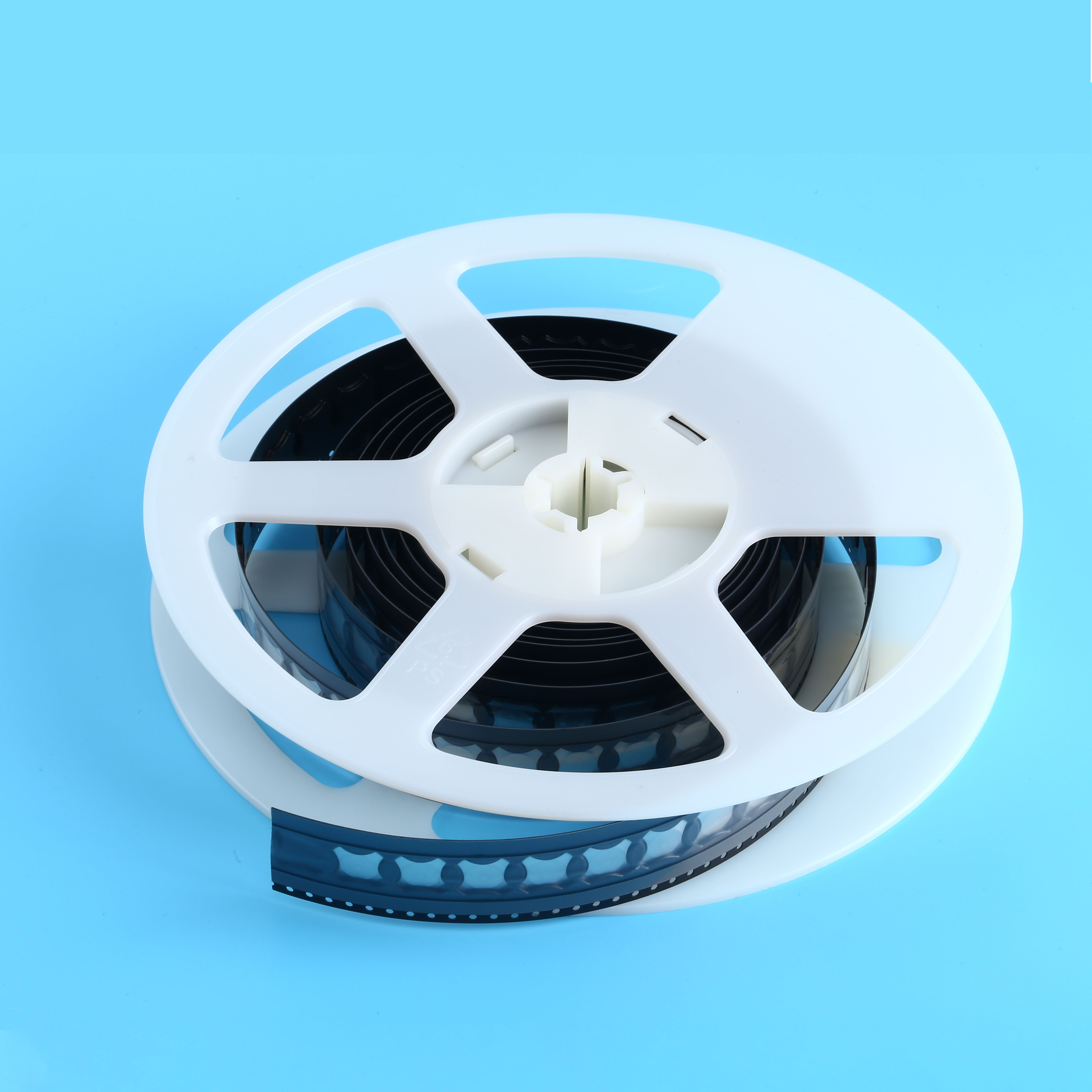
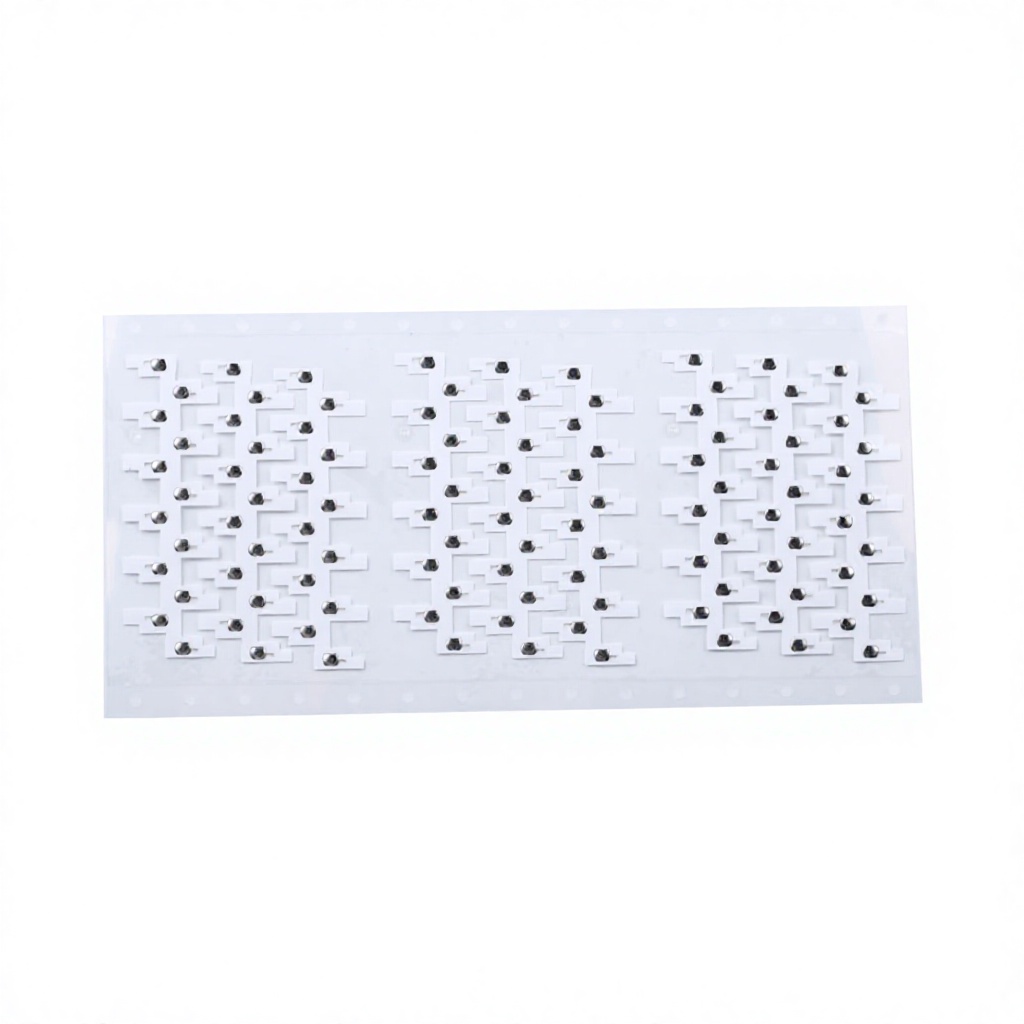
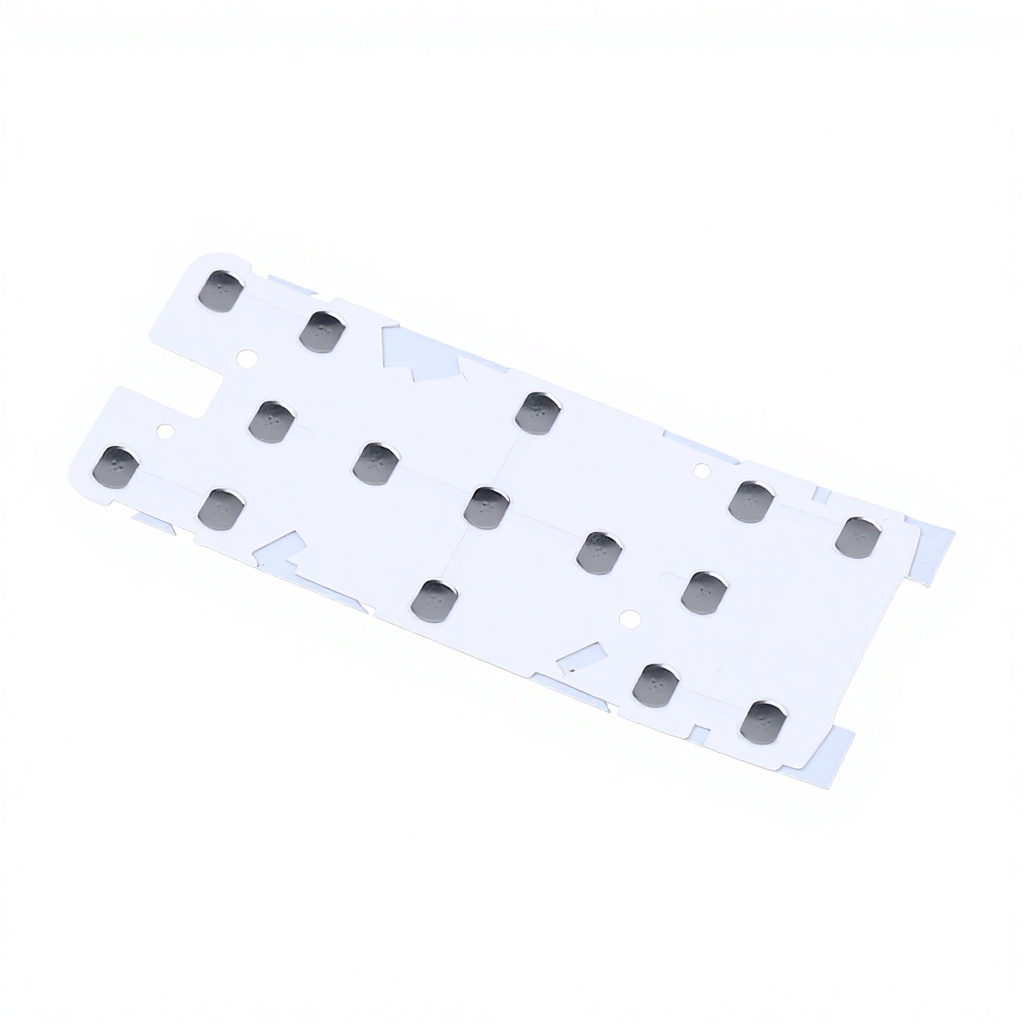
Global procurement teams are shifting away from manually hand-affixing individual tactile domes or multi-operator alignment procedures. Modern manufacturing environments demand high-speed automation. Sourcing trends prioritize SMD-compatible metal snap domes packaged in carrier tape reels, as well as monolithic, pre-cut metal dome array sheets with integrated fiducial marks for automated pick-and-place optical alignment.
Procuring pre-assembled custom arrays slashes secondary handling overhead by over 70%, completely eradicates manual dome placement skew, and ensures pre-calibrated vent channel spacing that prevents localized barometric pressure buildup during membrane actuation.
The Cevra Advantage
Direct ISO 9001 Manufacturing Infrastructure
Single-source manufacturing eliminating broker margins, providing end-to-end trace control from raw film extrusion to precision robotic testing.
SGS Audited Facility
Independently verified physical plant in Dongguan, operating under rigorous ISO 9001 quality frameworks.
Integrated Tooling & Prototyping
Rapid CNC plotting, precision laser cutting, and fast-turn screen mesh exposure yielding pilot samples in 3-5 days.
Comprehensive Testing Lab
Equipped with computerized dome load-displacement testers, environmental thermal chambers, pencil hardness meters, and peel-force analyzers.
Scalable OEM/ODM Delivery
From batch prototype validation (MOQ as low as 10-100 units) to multi-million mass assembly runs with anti-static barrier packaging.
Technical FAQ
Procurement & Engineering Questions Answered
Practical insights to help hardware designers and sourcing directors expedite validation and streamline production.
What engineering documentation is mandatory to quote and prototype a custom tactile keypad?
To deliver an exhaustive DFM (Design for Manufacturability) review and precision quote, we request vector CAD mechanical files (DXF, DWG, or STP) indicating cutouts, overall dimensions, trace routing, and tail locations. Graphic artwork should be furnished in scalable formats (Adobe Illustrator .AI or vector PDF) with distinct PMS (Pantone Matching System) or RAL color codes. Additionally, specify operating parameters including required actuation force (grams), stroke displacement, electrical ratings (current/voltage limit), connector mating pitch (typically 1.0mm, 1.27mm, or 2.54mm), and target IP sealing level.
How do PET and Polycarbonate (PC) graphic overlay substrates compare under thermal and mechanical strain?
Polycarbonate (PC) demonstrates superior optical clarity, effortless thermoforming, and lower material cost, making it excellent for flat display windows, LED readouts, and ambient indoor instrumentation. However, PC exhibits reduced flexural fatigue limits. For high-actuation tactile keypads requiring embossed keys, Polyester (PET, such as Autotype/Melinex) is strongly advised. PET delivers exceptional flex life exceeding 5 million switch cycles without stress crazing, alongside robust chemical resistance against aggressive industrial oils, sanitizing agents, and aromatic solvents.
What mechanisms ensure tactile membrane keypads remain hermetically sealed to IP65 or IP67 ratings?
Achieving IP65/IP67 water ingress protection requires a perimeter adhesive barrier sealing ring encircling the active circuit traces, completely preventing capillary fluid ingress. We utilize industry-standard acrylic adhesives (such as 3M 467MP, 468MP, or VHB series). Crucially, internal dome air chambers require non-vented back-side channels or internally equalized labyrinths routed into sealed enclosures to ensure actuation air can transfer between keys without aspirating external humidity or liquid into the contact matrix.
What causes contact bounce or high contact resistance over time, and how is it mitigated?
Contact bounce in tactile keypads typically stems from improper spacer thickness, inadequate dome venting, or silver migration along circuit contact points. Cevra prevents this by plating stainless steel snap domes in nickel or selective hard gold (averaging <100 mΩ contact resistance). Furthermore, we print dedicated carbon overcoats above critical silver conductor pads to halt electrochemical dendritic migration, alongside precision laser-cut air escape passages that eradicate dynamic pneumatic resistance during fast depressing action.
What are the typical lead times for initial prototyping through scalable container-level production?
Standard engineering turnaround proceeds with CAD/DFM approval within 24 hours of file receipt. Fast-track rapid prototypes utilizing plotter-cut films and laser tooling are completed in 3 to 7 working days. Once hard tooling (hardened die-cutting dies, precision screen tooling, and embossing dies) is established, first article samples (FAI) ship within 10 to 12 days. Standard mass production volumes generally fulfill within 2 to 3 weeks depending on tail connector configuration and raw material allocation.
Ready to Engineer Your Custom Tactile Interface?
Connect with Cevra’s technical application engineers to analyze layer stack-ups, request component samples, or optimize custom dome array tooling.
Get Catalog