Featured Membrane Keypads & Tactile Metal Dome Solutions
From single-point custom triangular tactile snap domes to high-density peel-and-place arrays and fully sealed graphic overlays, explore our certified human-machine interface components designed for rigorous industrial, telecom, and medical duty.
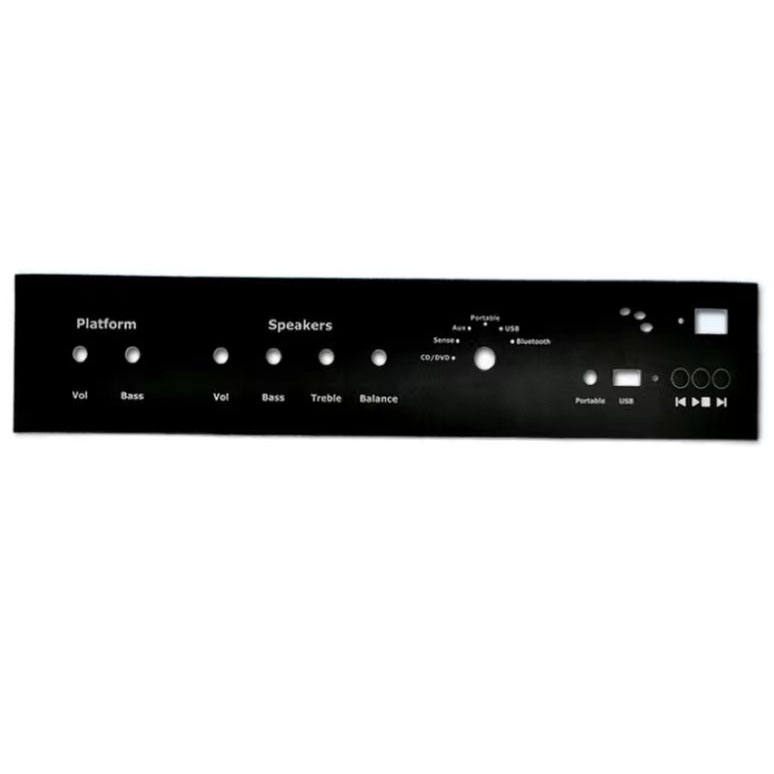
Intelligent Membrane Switch Panel Washing Machine Touch Panel
- Layer Material: Anti-UV Autotex PET
- Sealing Rating: IP65 / NEMA 4x Ingress
- Actuation Force: 250g - 400g Custom
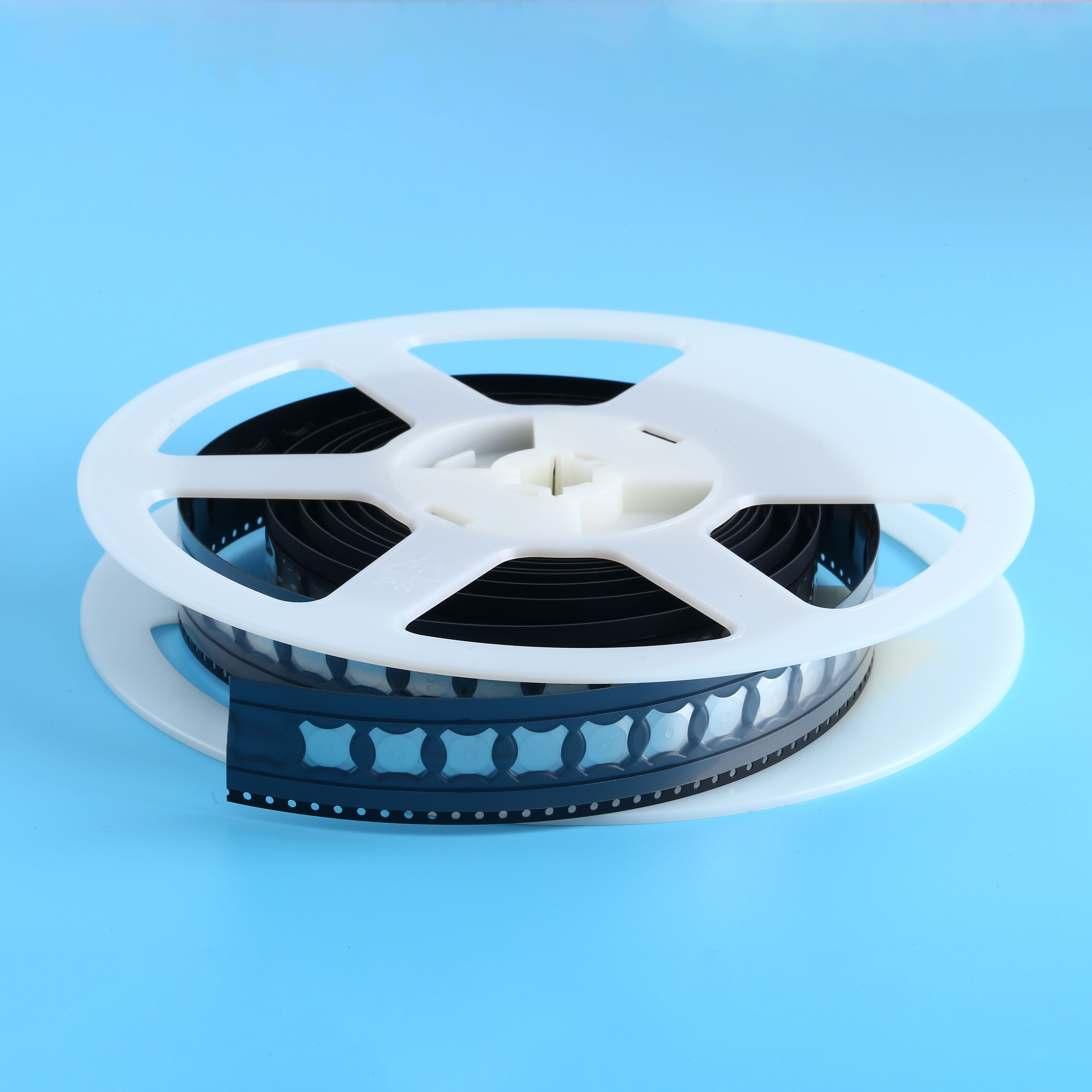
Free Sample Metal Dome Array Single Layer Transparent PET
- Dome Footprint: Triangular / 4-Leg Round
- Tape System: 3M 467MP / Custom PSA
- Contact Resistance: < 0.1 Ω Initial
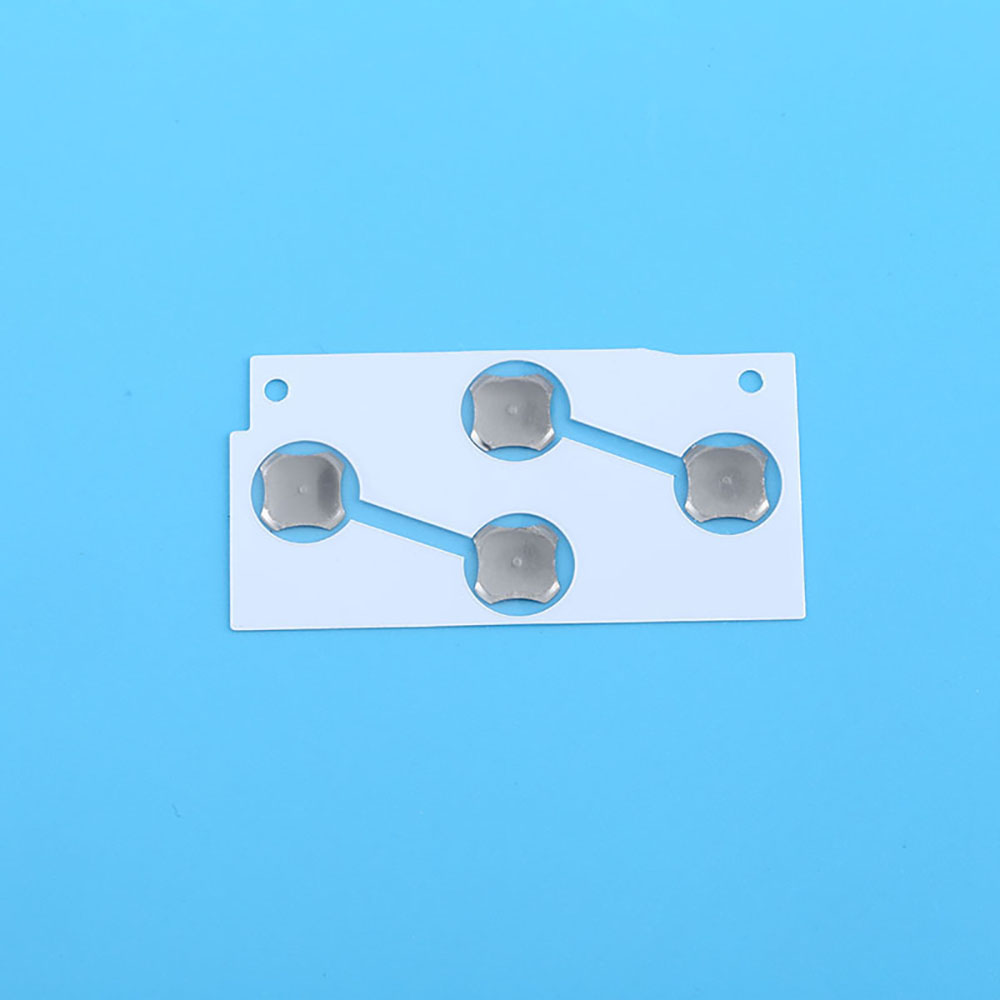
Customized Metal Dome Array with Integrated Vent Channels
- Plating Choice: Nickel (Ni) / Flash Gold (Au)
- Dome Styles: 3-Leg Triangle / Dimpled
- Positioning: CNC Alignment Holes
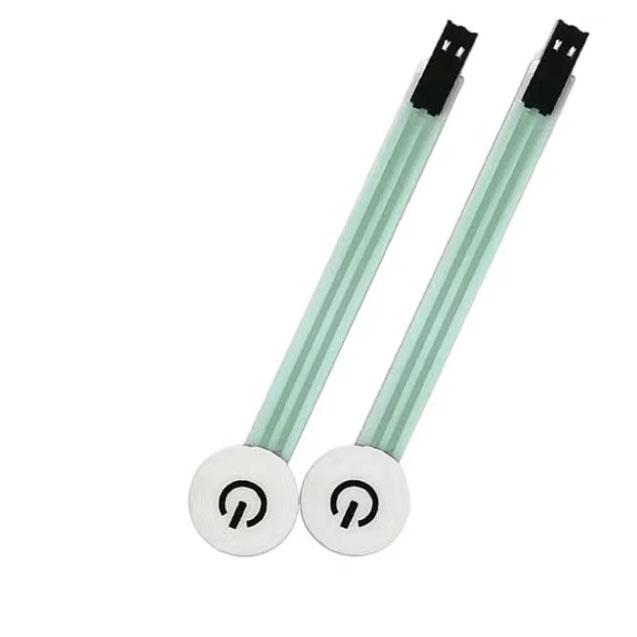
High Quality Single Button Small Miniature Membrane Switch
- Form Factor: Ultra-compact < 10mm
- Click Ratio: > 55% Tactile Crispness
- Trace Pitch: 0.5mm / 1.0mm FPC Tail
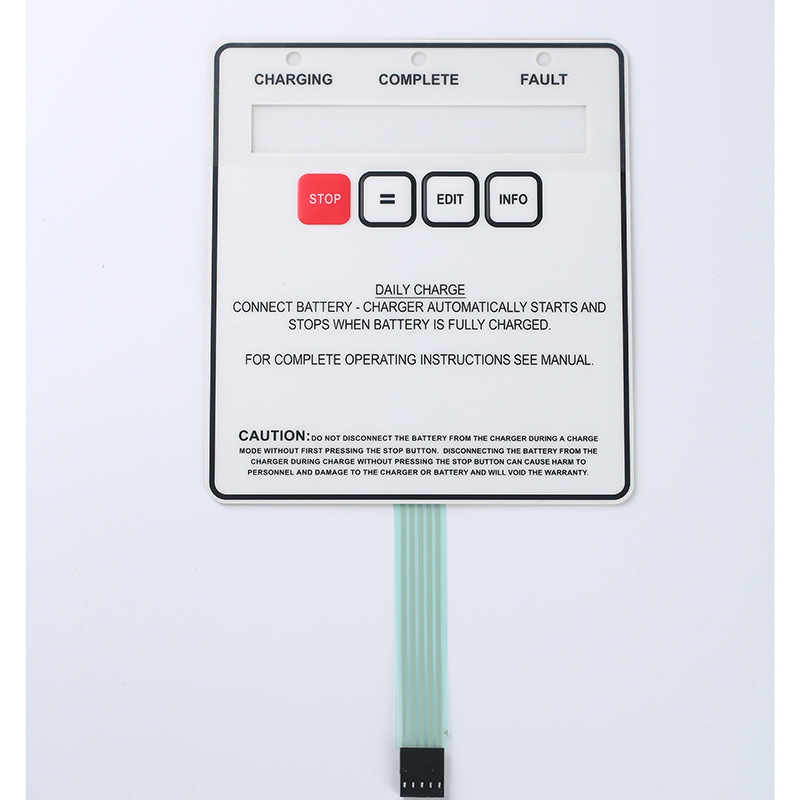
Waterproof & Dustproof Medical Equipment Membrane Panel
- Compliance: Biocompatible Overlay Film
- Chemical Armor: Resistant to Isopropyl & Bleach
- Switch Core: Hermetic Gold Snap Domes
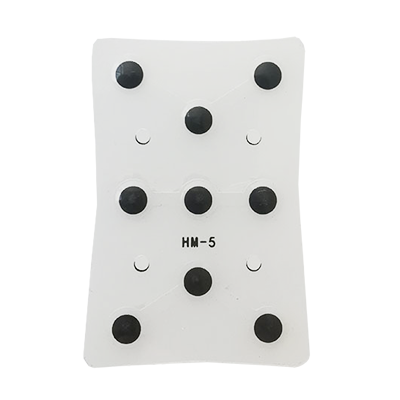
Membrane Keypad with LGF Light Guide Film & Metal Dome
- Illumination: Uniform 0.125mm Light Guide
- Backer Board: FR4 Rigid PCB / Flexible Polyimide
- Feedback: Triangular Tactile Snap
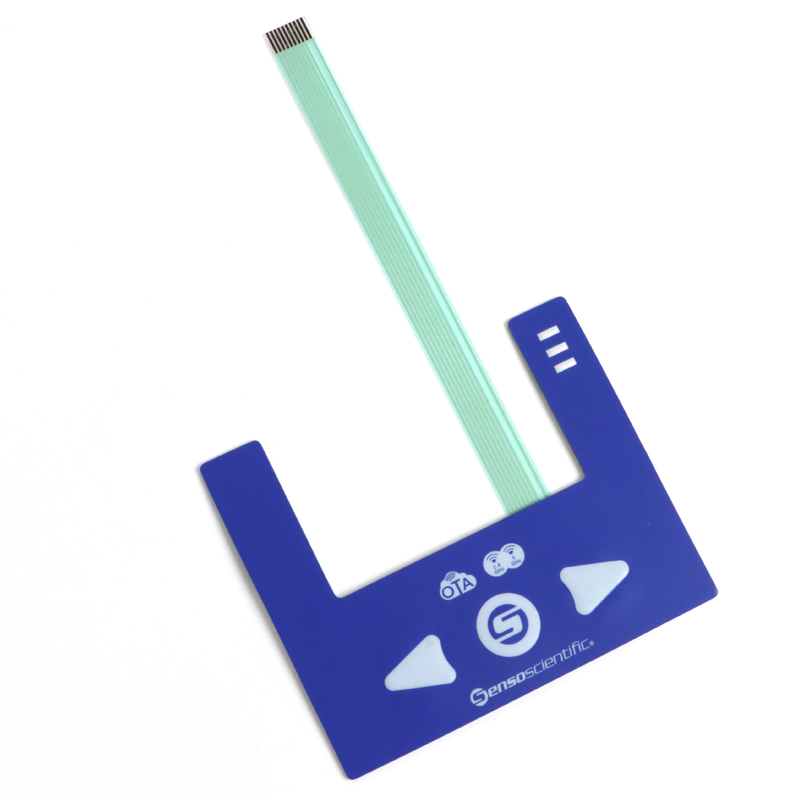
Custom Membrane Keypads & Integrated LED Graphic Overlay
- Printing Precision: Multi-Color Micro-Screening
- Integrated SMT: Side-Emitting 0603 LEDs
- Window Clarity: Water-Clear / Anti-Glare Tint
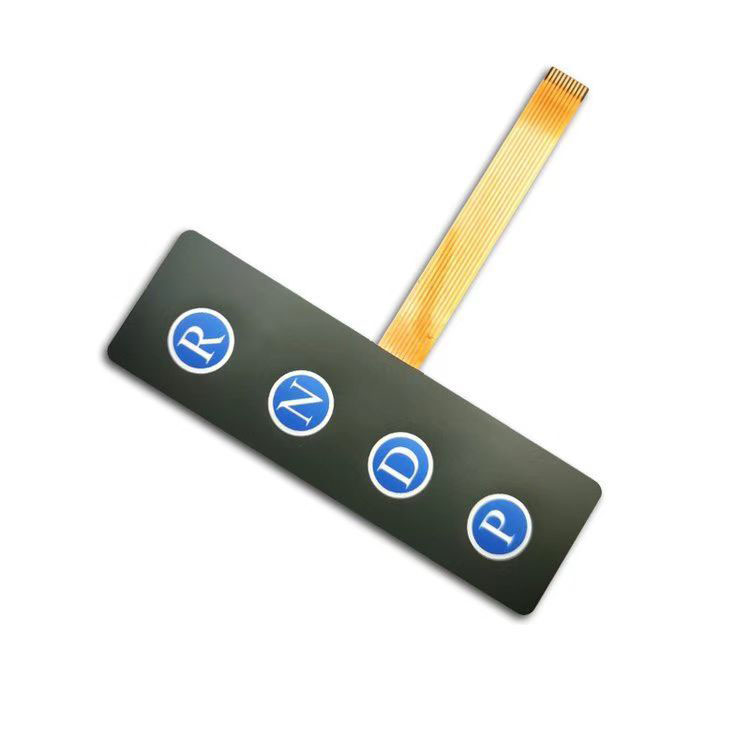
Embossed Backlit Multi-Button Touch Controller Keypad
- Embossing Profile: Pillow / Rim Tactile Perimeter
- Tactile Core: Triangular Snap Discs
- Life Expectancy: > 3,000,000 Operations
Kinematics, Metallurgy, and Contact Physics of Triangular Snap Domes
For hardware architects and electromechanical engineers in Ottawa and the Kanata North tech hub, selecting the correct tactile switch geometry is vital to human-factor ergonomics, PCB trace layout efficiency, and sub-zero switching reliability.
Trip Force & Tactile Ratio Dynamics
Triangular snap domes (also recognized as three-leg metal domes or tri-domes) operate on an engineered non-linear force-deflection curve. When an operator exerts downward load, mechanical resistance ramps steadily toward the trip force (Ft). Once the apex passes the critical yield point, the dome violently collapses through actuation travel into electrical contact, dropping to the return force (Fr).
The resulting Click Ratio, formulated as Cr = [(Ft - Fr) / Ft] × 100%, commonly achieves between 50% and 65% in triangular geometries. This produces a crisp, sharp tactile sensation through heavy winter gloves—an essential ergonomic feature for field hardware deployed across Eastern Ontario winters.
Space-Constrained Routing on Dense PCBs
Unlike four-leg cross domes that necessitate extensive radial real estate or circular domes that demand broad perimeter pad rings, the 3-point stance of a triangular dome dramatically streamlines double-sided and multilayer circuit routing. Ottawa's telecommunications and optical hardware designers frequently specify 5mm to 8mm triangular domes because two circuit traces can route between the triangular legs without requiring expensive micro-vias.
This tripod geometry enables tight keypad matrix grouping, minimal switch center-to-center pitch down to 6.5mm, and substantial reduction in overall human-machine interface panel dimensions.
Cold-Rolled SUS301 Metallurgy & Plating
Every snap dome fabricated in our facility originates from Japanese cold-rolled SUS301 stainless steel temper grades (extra-hard 3/4H or Full Hard). Precise stamping dies establish the parabolic arc and leg bends without inducing localized crystalline micro-fractures, ensuring an elastic memory exceeding 1,000,000 to 5,000,000 actuation cycles.
To safeguard electrical conductivity against oxidation and low-current signal degradation, domes receive electrolytic nickel (Ni) barrel plating or 0.05μm - 0.1μm hard gold (Au) deposition. Gold contacts deliver contact resistances under 100 mΩ, imperative for dry-circuit microcontroller inputs common in aerospace and optical transceivers.
Tactile Switch Matrix: Triangular vs. 4-Leg vs. Round Domes
Review the physical, mechanical, and electrical differences to determine the optimal tactile architecture for your Ottawa project enclosure.
| Performance Parameter | Triangular Snap Dome (3-Leg) | Cross-Shaped Dome (4-Leg) | Round / Oblong Metal Dome |
|---|---|---|---|
| Typical Diameter / Size Range | 4.0 mm – 12.0 mm | 6.0 mm – 20.0 mm | 3.0 mm – 12.0 mm |
| Actuation Force (Trip Force Ft) | 160g – 600g (customizable) | 180g – 500g | 100g – 350g |
| Click Ratio (Tactile Sensation) | 50% – 68% (Extremely Crisp) | 40% – 55% (Moderate Snap) | 30% – 45% (Soft Click) |
| Profile Height (Dome Height) | 0.20 mm – 0.45 mm | 0.30 mm – 0.60 mm | 0.15 mm – 0.35 mm |
| PCB Routing Efficiency | Highest (wide trace clearance between legs) | Moderate (requires 4-quadrant routing) | Low (annular pad ring restricts traces) |
| Dimple Options | No Dimple / Single Center Dimple | No Dimple / Center Dimple / Multiple | Center Dimple / Flat |
| Actuation Lifespan (Cycles) | 1,000,000 to 5,000,000+ | 1,000,000 to 3,000,000 | 500,000 to 1,500,000 |
| Primary Application Envelope | Compact avionics, Kanata telecom, hand-helds | Heavy industrial machinery, automotive | Ultra-thin remote controls, consumer toys |
How Ottawa Tech Corridors Apply Custom Snap Dome HMIs
As Canada's capital and premier technological powerhouse, Ottawa encompasses an elite ecosystem of telecom innovators, defense contractors, scientific research labs, and clean-tech pioneers that demand relentless HMI reliability.
Kanata North 5G & Optical Telecom
In the Kanata North Research Park—Canada's largest technology park housing telecom frontrunners—triangular snap domes are designed into optical line interface units, rugged field spectrum analyzers, and 5G test enclosures. The ultra-low profile allows optical test gear to house deep matrix keypads within ultra-thin handheld shells without compromising user tactile confidence.
National Defence & Tactical Avionics
Serving defense contractors and aerospace systems integrators across the National Capital Region (NCR), our domes withstand MIL-STD-810H environmental conditions. Triangular domes preserve their elastic spring constant down to -40°C, guaranteeing tactile feedback during winter Arctic deployments, tactical soldier radio inputs, and secure cryptographic terminal interfaces.
Ottawa Bio-Medical Instrumentation
From university research hospital laboratories to clinical monitoring devices manufactured along the Ottawa River medical corridor, our waterproof membrane switch panels integrate sealed triangular snap domes underneath anti-microbial polyester overlays. This allows aggressive daily wipedowns with isopropyl alcohol, chlorine, and hospital-grade sanitizers without circuit compromise.
Hydro & Sub-Zero Cleantech HMIs
Eastern Ontario's severe freeze-thaw cycles present major challenges to utility substations and outdoor EV fast chargers. Hydro Ottawa field engineers rely on our sealed metal dome array panels featuring integrated air-venting channels between keys. This eliminates internal vacuum or pressure buildup when air temperature swings rapidly from -30°C to +25°C.
Technological Trends Reshaping Eastern Ontario Hardware Sourcing
How progressive Ottawa electronics manufacturing services (EMS) providers and hardware startups are driving improvements in switch assembly density, backlighting efficiency, and automated line throughput.
Light Guide Film (LGF) Convergence
Legacy backlighting approaches using discrete bulky LEDs under each keycap create hotspots and consume excessive battery capacity. Ottawa designers are rapidly adopting ultra-thin (0.125mm) Light Guide Films (LGF) overlaid above triangular dome arrays. Micro-etched optical extraction dots diffuse side-fired SMD LEDs uniformly across key symbols while sustaining the crisp mechanical trip feel of the stainless dome underneath.
Pre-Assembled Peel-and-Place Dome Arrays
Rather than manually dropping loose domes onto bare PCBs with tweezers—an error-prone bottleneck that drives up domestic labor expenses—Ottawa manufacturing lines increasingly order custom pre-aligned Metal Dome Arrays. Supplied on release liners with clear PET carrier sheets, whole multi-key clusters can be accurately laminated to rigid PCBs or flexible circuits in a single 5-second placement step.
Pneumatic Venting & Hermetic Pressure Balancing
A persistent pain point in sealed Canadian industrial panels has been the "pillow effect"—where temperature fluctuations cause trapped air to expand or contract, stiffening dome clicks or triggering accidental actuation. Modern arrays incorporate laser-cut micro-venting channels in the spacer layers, routing equalization air safely within dry interior chambers while preserving IP67 exterior sealing.
Dongguan Cevra Electronic Technology Co., Ltd.
Operating from our modern 2,600㎡ manufacturing base in Dongguan—the epicenter of high-precision electronics—Cevra delivers factory-direct engineering accountability, eliminating intermediary markups and communication gaps for Ottawa procurement directors.
16+ Years In-House Production
Founded in March 2009, Cevra manages every manufacturing phase under one roof: screen printing, stamping, laser profiling, CCD precision drilling, and automated lamination. No outsourced delays, ensuring rigorous control over lot-to-lot tolerances.
SGS Onsite Audited & ISO 9001
Our quality systems are audited onsite by SGS Group, verifying staff competencies, cleanroom parameters, and trade integrity. Production operates under strict ISO 9001 protocols, backed by Alibaba Trade Assurance for risk-free international procurement.
Metrology & Reliability Testing Lab
Every production batch undergoes exhaustive testing on our in-house dome load testers (plotting force-deflection curves), CCD optical defect detection, tension peel testers, high/low thermal cycling cabinets (-40°C to +85°C), and pencil hardness testers.
Rapid DFM & Prototype Delivery
Receive comprehensive Design for Manufacturability (DFM) reviews within 24 hours. Prototype custom dome arrays or tactile membrane switch samples ship directly to your Ottawa R&D lab in as few as 7–10 working days via priority air courier.
Frequently Asked Questions for Ottawa Buyers & Engineers
Answers to common technical, logistics, compliance, and customization inquiries regarding sourcing tactile switch components from our factory.
Our snap domes use precision-tempered Japanese SUS301 stainless steel. Unlike rubber keypads or tactile elastomeric switches that stiffen and become sluggish in sub-zero climates, stainless steel domes experience less than a 5% variation in tactile snap ratio and actuation force from -40°C up to +85°C. We calibrate internal air vent channels to prevent freeze-thaw pneumatic lockup.
For high-speed optical transceivers, low-voltage microcontroller logic lines (< 3.3V, < 1mA), or harsh outdoor environments prone to moisture ingress, Gold plating is recommended because gold forms zero surface oxides, ensuring contact resistance under 100 mΩ. Nickel plating is cost-effective and performs reliably for standard 5V–24V industrial controls and consumer appliances.
To quote accurately, provide an outline drawing (CAD, DXF, or PDF), PCB pad layout showing key centers, desired actuation force (e.g., 280g, 350g, 420g), dome size, plating preference, and expected quantities. If graphic overlays or backlighting are needed, please provide vector artwork files (AI or CDR) indicating Pantone or RAL color codes.
Standard prototype turnaround for custom metal dome arrays or membrane switches is 7 to 10 working days following DFM approval. Mass production volumes usually ship in 14 to 20 working days. Shipments to Ottawa, Nepean, and Kanata ship via air express (FedEx, DHL, UPS) with transit times averaging 3 to 5 business days.
To support Ottawa startups, R&D incubators, and prototype verification runs, we offer low barrier access: selected graphic overlay keypads begin at just 10 pieces, complete custom membrane switches at 100 pieces, and customized loose metal domes or dome array sheets at 1,000 pieces. Full pre-production validation batches are available prior to volume stamping.
We employ computer-controlled dome load test stations that measure force-displacement curves for sampled units from each heat-treatment stamping lot. We maintain tactile force variances within ±30 grams of your target rating, combined with automated CCD vision inspection to verify leg formation, center dimple concentricity, and burr-free edges.