Featured Interface Assemblies for Fort Worth OEMs
From custom light guide film (LGF) arrays to tactile metal snap domes and hermetic membrane overlays, explore our factory-direct hardware engineered to MIL-STD, IPC, and ISO 9001 standards.
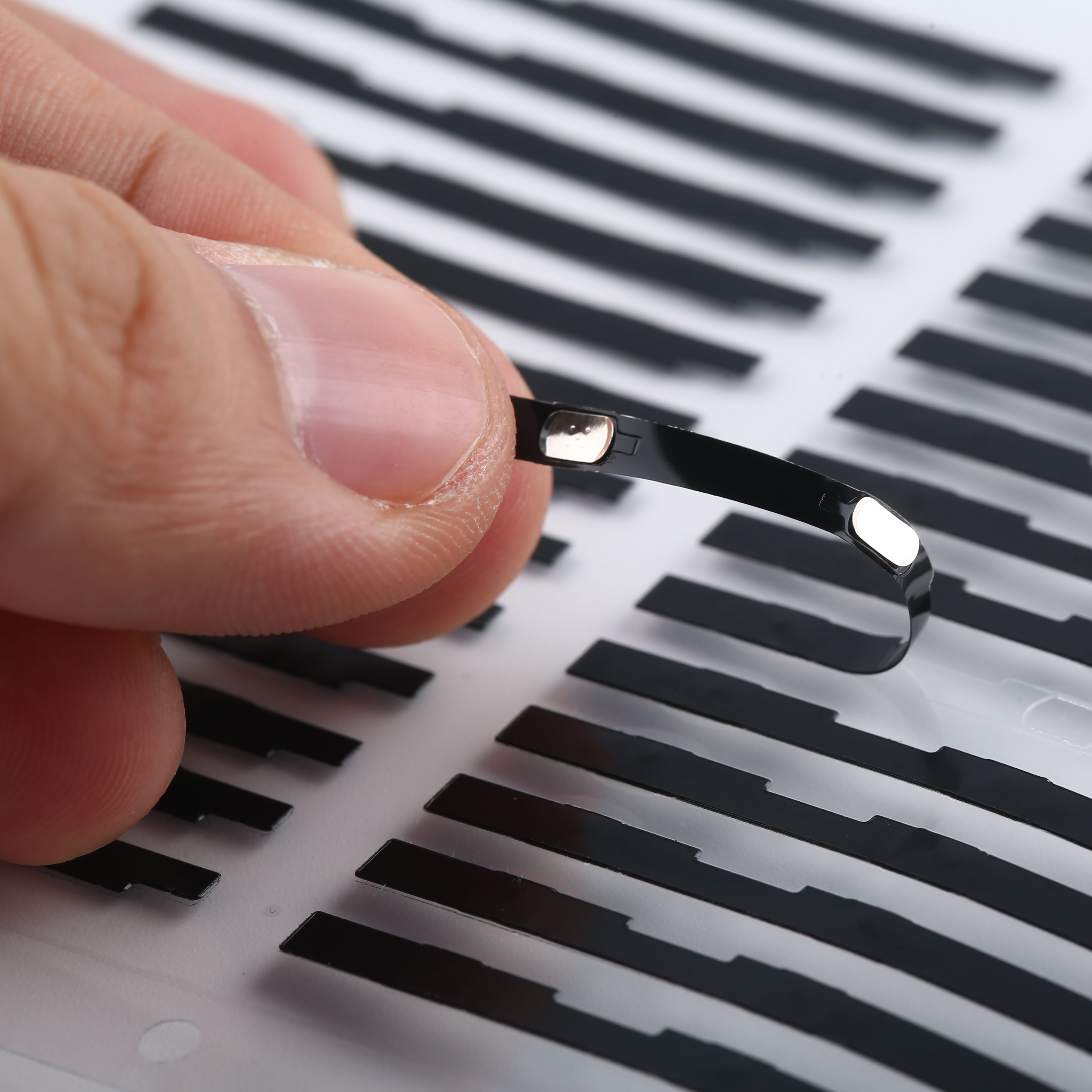
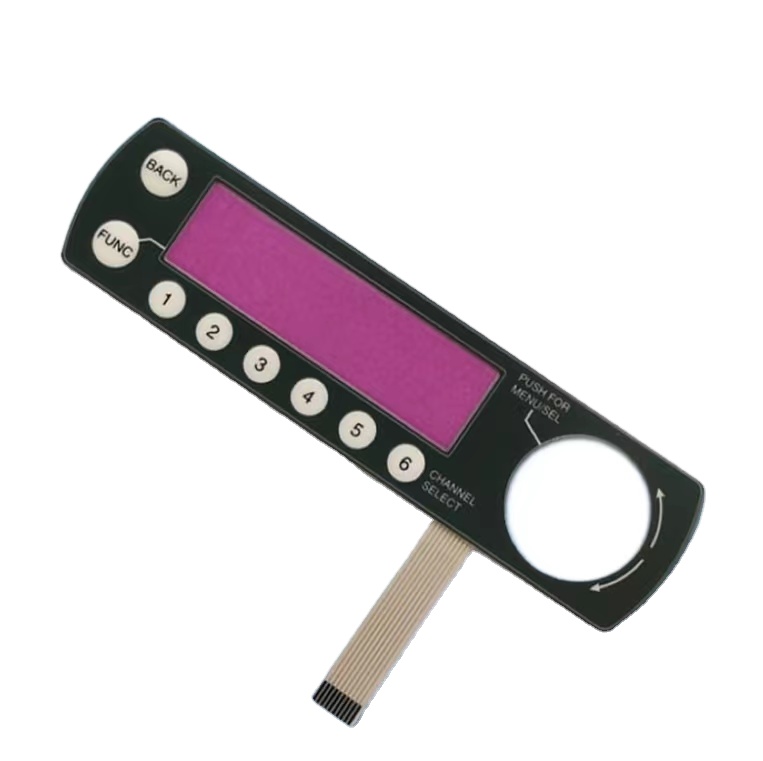
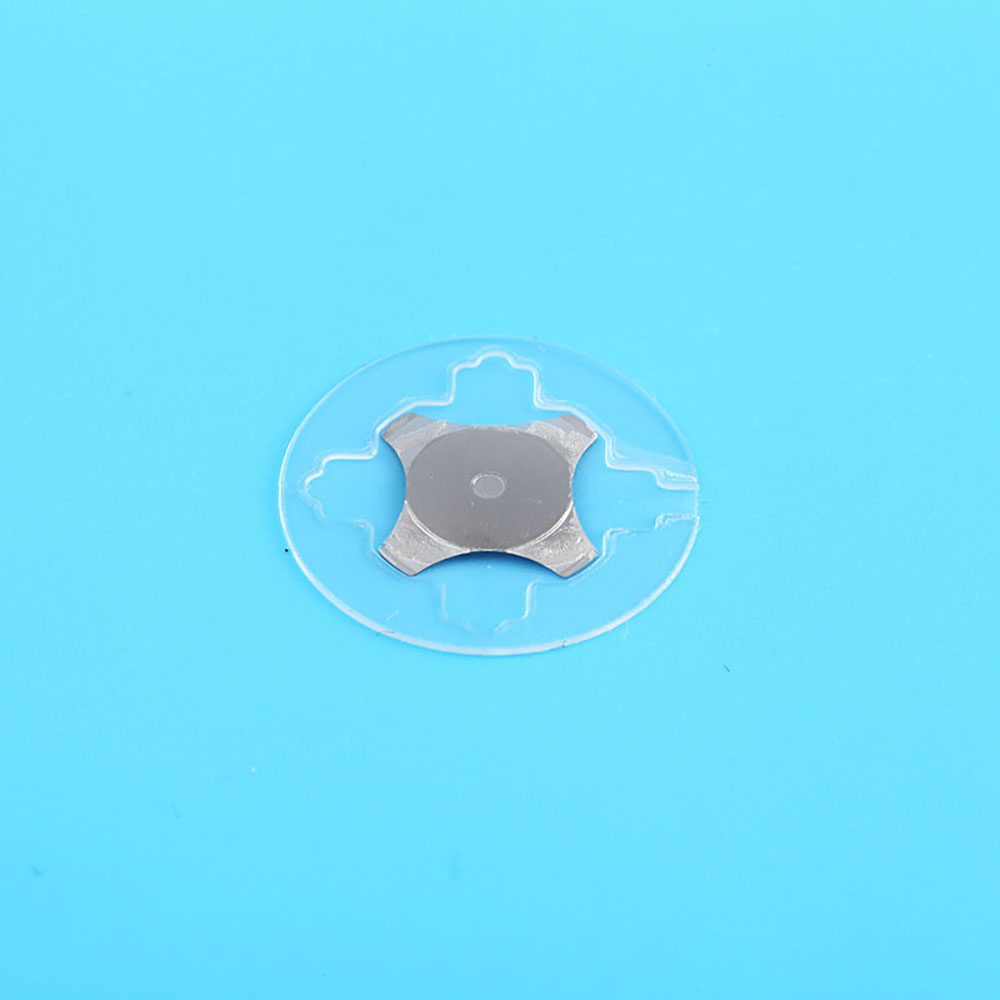
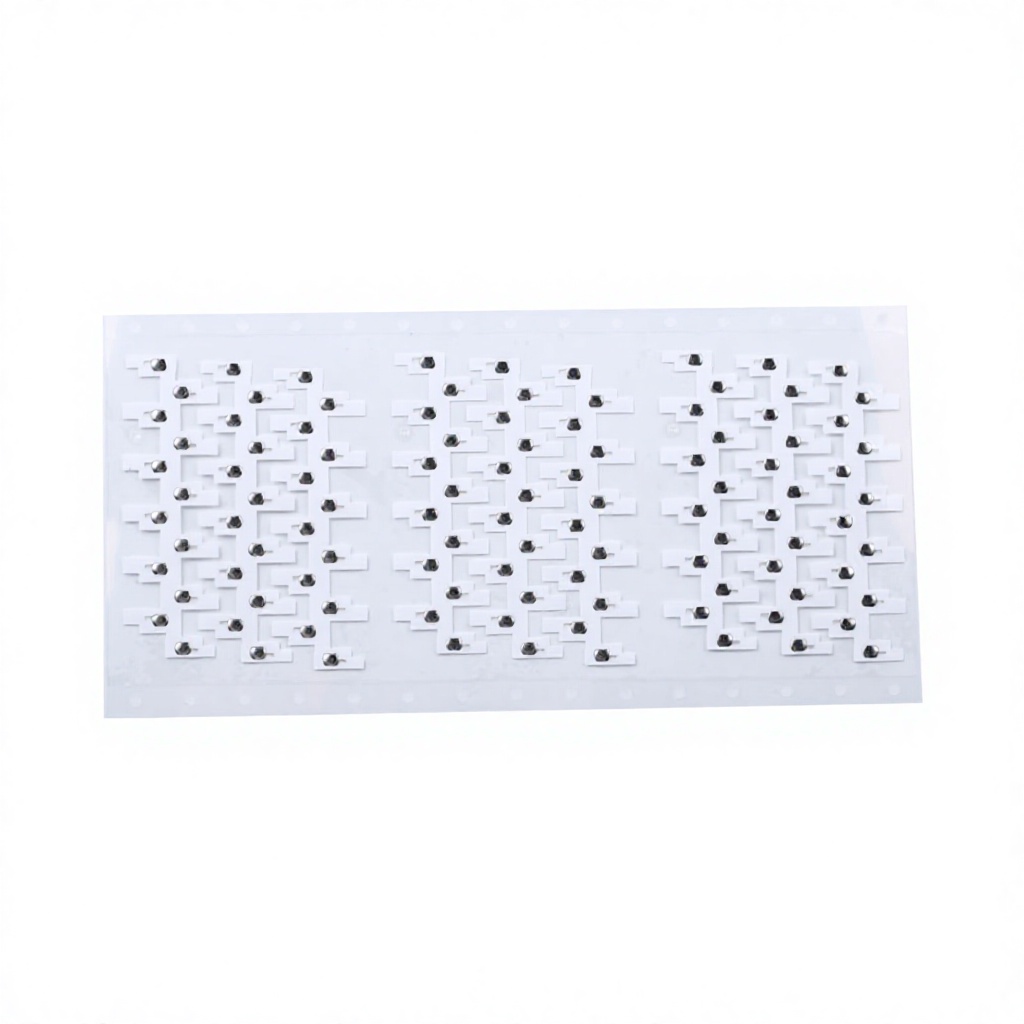
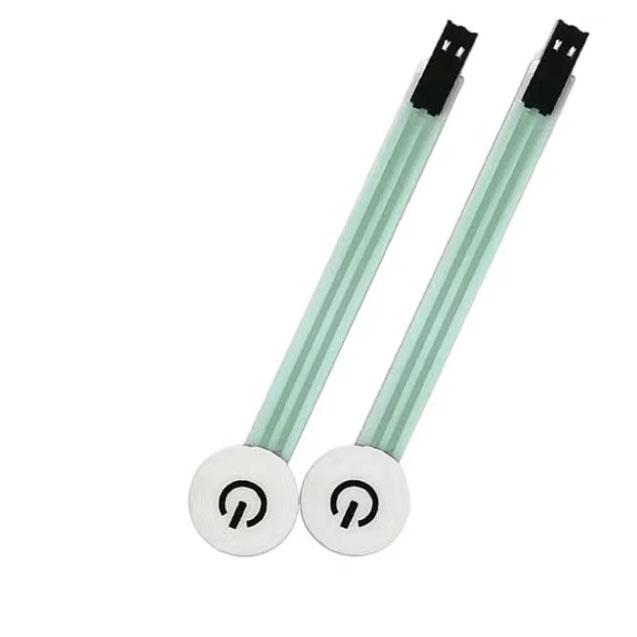
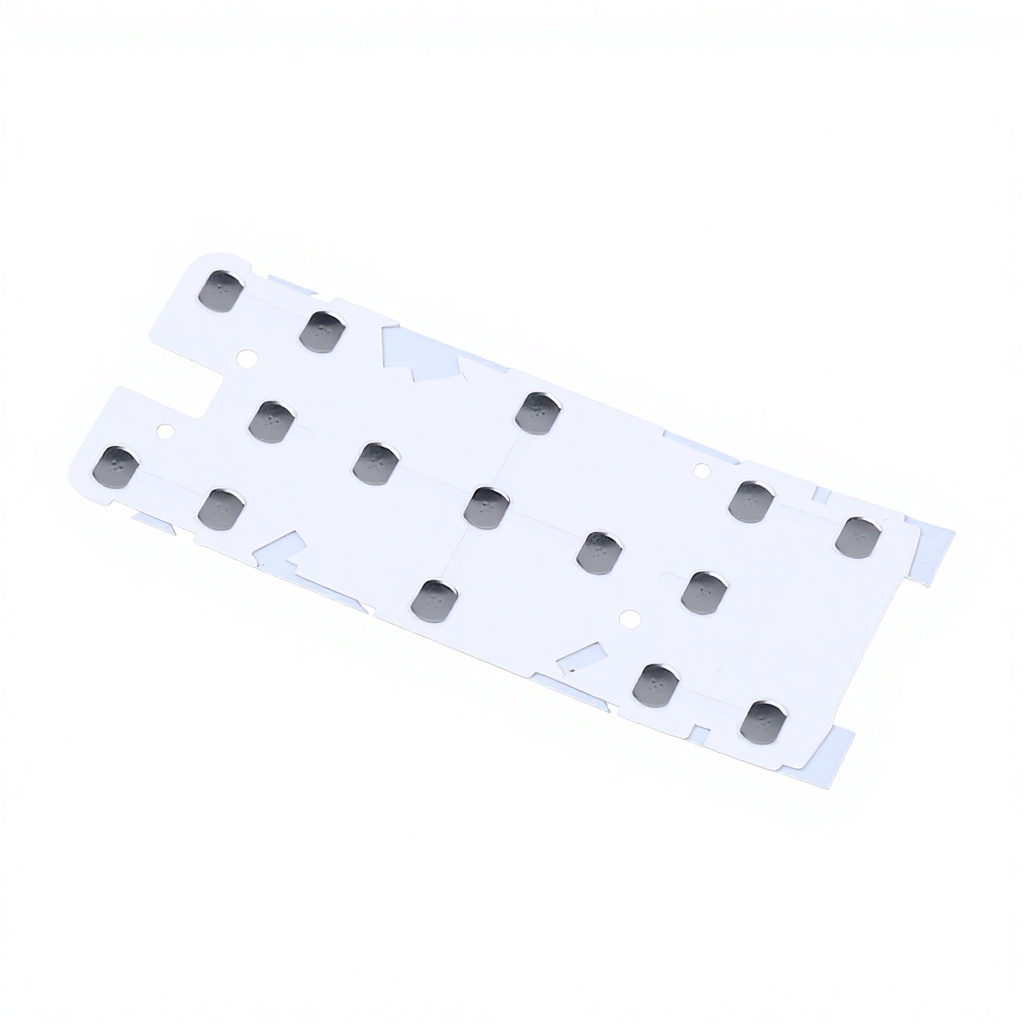
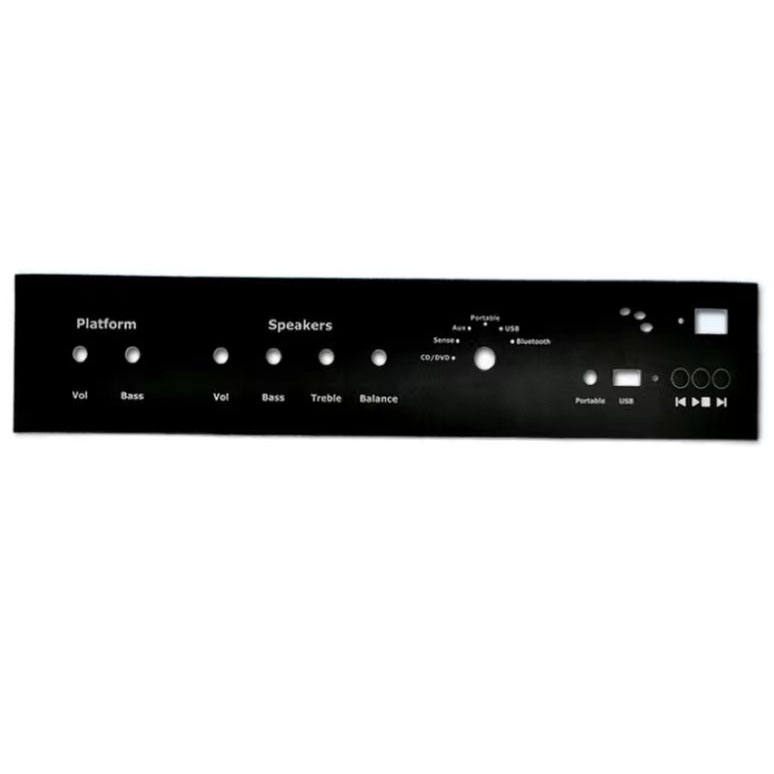
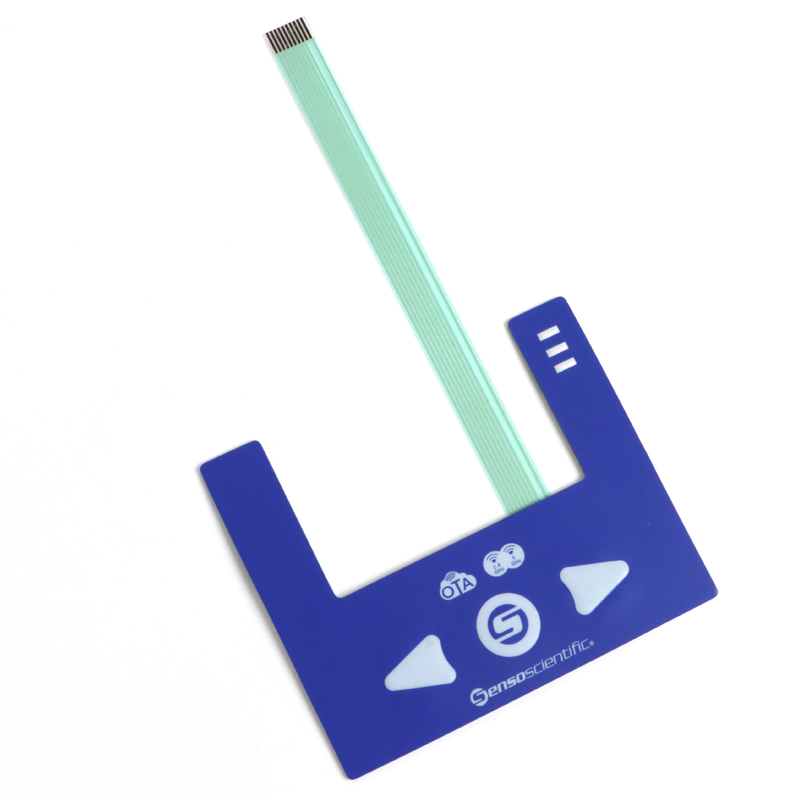
A Light Guide Film (LGF) is an optically transparent, precision-engineered thin-film polymer (typically high-clarity optical grade Polycarbonate or PMMA) ranging in thickness from 0.100 mm to 0.500 mm. Its core operational principle relies on Total Internal Reflection (TIR). When side-firing surface-mount LEDs inject photons into the polished lateral perimeter of the film, light rays propagate within the medium without significant transmission loss, provided the incidence angle exceeds the critical angle θc, governed by Snell’s Law:
θc = arcsin(nair / nsubstrate) ≈ arcsin(1.0003 / 1.586) ≈ 39.1° (for Optical PC)
Without surface perturbation, light remains entirely confined within the dielectric core. To extract illumination perpendicular to the user interface, precision micro-optical extraction structures—or micro-dots—are introduced onto the sub-layer of the light guide. Cevra employs high-speed CNC tooling, UV-cured micro-replication, and computerized precision laser ablation to form micro-prismatic indentations. By carefully varying the density, distribution gradient, depth, and spatial frequency of these micro-dots relative to the light source distance, our engineering department ensures that the luminous flux escaping the film maintains a flat, uniform profile across every key legend or capacitive zone.
Selecting the correct optical substrate is critical when matching local Texas environmental conditions with industrial reliability specifications. Cevra evaluates each OEM build based on mechanical actuation cycle life, operating temperature spectrums, and refractive clarity:
Features a high refractive index (n = 1.586) and exceptional light transmission (>90%). Ideal for thermoforming and laser etching micro-grooves. Withstands continuous ambient exposure up to 105°C without dielectric yellowing.
Unsurpassed flexural fatigue resistance for switches enduring over 1,000,000 mechanical actuations. Offers extreme resistance against petrochemicals, harsh cleanroom solvents, and industrial reagents.
Integrates a white bottom reflector film (PET/TiO2) and top diffuser films. Eliminates hot spots, elevates output luminance by up to 35%, and prevents light bleeding into adjacent operational channels.
Fort Worth Industrial Clusters: Advanced LGF Applications
The Dallas-Fort Worth metroplex represents one of the fastest-growing manufacturing and engineering hubs in North America. Here is how specialized light guide film assemblies interface directly with dominant local sectors.
Positioned along the Fort Worth aerospace corridor (adjacent to NAS JRB Fort Worth and major defense contractors), our LGF switches satisfy stringent cockpit and field control requirements. We provide ultra-thin, low-EMI illuminated keypads compatible with NVIS (Night Vision Imaging Systems) per MIL-STD-3009, preventing infrared blooming during night tactical operations.
AllianceTexas and the North Texas logistics triangle host world-scale distribution nodes. Forklift-mounted tablets, cold-chain monitoring devices, and ruggedized barcode terminals require keypads that withstand sub-zero cold-storage (-30°C) to intense Texas summer warehouse heat (+50°C). Our sealed LGF arrays provide shock-proof illumination without the mechanical frailty of CCFL or thick optical plastics.
With the expansion of specialized health sciences and biotechnology across Tarrant County, medical equipment makers require seamless, flat-surface capacitive or tactile membrane switches. Backlit LGF assemblies enable IP67/IP68 hermetic surface sealing, allowing aggressive hospital-grade chemical sterilizations (bleach, IPA, quaternary ammonium) without liquid intrusion or display degradation.
Engineering Matrix: LGF vs. Traditional Backlighting Technologies
Hardware architects must weigh optical efficiency, mechanical travel, energy consumption, and long-term degradation when designing interface panels.
| Evaluation Parameter | Cevra Micro-Dot LGF Membrane | Electroluminescent (EL) Foil | Direct Discrete LED Matrix | Woven Optical Fiber Bundles |
|---|---|---|---|---|
| Typical Thickness | 0.125 mm – 0.250 mm | 0.200 mm – 0.350 mm | 1.60 mm – 3.20 mm | 0.300 mm – 0.600 mm |
| Luminance Uniformity | >85% via dot gradient | ~90% (new) / Degrades rapidly | Poor (<60%) without thick diffusion | 70% – 80% |
| Power Consumption | Very Low (1-4 Edge LEDs) | Requires High Voltage AC Inverter | High (15-40 LEDs per array) | Low to Moderate |
| Half-Life (L50) | >50,000 Hours (LED limited) | 2,000 – 4,000 Hours (Phosphor decay) | >50,000 Hours | >30,000 Hours |
| EMI / RFI Generation | Zero (Solid state DC drive) | Severe (High-frequency inverter noise) | Zero | Zero |
| Tactile Dome Compatibility | Superior (Direct punch holes / domes) | Fair (Risk of dielectric breakdown) | Challenging (Requires PCB cutouts) | Moderate (Crush sensitivity) |
| Environmental Durability | -40°C to +85°C, 95% RH | Susceptible to moisture ingress | Vibration sensitive solder points | Micro-fractures under heavy vibration |
Why Fort Worth Exporters & Procurement Teams Choose Cevra
Operating from our 2,600㎡ purpose-built manufacturing facility in Dongguan, China, Dongguan Cevra Electronic Technology Co., Ltd. provides precision-manufactured HMI solutions backed by rigorous international audits.
Certified under ISO 9001 quality management with on-site factory verification conducted by SGS Group. Our multi-stage traceable QA/QC protocol audits every raw substrate from incoming goods inspection through final photometric validation.
We eliminate external subcontracting delays. Screen printing, CCD automatic guide-hole drilling, precision die punching, laser profile trimming, high-speed dome placement, and automated cleanroom lamination are integrated entirely on our production floor.
Every production batch undergoes strict testing via Dome Load Testers (actuation force curve analysis), Environmental Thermal Shock Cabinets (-40°C to +125°C), Adhesive Holding Tack Testers, Peel Tension Analyzers, and 2D Optical CCD Comparators.
Fort Worth Buyer & Engineering FAQ
Clear answers to critical technical questions regarding lead times, international logistics to Dallas/Fort Worth International Airport (DFW), tooling expenses, and design rules.
What CAD files and photometric data are required to initiate an LGF membrane quote?
How does Cevra ensure backlighting uniformity across large control panels?
What are the lead times and logistics routes for shipments arriving in Fort Worth, TX?
Can LGF backlighting be integrated directly with tactile metal dome arrays?
How does light guide film survive broad Texas outdoor temperature swings?
Accelerate Your Interface Engineering Project
Connect directly with our optical engineering team in Dongguan. Whether you are revising an existing Fort Worth defense console or developing a breakthrough medical diagnostic device, we deliver turnkey DFM evaluations, optical ray-trace simulations, and rapid prototypes built to your exacting tolerances.