Export Catalog
Certified FPC & Tactile Membrane Keyboard Solutions
Standard and custom HMI assemblies engineered for high-cycle industrial, clinical, and harsh automation deployments across the Strasbourg Eurodistrict and European industrial corridors.
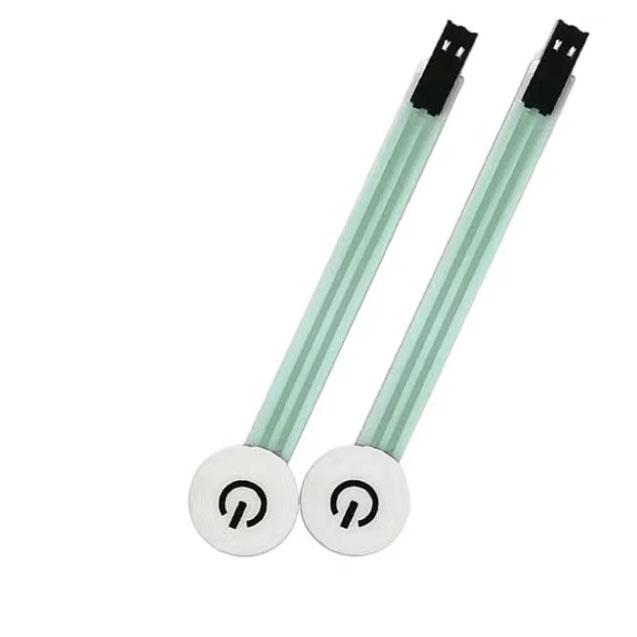
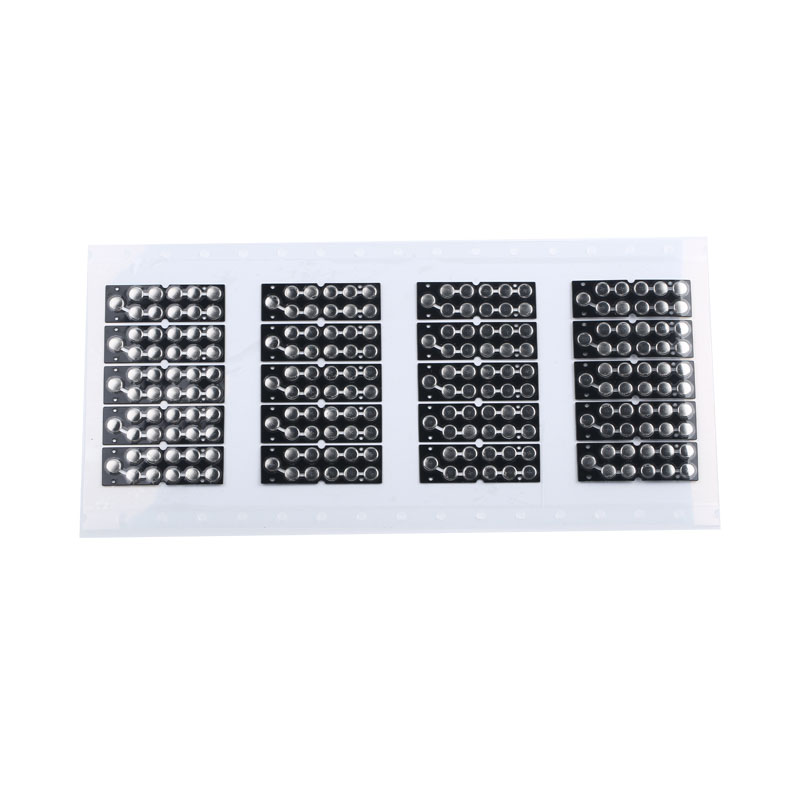

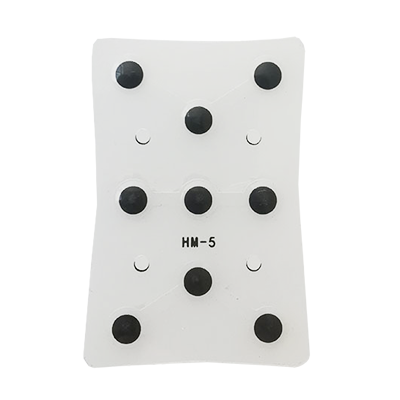
Engineered Performance Benchmarks
Verifiable metrics underpinning our industrial production lines serving European OEMs and technical integrators.
16+
Years Engineering Expertise
2,600㎡
ISO 9001 In-House Facility
>1M
Actuation Cycles Per Key
IP67/IP68
Environmental Ingress Protection
Technical White Paper
FPC Keyboard Architecture: Engineering Considerations for the European Industrial Corridor
In modern industrial electronics, Human-Machine Interfaces (HMIs) represent the critical junction between operator intent and machine execution. For high-reliability sectors across the Strasbourg metropolitan area and the Upper Rhine innovation corridor, traditional silver-printed polyester (PET) switches increasingly face physical limitations. Dynamic mechanical vibration, chemical exposure from automated disinfection, and extreme thermal variation necessitate the transition toward Flexible Printed Circuit (FPC) keyboards based on polyimide (PI) substrates and rolled annealed (RA) or electro-deposited (ED) copper conductors.
1. The Substrate Divergence: FPC Copper Traces vs. Silver-Printed PET
Conventional membrane keypads employ screen-printed conductive silver flakes suspended in a polymer matrix. While cost-effective for standard consumer goods, screen-printed silver suffers from elevated sheet resistivity (typically >15–25 Ω/sq) and is vulnerable to silver ionic migration in humid environments. Under an electrical bias and moisture condensing inside micro-cracks, silver dendrites precipitate between adjacent circuit tracks, provoking catastrophic short circuits.
Our FPC-based keyboards resolve this failure mode by utilizing etched copper traces encased in chemically inert polyimide layers. With sheet resistance dropping to milliohm thresholds, FPC keyboards allow ultra-dense pitch connector routing (down to 0.5 mm pitch ZIF terminations), higher continuous trace current, and zero silver migration risk. Furthermore, surface mount technology (SMT) can be directly integrated onto the FPC plane, accommodating miniature side-emitting micro-LEDs, discrete resistors, and ESD suppression diodes without requiring secondary rigid PCB backer boards.
| Engineering Criterion | Standard Silver Flexible (PET) | Copper-Polyimide FPC Keyboard | Rigid FR-4 PCB Membrane Assembly |
|---|---|---|---|
| Conductor Resistivity | 10 – 30 Ω per loop | < 0.5 Ω per loop (Ultra-low) | < 0.1 Ω per loop |
| Trace Pitch Capability | ≥ 1.0 mm (standard) | 0.3 mm – 0.5 mm (High density) | ≥ 0.2 mm |
| SMT Integration | Conductive epoxy only (fragile) | Standard lead-free reflow soldering | Standard reflow soldering |
| Flexibility & Bend Radius | Moderate (> 5 mm radius) | Exceptional (< 1 mm radius dynamic) | Rigid (None) |
| Continuous Thermal Range | -20°C to +65°C | -40°C to +125°C | -40°C to +130°C |
| Chemical Ingress Rating | IP65 typical | IP67 / IP68 with peripheral gasket | IP67 with mechanical seal |
2. Contact Metallurgy and Snap Ratio Engineering
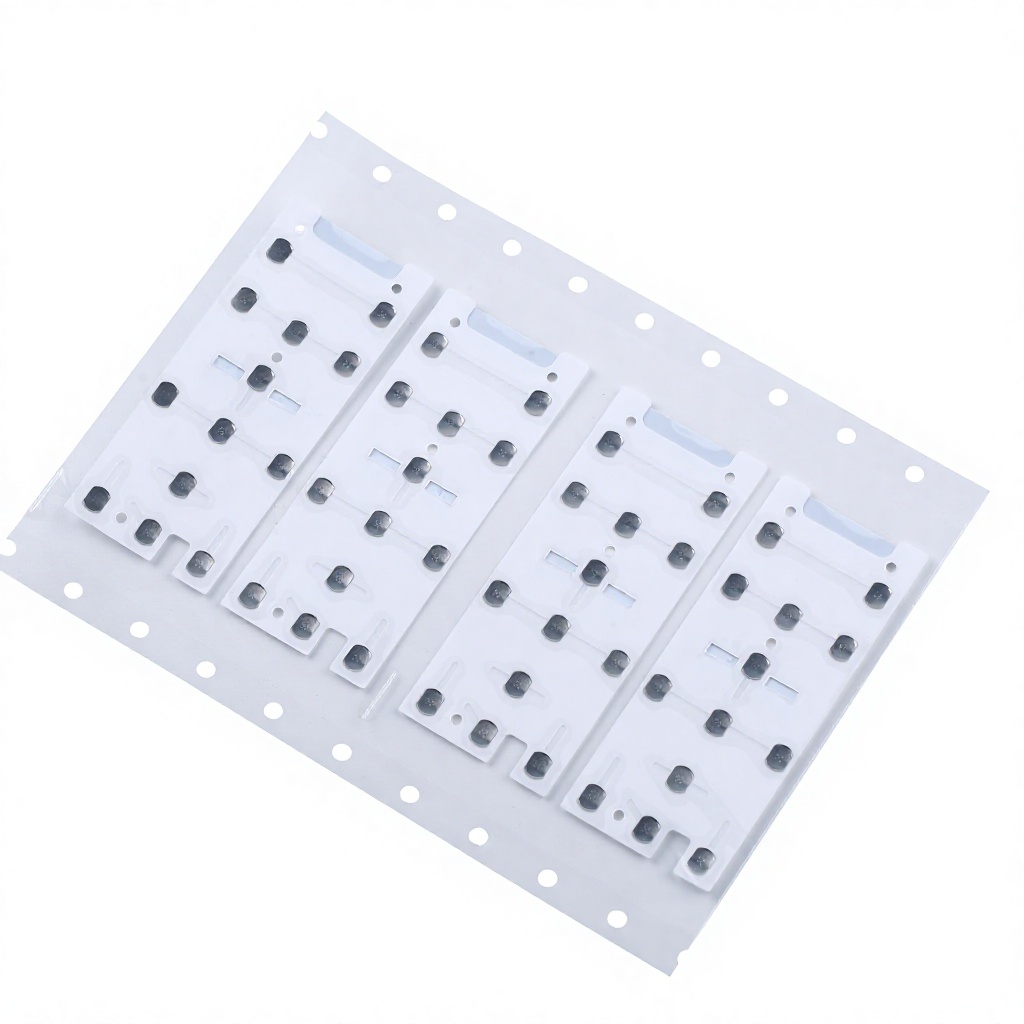
Tactile feedback is not merely an aesthetic choice; in life-critical surgical tools or emergency industrial control stations, tactile assurance informs the operator that an action has registered without requiring visual confirmation. We manufacture snap domes strictly from cold-rolled SUS301 stainless steel, available with selective gold (Au) or hard nickel (Ni) plating.
The sensation of mechanical response depends on the Snap Ratio (SR), mathematically expressed as:
Snap Ratio (%) = [(Actuation Force - Contact Force) / Actuation Force] × 100
Our engineering lab maintains the Snap Ratio between 45% and 65% for our 4-legged cross and dimpled snap domes, ensuring sharp tactile response and preventing actuator fatigue over life tests exceeding 1,000,000 cycles.
Regional Integration
Localized Industrial Applications in the Strasbourg Market
Strasbourg serves as the economic hub of Alsace and the administrative center of the European Parliament, distinguished by prominent biomedical research, cross-border logistics, and smart automated machinery.
NextMed & Biomedical Devices
Within the Strasbourg NextMed medical technopark, surgical robotic tools, intensive care patient monitoring systems, and diagnostic centrifuges require interfaces that withstand heavy antiseptic regimens (including sodium hypochlorite, isopropyl alcohol, and quaternary ammonium compounds). Our antimicrobial textured PET overlays bonded to sealed FPC circuits provide seamless chemical barrier protection tested up to IP68.
River Port & Rhine Multimodal Logistics
The Autonomous Port of Strasbourg (Port Autonome de Strasbourg) handles multi-million-ton bulk shipping and container traffic along the Rhine river corridor. Crane tele-operation pendants, barge navigational consoles, and rail freight terminals encounter relentless outdoor UV exposure, driving rain, and wide temperature swings. We incorporate UV-resistant Autotex XE films and hermetic edge-gaskets to maintain circuit continuity under punishing conditions.
Industry 4.0 & Cross-Border Automation
Situated in proximity to Baden-Württemberg's machine tool manufacturers and the Alsatian automotive engineering hub, local system integrators develop precision robotic cells and packaging machinery. Our FPC keyboards offer compact ribbon bends that slide through dynamic articulating arms, offering multi-key matrix configurations and integrated Light Guide Films (LGF) for dim industrial environments.
Market Trends
Emerging HMI Engineering Trends Across Alsace & France
How regulatory directives, hygienic designs, and smart architectures are reshaping industrial interface procurement.
Strict EU REACH & RoHS Compliance
All exports routed into European ports must rigorously verify the exclusion of SVHCs (Substances of Very High Concern) under EU Regulation No 1907/2006 (REACH) and Directive 2011/65/EU (RoHS 3). Our raw materials—from raw polyimide substrates to 3M VHB structural adhesives—are documented with full material declaration certificates and testing reports from SGS.
Hygienic Flat Surfaces Replacing Mechanical Switches
In accordance with EHEDG guidelines for pharmaceutical and food handling processes throughout the Grand Est agrifood cluster, open mechanical push buttons with dirt-trapping crevasses are being phased out. Sealed FPC tactile membrane keyboards provide an unbroken, IP67 wipe-down plane that prevents bacterial colonies from nesting behind switch cavities.
Hybrid Capacitive & Tactile Integration
European design bureaus in Strasbourg increasingly favor hybrid architectures: smooth capacitive slider controls for parameter tuning paired with unmistakable mechanical snap-dome FPC keys for hazardous operations (such as Emergency Stop, Motor Ignite, or System Reset) to mitigate accidental soft-touch activations.
Manufacturing Excellence
Why European Engineers Partner Directly with Cevra
Established in March 2009 in Dongguan, Dongguan Cevra Electronic Technology Co., Ltd. operates a 2,600㎡ dedicated facility bridging OEM/ODM precision fabrication with global delivery reliability.
Verified In-House Production
Unlike trading entities, we execute every critical production phase on-site: precision silkscreen printing, automatic laser profiling, CCD automated drilling, high-speed dome placement, and fully automatic continuous lamination lines.
SGS Group Onsite Verified & ISO 9001
Our operational facilities, capacity data, and quality control systems are verified through extensive onsite inspection by SGS Group. Certified to ISO 9001, our QA framework enforces total traceability across incoming materials, WIP stages, and finished assemblies.
Comprehensive Reliability Laboratory
Our dedicated quality testing lab runs automated load-force deflection testing, electrical loop resistance verification, environmental high/low temperature soaking (-40°C to +105°C), tensile peel testing, adhesive tack measurement, and pencil hardness surface testing.
Procurement FAQ
Frequently Asked Questions by European Sourcing Teams
Clear engineering and logistical answers addressing customs, minimum orders, layer stack-up parameters, and lead times.
What engineering documentation is required to receive a formal DFM review and quotation?
To initiate a comprehensive Design For Manufacturability (DFM) assessment, we request your vector artwork or graphic layout (Adobe Illustrator, PDF, or DXF), mechanical housing dimensions, electrical circuit schematic, connector pinout, preferred tactile force (e.g., 280g vs 350g), operating temperature parameters, and projected annual volumes. Our engineering group delivers a complete stack-up recommendation and quotation within 24 hours.
What are the key advantages of selecting FPC over traditional silver-printed circuits for Strasbourg deployments?
FPC circuits utilize etched copper traces on flexible polyimide substrates rather than printed silver inks. This eliminates the risk of silver migration under high humidity, significantly reduces trace loop resistance (< 0.5 Ω vs > 20 Ω), allows ultra-fine pitch connectors down to 0.5mm, supports standard lead-free component soldering, and survives millions of dynamic bends in moving equipment or industrial robotic joints.
How do you manage customs, VAT, and logistics into the European Union and France?
We routinely export directly to European destinations via express air courier (DHL Express, FedEx, UPS) with transit times of 3 to 5 business days into Strasbourg-Entzheim Airport or regional logistic hubs, as well as consolidated air and sea freight (FOB, CIF, or DDP terms). We supply all regulatory documentation including commercial invoices with proper HS codes, packing lists, CE compatibility declarations, and RoHS/REACH material certificates to ensure swift customs clearance.
What Minimum Order Quantities (MOQ) and lead times apply for custom HMI prototypes?
For custom engineering prototypes and pre-series pilot builds, our MOQ starts from just 10 to 50 pieces depending on complexity. Typical prototype turnaround ranges between 7 and 12 working days following artwork and stack-up sign-off. Mass production volume batches typically ship within 15 to 20 working days.
Which surface finishes and adhesives are recommended for medical and transport devices?
For medical devices requiring intensive sanitization, we recommend textured, chemical-resistant polyester (such as Autotex Fine/Velvet) treated with selective antimicrobial coatings. For critical structural adhesion, we specify industrial 3M adhesives (such as 3M 467MP, 3M 468MP, or 3M 300LSE for low surface energy plastics and powder-coated cast aluminum enclosures).
Can backlighting and status indicators be integrated into thin FPC membrane switches?
Yes. We integrate ultra-thin surface-mount LEDs (0603 or 0805 packages) directly onto the copper FPC layer. For uniform full-key illumination without hot spots, we engineer custom Light Guide Films (LGF) or integrate side-fire LEDs, which channel light evenly across designated legends while maintaining an ultra-thin total profile under 1.5 mm.
Accelerate Your Custom FPC Keyboard Project
Connect with our technical design team in Dongguan for rapid prototyping, detailed layer stack-up optimization, and direct manufacturer pricing tailored for the Strasbourg industrial market.