High-Performance Membrane Keypads & Light Guide Assemblies
Engineered in Dongguan, verified by SGS, and custom-fabricated to meet stringent environmental tolerances across marine, commercial automation, and harsh climate control interfaces.
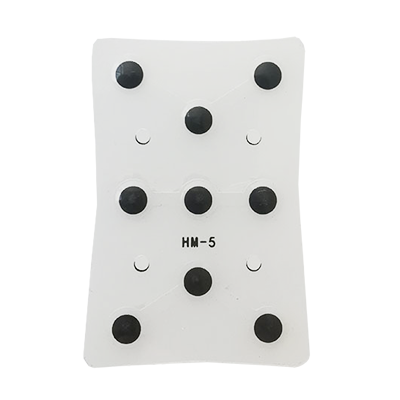
Membrane Keypad With Light Guide Film Metal Dome Array Sheet PCB Switch Button
- Backlight Type: Micro-Dot Matrix LGF
- Actuation Force: 280g - 420g Tactile
- Base Substrate: Rigid FR4 / Flex PCB
- Sealing Standard: IP67 Dust & Splash
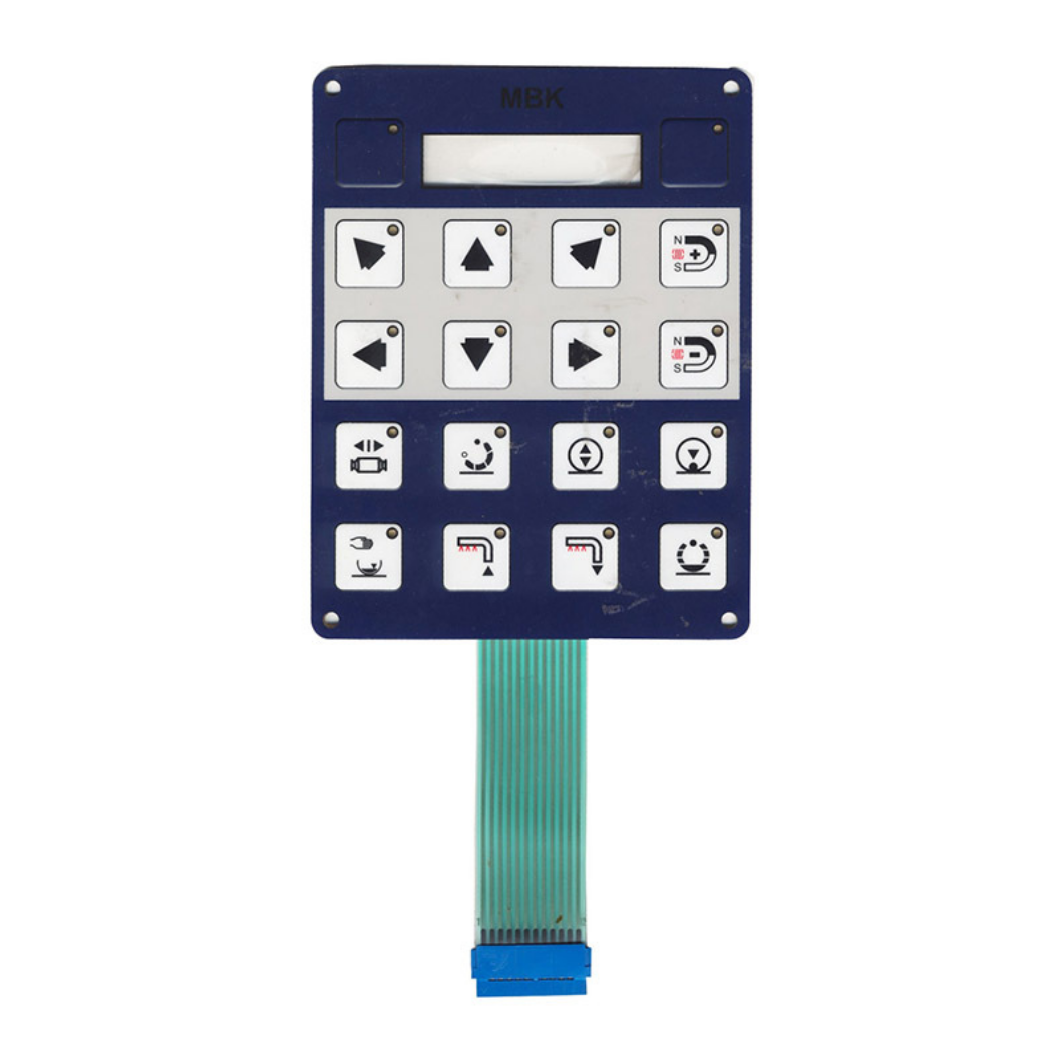
Price 1 Row 4 Key Custom Made One Button Keyboard Membrane Switch
- Key Array: Linear 1-Row 4-Key
- Overlay Material: Autotex Textured PET
- Loop Resistance: < 100 Ω
- Operating Life: > 1,000,000 Cycles
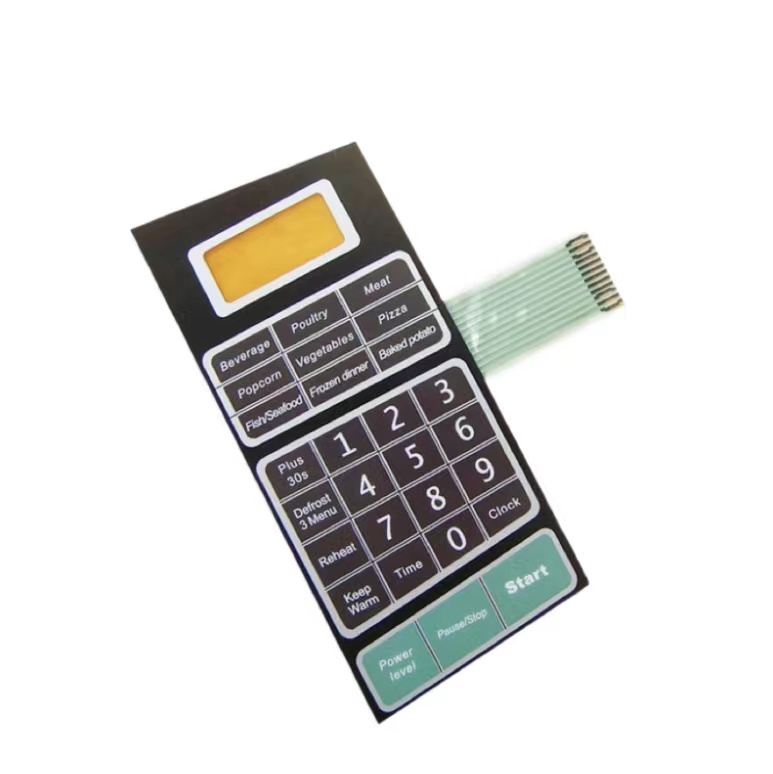
Low Moq Custom Membrane Switch Panel Keypad Control
- MOQ Threshold: Flexible / Rapid Sample
- Embossing Style: Rim / Pillow Emboss
- Contact Layer: Silver Conductive Trace
- Back Adhesive: 3M 467MP / 468MP
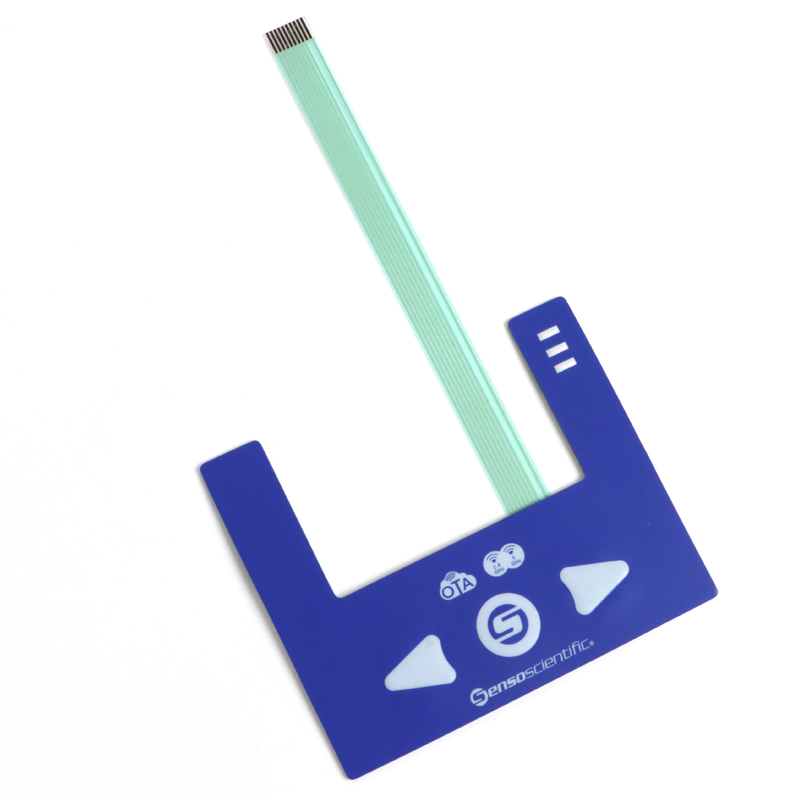
Manufacturer Custom Membrane Keypads and LED Graphic Overlay
- Indicator Tech: Surface Mount SMT LED
- Optical Windows: Transparent / Smoked Tint
- Die-Cutting: CCD Automated Punching
- Connector: 2.54mm / 1.0mm Pitch FPC
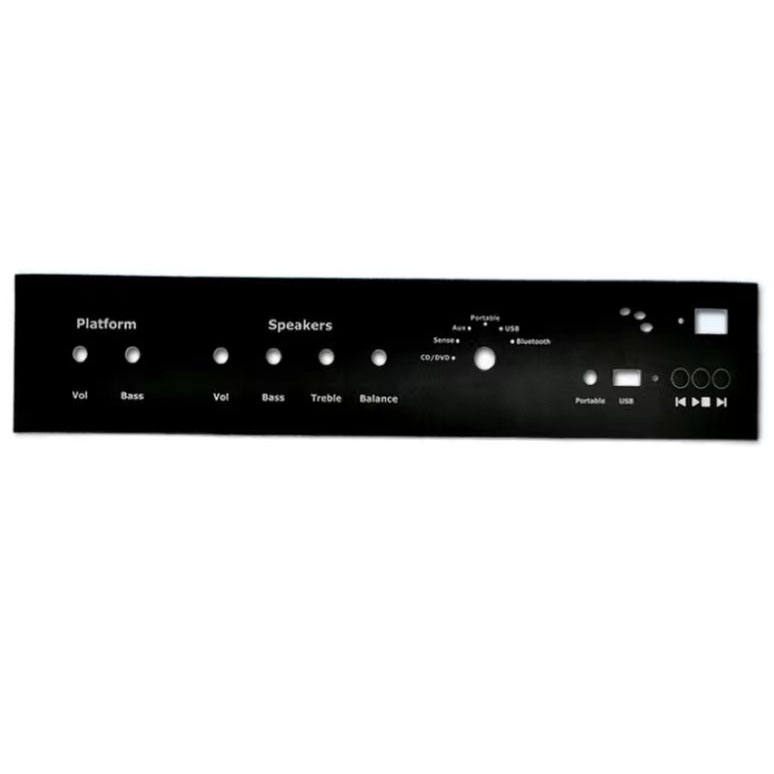
Intelligent Membrane Switch Panel, Washing Machine Touch Panel
- Environment: High Humidity / Waterproof
- Circuit Architecture: Double-Sided Polyimide
- Surface Hardness: 3H - 4H Pencil Hardness
- Chemical Proof: Detergent & UV Stable
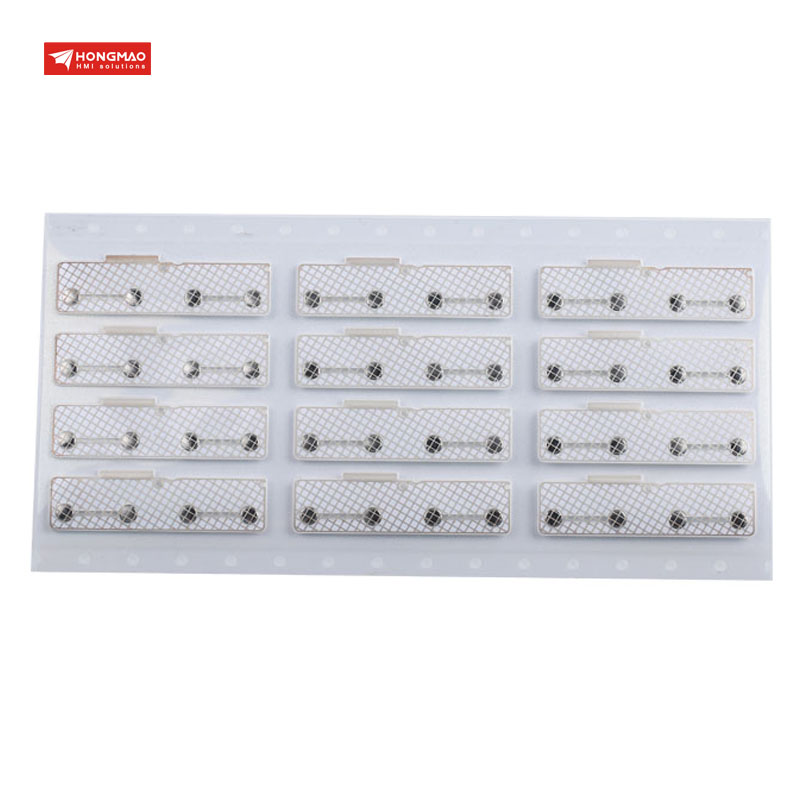
Double-Sided SUS301 Stainless Steel EMI Metal Dome Array
- Metal Alloy: SUS301 Japanese Steel
- Plating Options: Nickel / Flash Gold
- EMI Shielding: Printed Carbon / Copper Foil
- Click Ratio: 55% - 65% Tactile Feel
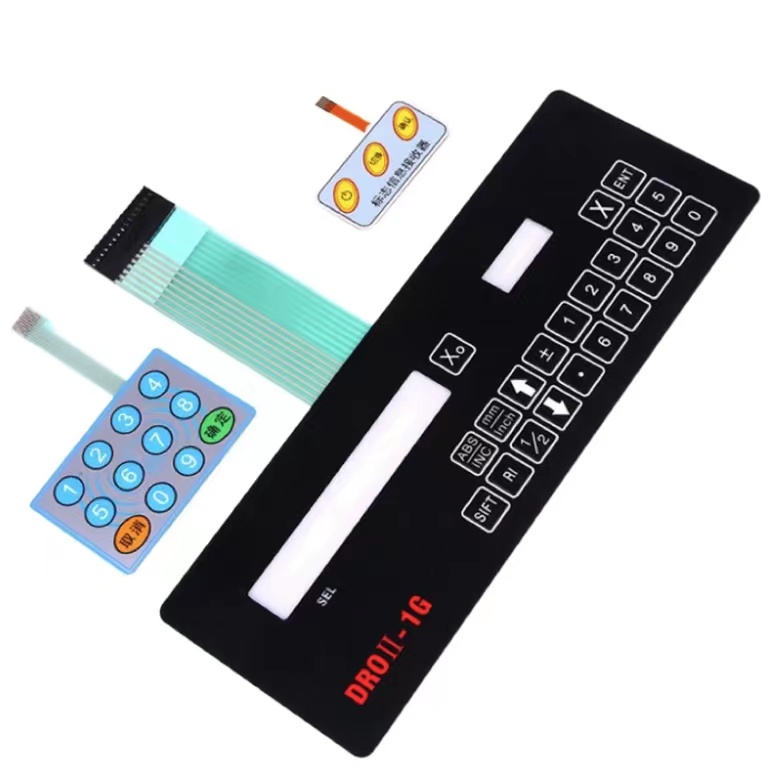
Factory Direct Graphic Overlay Custom Membrane Keyboard Switch
- Color Fidelity: Pantone / RAL Precision Match
- Thickness Range: 0.125mm - 0.25mm Film
- Adhesive Bond: High Shear Peel Strength
- Inspection: 100% CCD Automated Check
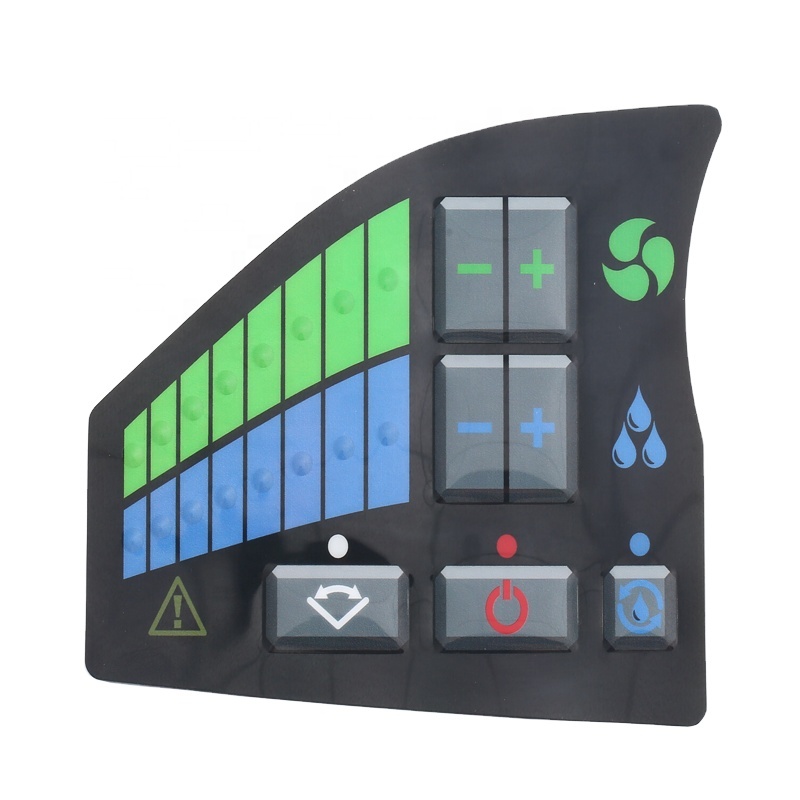
Custom Silk Printing Embossed Metal Dome Tactile Buttons Control Overlay
- Printing Tech: Multi-Color Silk Screen
- Dome Geometry: 4-Leg Cross / Circular Snap
- Tactile Feedback: Crisp Ergonomic Click
- Thermal Range: -40°C to +85°C Functional
Micro-Dot Optical Refraction: The Physics Behind Cevra LGF Technology
Why modern hardware design teams are abandoning hot-spot-prone direct backlighting in favor of ultra-thin Light Guide Films for rugged human-machine interfaces.
Understanding Total Internal Reflection (TIR) & Dot Gradient Pitch
Light Guide Film (LGF) is an ultra-thin (0.125mm to 0.250mm) optical-grade polycarbonate (PC) or polymethyl methacrylate (PMMA) elastomeric film engineered to redirect light emitted from side-firing surface-mount (SMT) LEDs across a planar surface. Rather than requiring bulky diffusers or arrays of power-hungry discrete LEDs directly under every keycap, an LGF system uses Total Internal Reflection (TIR) according to Snell's Law.
To disrupt the internal reflection and extract light perpendicularly toward the user, Cevra executes proprietary high-density micro-optical laser micro-grooving or optical-ink dot patterns. By calculating a mathematically variable dot gradient pitch—where dots are spaced wider near the light source and grouped tighter as distance increases—our engineers achieve over 85% luminous uniformity across complex graphic overlays with zero illumination fall-off.
Mechanical Advantage: Solving Travel, Tactility, and Space Constraints
Traditional backlighting solutions—such as electroluminescent (EL) foils or fiber-optic weaves—suffer from distinct mechanical flaws. Electroluminescent panels degrade rapidly in tropical heat, losing 50% of their half-life within 3,000 hours, while emitting high-frequency AC inverter hum that interferes with precision sensors. Fiber-optic keypads require high actuation forces that degrade dome snap ratios.
Cevra's LGF modules integrate directly between the graphic overlay and the tactile metal dome array without deadening the tactile feedback. With a thickness often less than 0.2mm, the film allows the user to experience the full, crisp snap of our SUS301 stainless steel domes (trip force 280g to 420g) while reducing device thickness profiles by up to 75%.
| Evaluation Parameter | Cevra Micro-Dot LGF Assembly | Electroluminescent (EL) Panel | Discrete Surface-Mount LEDs | Fiber Optic Woven Panel |
|---|---|---|---|---|
| Typical Thickness | 0.125 mm – 0.250 mm | 0.300 mm – 0.500 mm | 1.200 mm – 2.500 mm | 0.400 mm – 0.800 mm |
| Operational Half-Life | > 50,000 Hours (LED Limited) | 3,000 – 5,000 Hours (Rapid decay) | > 50,000 Hours | > 30,000 Hours |
| Power Consumption | Ultra-Low (2-4 Edge LEDs) | High (Requires AC Inverter) | High (1 LED per key zone) | Moderate (Coupled light source) |
| Tactile Dome Damping | Negligible (< 5% crispness loss) | Noticeable stiffness increase | Requires thick spacer cavities | Severe tactile force dampening |
| Salt Mist & Moisture Durability | Immune (Solid-state hermetic seal) | Porous, vulnerable to humidity | Prone to solder joint corrosion | Delamination under moisture |
| EMI / RFI Generation | Zero (Pure solid-state DC) | Severe (High-frequency AC hum) | Low | Zero |
Mission-Critical Applications in Belize City's Industrial & Coastal Sectors
Belize City sits at the nexus of the Western Caribbean's most aggressive maritime climates. High atmospheric salinity, 90%+ relative humidity, and extreme solar UV indices demand specialized HMI construction.
Marine Navigation & Commercial Fishing Telemetry
Vessels navigating the Belize Barrier Reef, water taxi fleets shuttling between Belize City and San Pedro, and deep-sea fishing trawlers require bridge instrumentation that withstands continuous salt-water spray. Our LGF membrane switches incorporate hermetically sealed IP67/IP68 perimeter gaskets and gold-plated SUS301 metal domes that resist electrolytic corrosion even under prolonged salt fog exposure.
Off-Grid Eco-Resort & Island Energy Interfaces
Belize's luxury private cayes and jungle eco-lodges operate on decentralized solar micro-grids, battery banks, and hybrid inverters. Cevra's LGF switches consume up to 70% less current than traditional backlit interfaces, delivering razor-sharp, uniform night-time illumination without draining critical battery storage reserves during cloudy Caribbean intervals.
Port of Belize Logistics & Freight Crane HMI
At the Port of Belize in Belize City, port handling equipment, gantry consoles, and container tracking devices operate under continuous thermal cycling and heavy vibrational stress. Our metal dome arrays provide decisive tactile feedback that operators can clearly feel through industrial gloves, preventing costly operator input mistakes during 24/7 port loading cycles.
Hospitality Access Control & Smart Villa Panels
Tourism properties across the Belize District demand modern, sleek aesthetic controls for digital locks, automated lighting, and HVAC management. By replacing mechanical pushbuttons with flush, UV-stabilized Autotex PET graphic overlays illuminated by our thin LGF, hospitality hardware developers eliminate insect intrusion and sand ingress while creating luxury visual appeal.
Aquaculture & Agro-Industrial Pumping Telemetry
Surrounding shrimp farms and agricultural facilities in coastal Belize rely on automated aeration pumping controllers and salinity sensors. Our customized washing-machine-grade membrane switch technology ensures that chemical splash, chlorine exposure, and frequent washdowns never compromise electrical circuit integrity or trace conductivity.
UV & Tropical Weatherproofing Upgrades
Central America's UV Index regularly hits 11+. Standard polycarbonate overlays yellow, become brittle, and crack within 12 to 18 months of tropical exposure. Cevra equips all exterior-grade shipments to Belize City with selective UV-cured hardcoats and outdoor-stabilized polyester substrates tested to survive over 2,000 hours of continuous xenon arc exposure without fading or embrittlement.
Emerging HMI Engineering Trends in Belize & the Caribbean Basin
How the convergence of maritime digitalization, renewable micro-grids, and decentralized manufacturing is reshaping interface procurement across Central America.
The Transition to Low-Power Solid-State Human Interfaces
Caribbean off-grid electrification demands radical reduction in idle and operational power consumption. Engineers are phasing out incandescent indicator bulbs and heavy LED backplanes. Cevra's LGF technology reduces human-interface current draw down to 15mA - 30mA for entire multi-key panels, making solar-assisted remote IoT installations feasible and highly reliable.
Sealed Capacitive & Hybrid Tactile Membrane Surfaces
Equipment buyers in Belize City are prioritizing cleanability and zero-penetration enclosures to counter coastal dust, salt deposits, and tropical moisture ingress. The market is shifting from open mechanical switches to hybrid assemblies that combine flush capacitive touch zones with tactile metal dome confirmation for safety-critical stop/start functions.
Direct-from-Source OEM Prototyping & Agility
Hardware innovators and repair operations in Central America traditionally relied on expensive North American distributors who mark up parts by 300%. By partnering directly with Cevra in Dongguan, Belizean businesses access direct engineering reviews (DFM), zero middleman costs, rapid 5-day prototyping, and volume production at factory pricing.
Dongguan Cevra Electronic Technology Co., Ltd.
Established in March 2009 in Dongguan, China. Over 16 years of dedicated manufacturing expertise in custom membrane switches, metal dome arrays, light guide films, and precision die-cut components.
SGS Group Onsite Verified Factory
Our operational capabilities, employee staffing, cleanroom environment, and manufacturing assets are independently verified onsite by SGS Group. International buyers enjoy total transparency and verifiable quality assurance backed by ISO 9001 certified workflows.
Advanced Laboratory Testing Rigor
Every production batch is tested in our Dongguan laboratory using high/low temperature environmental chambers (-40°C to +85°C), computerized metal dome load-displacement testers, tension/peel test benches, holding tack instruments, and pencil hardness testers.
End-to-End Vertical Manufacturing
From precision multi-color screen printing and CCD automated drilling to laser kiss-cutting, automatic laminating, and robotic dome array placement, 100% of processes take place under our roof. This eliminates subcontractor delays and enforces rigorous traceability on every shipment.
Frequently Asked Questions by Belizean Buyers & Engineers
Clear, direct answers regarding logistics, customs tariffs, environmental ratings, prototyping lead times, and engineering specifications for projects destined for Belize City.
How does Cevra ship custom membrane switches and LGF panels to Belize City?
Can you provide low minimum order quantities (MOQ) for prototypes and pilot runs?
How do Cevra LGF membrane switches resist tropical Caribbean salt mist and humidity?
What CAD or engineering design files do we need to provide to start a project?
What is the typical production lead time from drawing sign-off to dispatch?
How does Trade Assurance protect payments and orders for importers in Belize?
Ready to Build Custom Light Guide Film & Membrane Keypads for Belize?
Consult directly with Dongguan Cevra's engineering team. Receive comprehensive DFM analysis, layer stack-up guidance, and an itemized factory-direct quote within 24 business hours.
Inquire Now