Precision HMI & Membrane Interface Assemblies
Explore our core OEM/ODM product portfolio built with automotive-grade tolerances, superior tactile snap ratios, and environmental resistance.
Engineering PVC & Polymer Substrates in Membrane HMI Switch Design
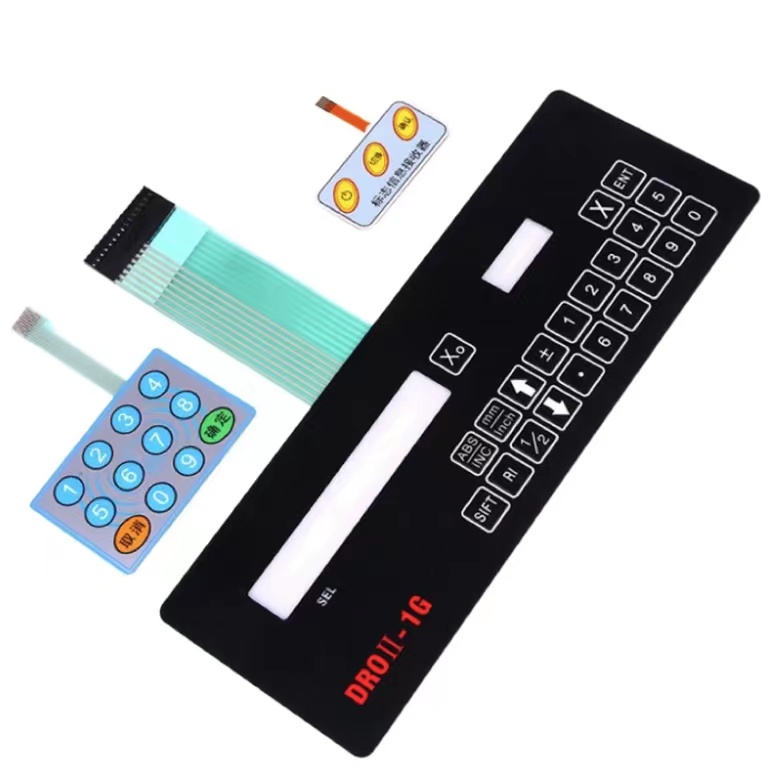
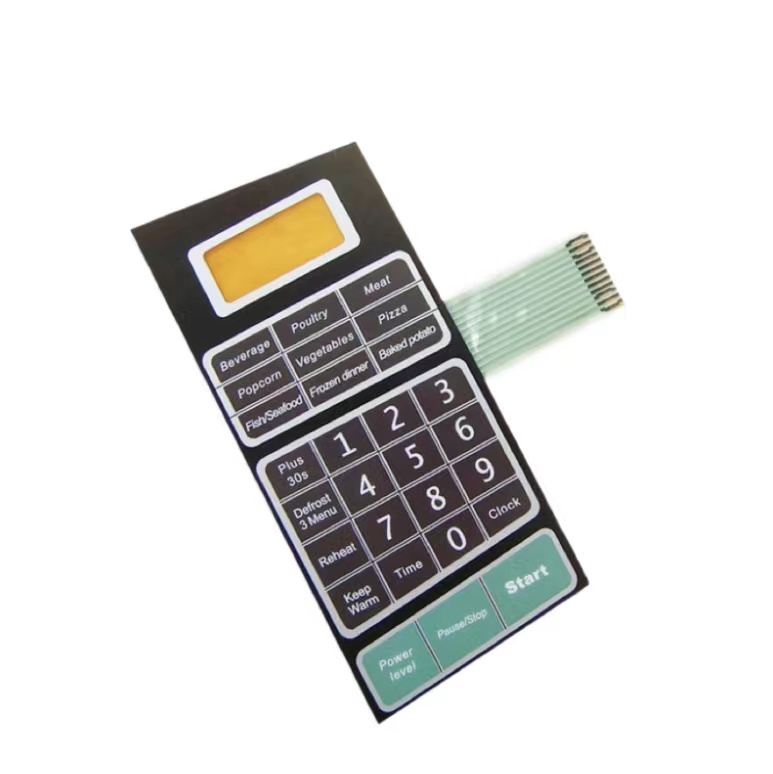
Modern industrial human-machine interfaces require a meticulous balance between tactile ergonomics, environmental endurance, dielectric isolation, and structural cost-efficiency. While Polyester (PET) and Polycarbonate (PC) remain predominant across aerospace and medical sectors, specialized Polyvinyl Chloride (PVC) formulations continue to occupy a vital, high-efficiency role in global electronic manufacturing. When selected and stabilized correctly with polymeric plasticizers and UV-inhibiting stabilizers, PVC provides unmatched printability, thermoforming versatility, flame-retardant self-extinguishing properties (UL94 V-0 or VTM-0 ratings), and extraordinary resistance to aggressive industrial solvents, acidic fumes, and alcohol-based sterilization washdowns.
PVC Graphic Layer Dynamics
Offers superb dimensional stability under moderate thermal environments (-10°C to +60°C), cost-effective screen and digital UV printing ink adherence, and inherent resistance to chlorinated cleaners, petroleum derivatives, and chemical splatters. Available in velvet, anti-glare matte, and optical gloss finishes.
Conductive Circuit Routing
Utilizes ultra-refined micro-particle conductive silver paste backed by abrasion-resistant graphite carbon bridges. Circuit tracks are printed within class 100,000 cleanrooms and cured via infrared thermal tunnels to eliminate silver electromigration risks under electrical potentials up to 50V DC.
Tactile Snap Dome Architecture
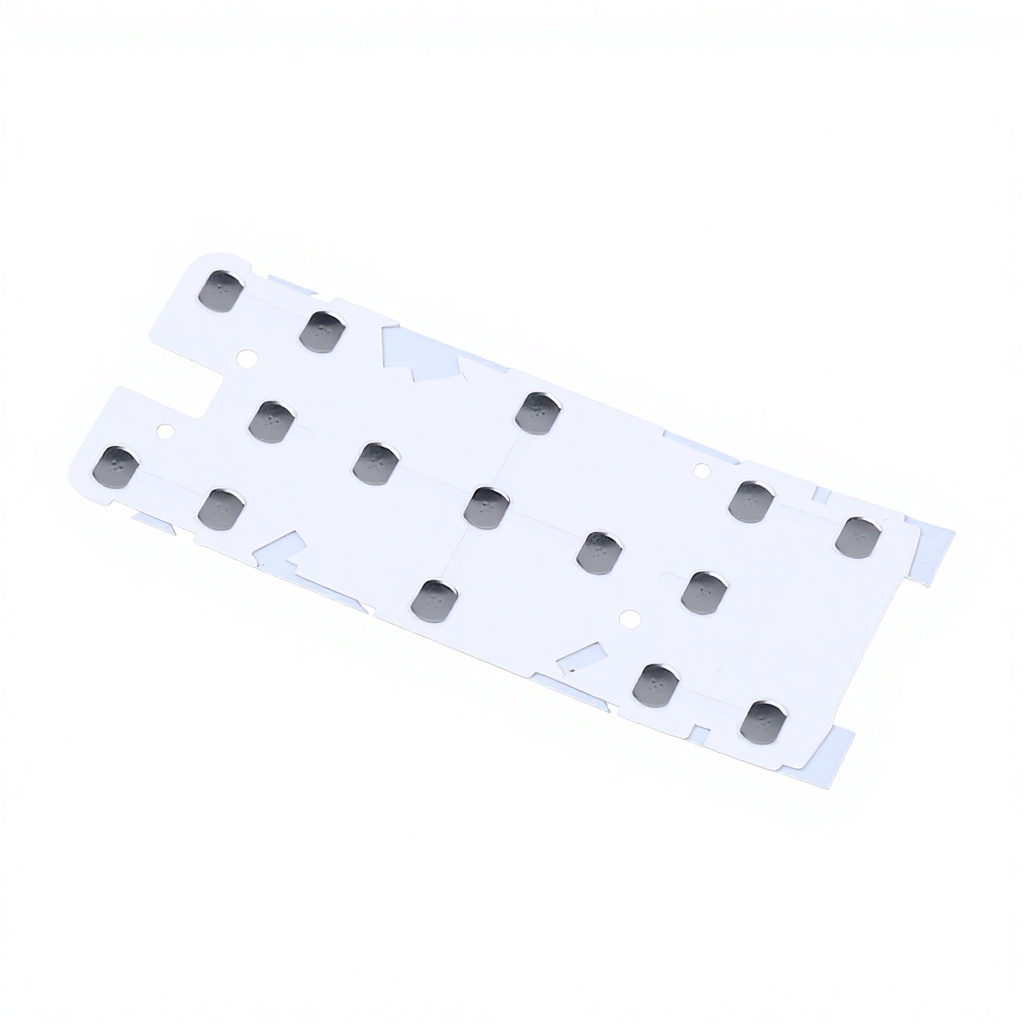
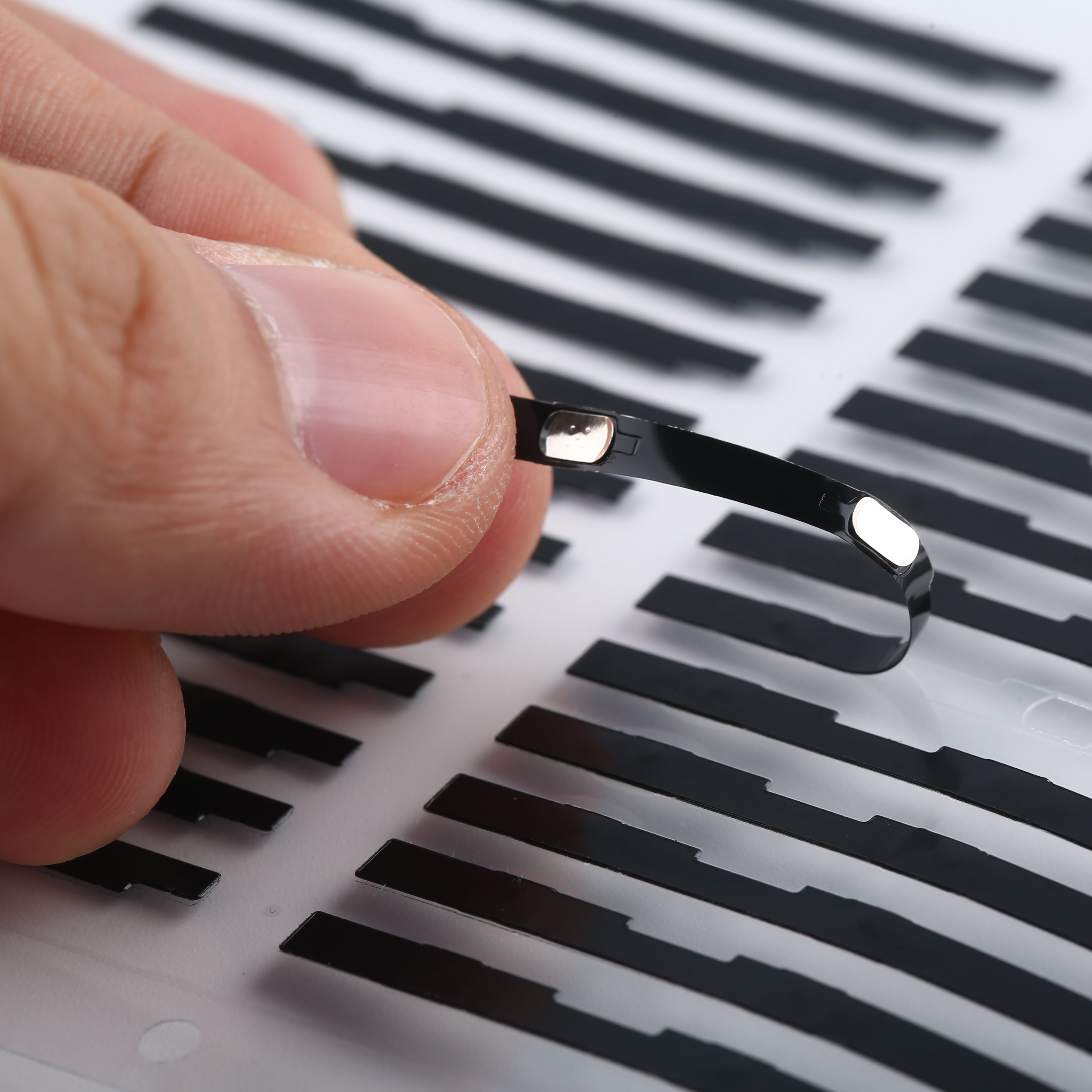
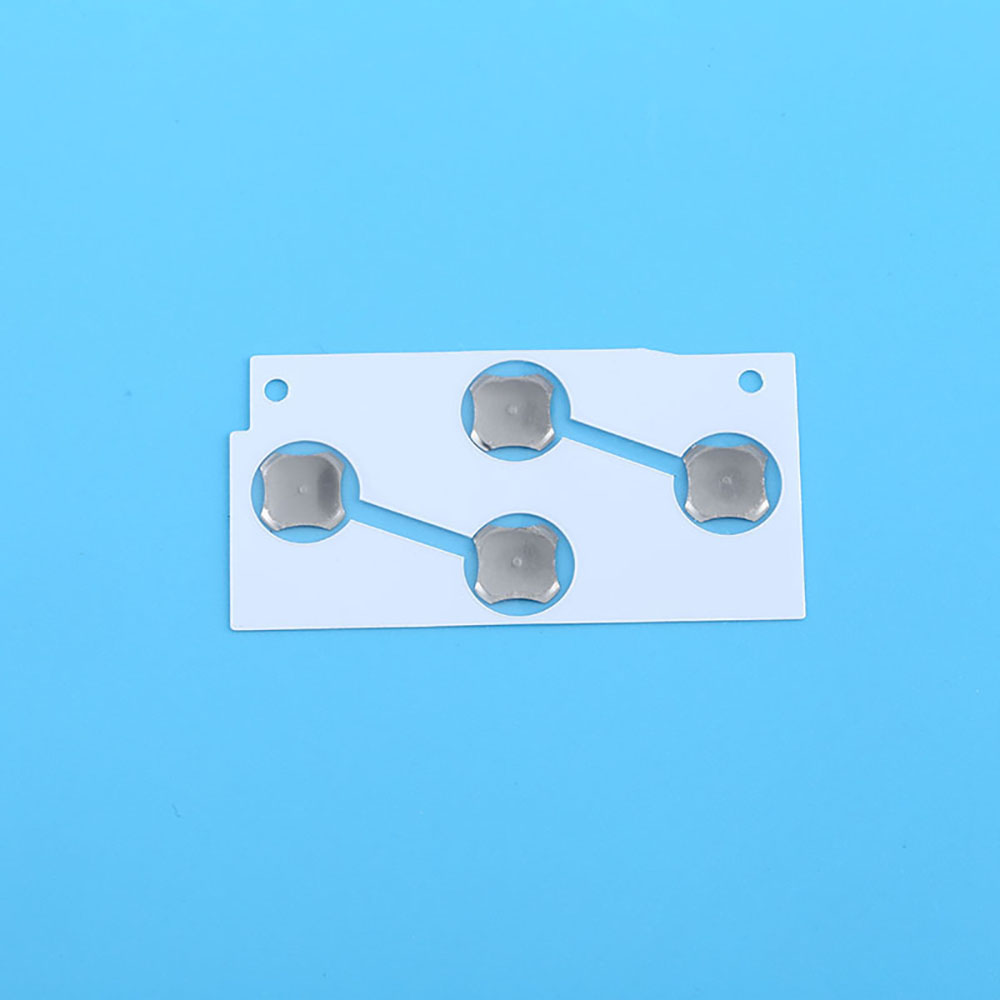
Integration of SUS301 high-yield stainless steel snap domes (4-leg cross, round, or triangular with concentric dimples). Engineered snap ratios ranging between 40% and 65% guarantee crisp sensory confirmation for operators wearing industrial or medical protective gloves.
| Layer Index | Functional Component | Standard Material & Thickness | Primary Engineering Function |
|---|---|---|---|
| Layer 1 | Graphic Overlay | PVC / Autotype PET / Lexan PC (0.125 – 0.25mm) | Aesthetic user faceplate, UV protection, selective textures, dead-front window filtering. |
| Layer 2 | Overlay Adhesive | 3M 467MP / 3M 468MP High-Performance Acrylic | Laminates graphic faceplate to underlying spacer; zero outgassing, high shear bond. |
| Layer 3 | Dome Retainer / Spacer | Hydrophobic PET film + Double-Coated Adhesive | Encloses tactile domes, isolates key switch chambers, includes air venting micro-channels. |
| Layer 4 | Tactile Metal Dome Array | SUS301 Stainless Steel (Nickel/Gold Flash) | Mechanical feedback spring contact; momentary electrical short circuiting upon deflection. |
| Layer 5 | Circuit Traces (Upper/Lower) | Silver Printed PET or Copper Polyimide FPC | Directs electrical control signals to connector tails; insulation impedance > 100MΩ @ 100V DC. |
| Layer 6 | Rear Mounting Adhesive | 3M 9448A / 3M 300LSE / Foam Cushion Adhesive | Hermetic bonding to host casting, aluminum extrusion, ABS housing, or steel chassis. |
Why Tier-1 Global Procurement Teams Partner with Dongguan Cevra
Operating since March 2009, Dongguan Cevra Electronic Technology Co., Ltd. has established an integrated, single-roof manufacturing ecosystem audited on-site by SGS Group and certified to ISO 9001:2015 quality standards.
SGS Onsite Audited
Direct third-party verification of manufacturing floor, engineering headcount, CNC precision machinery, cleanroom disciplines, and supply chain governance.
Automated Screen Printing
Equipped with CCD automated optical target-positioning screen printing presses ensuring layer-to-layer overlay alignment within tight ±0.05mm thresholds.
Comprehensive Test Lab
In-house computerized dome load-deflection curve testers, 180° peel adhesion testers, electric pencil surface hardness gauges, and holding tack analyzers.
Environmental Reliability
Thermal shock cabinets (-40°C to +85°C) and cyclic damp heat chambers (85°C / 85% RH) ensure zero delamination or silver trace oxidation in field duty.
Future Procurement Trends in Membrane Switch & HMI Manufacturing (2025–2030)
The global industrial human-machine interface landscape is undergoing rapid technological divergence. As hardware architects demand sleeker profiles, enhanced ingress protection, and capacitive touch integration, procurement professionals must anticipate several defining macroeconomic and engineering transitions:
1. Convergence of Tactile & Capacitive Touch
OEMs increasingly specify hybrid human-machine interfaces where safety-critical commands (Emergency Stop, Power, Primary Valve) utilize physical tactile metal snap domes, while secondary menu navigation is managed via capacitive touch sensor film switches laminated under a seamless, waterproof PVC or PET glass-like bezel.
2. Advanced Backlighting: LGF & Micro-LEDs
Bulky, power-hungry incandescent and EL (electroluminescent) backlights have been replaced by ultra-thin Light Guide Films (LGF) powered by side-firing surface-mount micro-LEDs (0603 and 0402 packages). LGF ensures ultra-uniform graphic illumination with zero light bleed and a profile under 0.8mm total thickness.
3. Ultra-Harsh Ingress Sealing (IP67 / NEMA 4X)
Industrial fuel dispensers, marine consoles, and agricultural equipment require continuous operation exposed to solar UV, direct power-hose washdowns, and petrochemical vapors. Procurement trends focus on perimeter silicone gas-tight gaskets and modified 3M 300LSE low-surface-energy adhesive systems.
Furthermore, ESG (Environmental, Social, and Governance) compliance is tightening across Europe and North America. Suppliers must provide full compositional documentation under EU RoHS 2011/65/EU, REACH SVHC declarations, and Halogen-Free certifications. Dongguan Cevra's continuous audit protocols guarantee full trace-element compliance for all raw films, acrylic adhesives, conductive pastes, and electroplated stainless steel alloys.
Frequently Asked Questions by Industrial Sourcing Managers
Clear, unvarnished technical answers directly from our senior DFM (Design for Manufacturability) engineers.
What specific CAD/design files and technical parameters are required to generate an accurate DFM quote?
- Vector Artwork: Adobe Illustrator (.AI), CorelDRAW (.CDR), or Vector .PDF detailing visual graphics, fonts converted to outlines, Pantone PMS or RAL color callouts, and dead-front or LED window transparencies.
- Mechanical CAD: 2D mechanical outlines in AutoCAD (.DXF or .DWG) specifying overall dimensions, cutouts, tail pitch (e.g., 2.54mm or 1.0mm), tail length, and embossing boundaries.
- Circuit Schematic: Netlist, pinout assignment, matrix configuration (e.g., 4x4, 3x3) or common-bus schematic, LED forward voltages/currents, and connector termination types (e.g., Nicomatic, Amphenol FCI clincher, or standard female housing).
- Operating Environment: Expected operating temperatures, IP rating requirements, chemical contact risks, and actuation lifecycle expectations.
When should an engineer specify PVC versus Polyester (PET) or Polycarbonate (PC) for the graphic overlay?
- Polyester (PET): Unsurpassed flexural endurance (>5 million switch actuations without micro-cracking), exceptional resistance to harsh industrial solvents (acetone, MEK, gasoline), and outstanding elevated thermal resistance up to +105°C. Best suited for high-usage tactile keypads and medical diagnostic devices.
- Polycarbonate (PC): Exceptional optical clarity for display windows, high dimensional stability, ease of thermoforming/embossing, and high impact resistance. However, it is vulnerable to aromatic hydrocarbons and repeated high-cycle button flexing.
- Polyvinyl Chloride (PVC): Excellent cost-efficiency for mass-market consumer electronics, flat instructional panels, instrument faceplates, and non-actuated signage overlays. PVC offers natural flame retardancy (UL94 self-extinguishing), superb resistance to moisture, salts, and mild acids, but is restricted to flatter profiles with lower cycle counts or assemblies where tactile metal domes bear the mechanical displacement.
How does Cevra eliminate silver electromigration and open-circuit degradation in high-humidity applications?
- Over-Coating with Carbon Paste: All inter-key silver conductors and tactile contact pads receive a complete graphite/carbon paste print overcoat, providing an inert barrier against electrolytic electrochemical migration.
- Hydrophobic Dielectric Encapsulation: Dual-layer ultraviolet-cured dielectric insulation masks are printed over all non-contact traces, completely sealing circuits from ambient moisture.
- Breathing Vent Micro-Channels: Vent paths are strategically routed internally between sealed switch cavities rather than vented to the exterior atmosphere, preventing humid outside air or washdown chemicals from entering the dome switch pockets.
What tactile metal dome geometries and plating options are manufactured in-house?
- 4-Leg Cross Domes: Dimensions from 6.0mm to 20.0mm; trip forces from 160g to 500g. Excellent self-alignment, ideal for PCB direct-mounting or dome retainer arrays.
- Round & Dimpled Domes: Diameters from 4.0mm to 12.0mm. Provide clean tactile travel in tight dimensional envelopes, such as remote controls, hearing aids, and wearable military gear.
- Triangular Snap Domes: Optimized for ultra-compact layouts requiring high actuation force in minimal spatial areas.
- Plating Choices: Standard bright nickel electroplating for general consumer switches, or gold flash plating (0.03–0.1μm) for low-voltage, low-current signals (<10mA, <5V DC) requiring ultra-low contact resistance (<0.1 Ω).
How does the factory verify batch-to-batch quality and dimensional conformance?
- Incoming Material Inspection (IQC): Thickness micrometer checks, raw PET surface dyne level tension testing, and adhesive release-liner peel resistance verification.
- In-Process Control (IPQC): High-resolution CCD automated optical inspection (AOI) to detect trace voids, printing pinholes, trace spacing violations, or pitch deviations.
- Laboratory Mechanical Testing: Computerized dome load testers measure peak force (F1), switch point (Fs), and return force (F2) to verify snap ratio consistency. Surface hardness is tested with automated pencil scratch instruments up to 3H/4H ratings.
- 100% Outgoing Electrical Inspection (OQC): Automated circuit continuity testing checks for open circuits, high trace resistances, pin-to-pin short circuits, and dielectric insulation resistance at 100V DC (>100 MΩ standard).
What are the typical Minimum Order Quantities (MOQ) and production lead times?
- Rapid Prototyping: 10 to 50 units for functional validation, with turnaround in as few as 3 to 7 business days following DFM approval.
- Standard Production Runs: Pilot runs start at 100 to 500 units; full-scale mass production orders typically range between 1,000 and 100,000+ units.
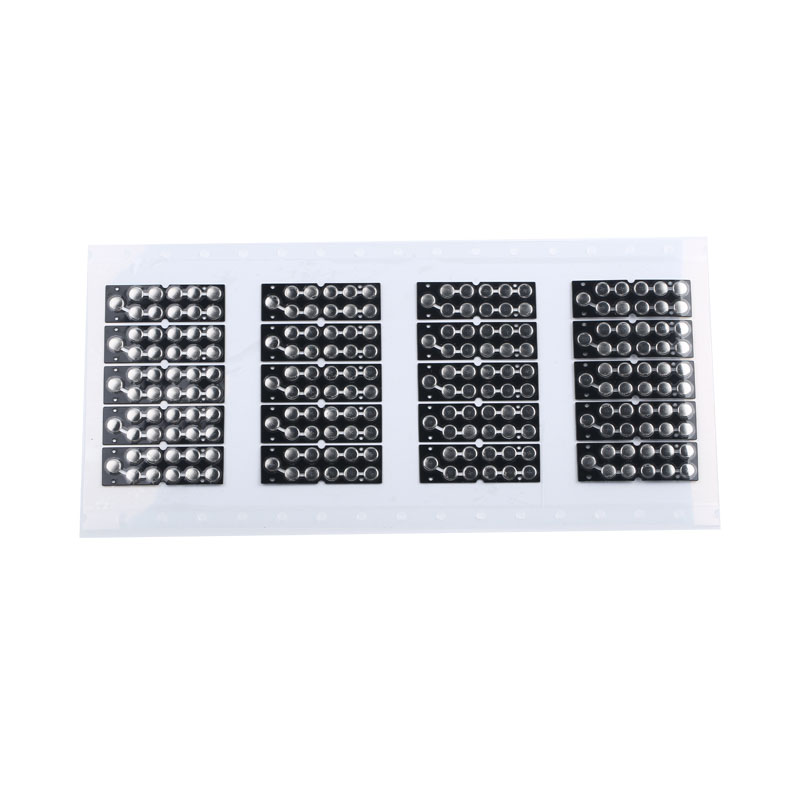
- Discrete Metal Domes & Tape Arrays: Standard catalog dome arrays start at an MOQ of 1,000 units on automated reels or sheets.
What adhesive transfer systems are recommended for low surface energy (LSE) plastic bezels?
- 3M 467MP / 468MP: Industry benchmark for smooth metal surfaces and high-surface-energy plastics; extreme shear strength and solvent resistance.
- 3M 300LSE / 9471LE: Specially developed for low surface energy (LSE) plastics, powder-coated finishes, and textured enclosures; eliminates the need for aggressive solvent-based chemical primers.
- 3M VHB Series / Closed-Cell Acrylic Foam: Employed when the membrane switch must span structural gaps, absorb severe mechanical vibration, or establish an IP67 gas-tight perimeter seal against rough die-cast bezels.
Initiate Your Custom HMI Engineering Project Today
Send your 2D/3D CAD drawings, schematic layouts, or environmental specifications to Dongguan Cevra's engineering team. Receive professional DFM feedback, stackup optimization, and a detailed price quotation within 24 hours.