Tactile Array Systems
Engineered to withstand rigorous mechanical cycling, aggressive cleaning reagents, and harsh ambient operating temperatures across medical, industrial automation, instrumentation, and consumer electronics.

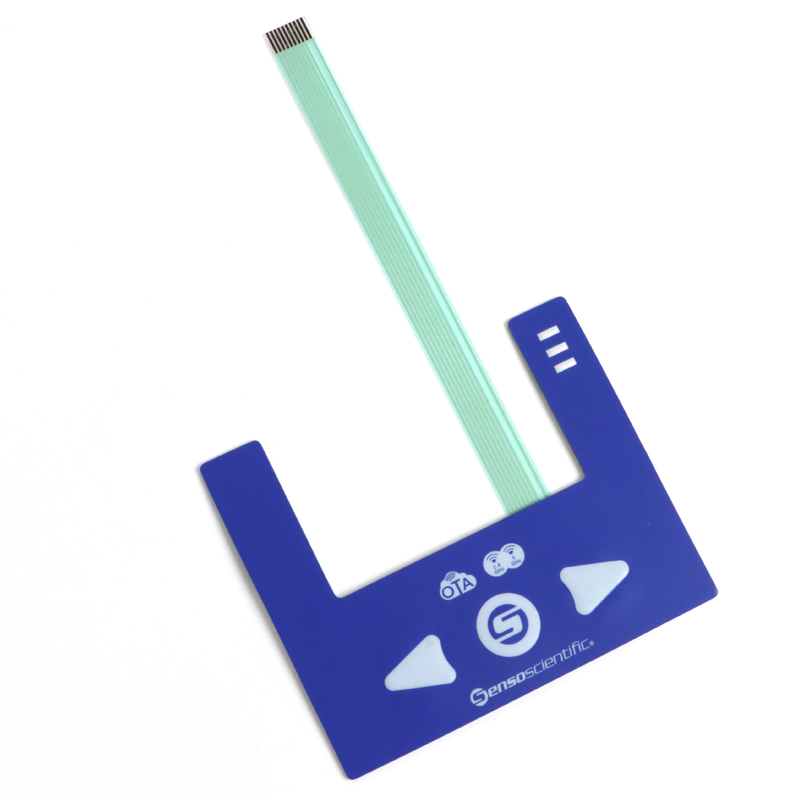
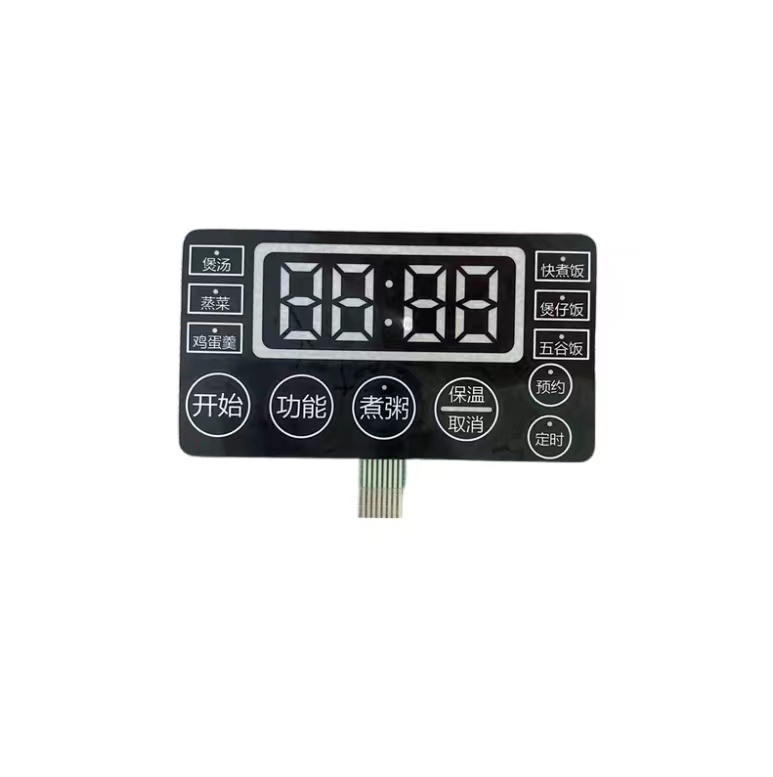
Founded in March 2009, Dongguan Cevra Electronic Technology Co., Ltd. operates a vertically integrated 2,600㎡ manufacturing complex engineered for extreme precision, repeatable batch quality, and complete intellectual property security.
Eliminating broker overheads and third-party production variability. Our Dongguan facility houses every manufacturing phase: silk-screen printing, precision laser etching, high-tonnage die punching, automated layer lamination, and CCD micro-drilling.
Certified under the ISO 9001 quality management architecture and independently audited onsite by SGS Group. Every custom graphic overlay and tactile array batch undergoes stringent mechanical, electrical, and chemical endurance protocols.
From schematic review to full production ramp, our senior CAD engineering team offers comprehensive Design for Manufacturability (DFM) support. We optimize layer stack-ups, venting geometry, tactile dome actuation, and adhesive selection.
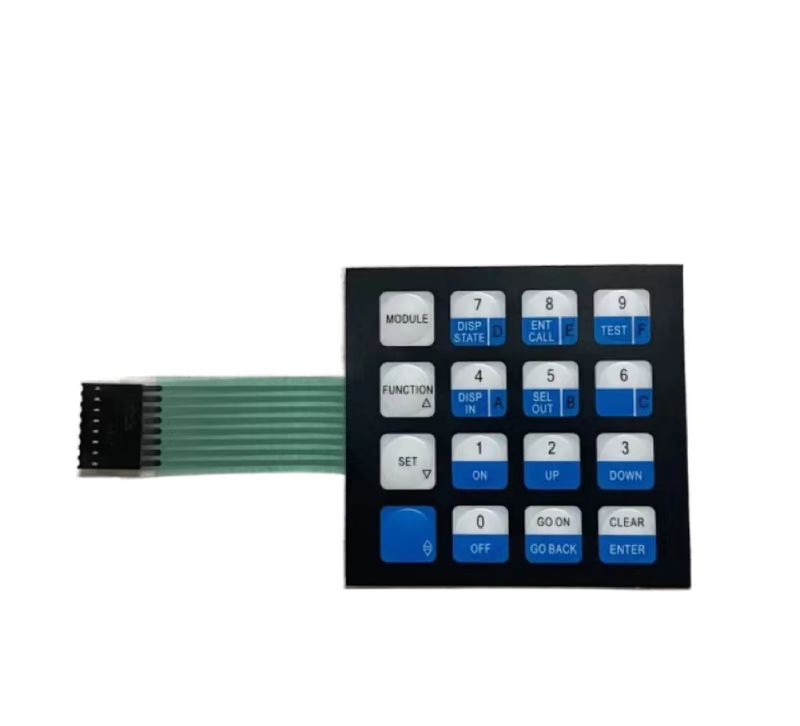
In harsh operating environments—such as hospital operating rooms, petrochemical refineries, marine helm consoles, and high-vibration manufacturing floors—surface-printed graphics rapidly deteriorate under mechanical abrasion and aggressive solvents. At Cevra, our custom graphic overlays utilize an inverted subsurface printing process (second-surface printing). High-opacity solvent and UV-curable inks are deposited onto the backside of optically transparent, engineered polymer films (Autotype Autotex Polyester or SABIC Lexan Polycarbonate).
Because the polymer substrate acts as an impervious optical shield, the graphics, icons, brand legends, and dead-front indicators remain fully isolated from external friction, alcohol sanitizers, industrial grease, hydraulic fluids, and ultraviolet photodegradation. The graphic layer is subsequently bonded to industrial-grade pressure-sensitive acrylic adhesives (such as genuine 3M 467MP, 468MP, or 300LSE series), creating an unbroken seal meeting IP65, IP67, or NEMA 4X industrial containment criteria.
Selecting the appropriate faceplate polymer dictates flexural life, thermal operating window, chemical resistance, and optical display clarity.
| Performance Parameter | Autotype Autotex PET (Polyester) | SABIC Lexan PC (Polycarbonate) | Optical PMMA (Cast Acrylic) | Engineering Selection Rule |
|---|---|---|---|---|
| Actuation Fatigue Life | > 5,000,000 switch cycles | ~ 100,000 to 200,000 cycles | Rigid (Non-actuating only) | PET is mandatory for embossed moving tactile keys |
| Chemical & Solvent Resistance | Superior (MEK, IPA, Bleach) | Moderate (Prone to aromatic cracking) | Good (Resistant to weak acids/bases) | PET for medical sanitation & petroleum exposure |
| Optical Window Clarity | Good (Light haze in textured films) | Excellent (Near water-clear) | Superior (92% Light transmission) | PC or Acrylic for high-clarity LCD/OLED readouts |
| Pencil Scratch Hardness | Up to 3H (Hardcoated variant) | HB to 1H (Unless hardcoated) | 2H to 4H depending on grade | Specify hardcoated finishes for high-abrasion consoles |
| Thermal Operating Window | -40°C to +120°C continuous | -30°C to +85°C continuous | -20°C to +75°C continuous | Polyester provides higher dimensional thermal stability |
| Embossing Capability | Requires matched metal heated tooling | Easily cold/hot formed, sharp radius | Cannot be embossed | PC accommodates complex relief contours easily |
Elevate user ergonomics through targeted tactile embossing. Rim embossing forms an accurate tactile border around actuation zones, whereas pillow embossing raises the entire key surface to provide immediate finger location for blind-operation equipment.
Employing semi-translucent smoke-tinted inks behind the graphic layer. Icons remain invisible in standby mode and illuminate crisply only when targeted back-mounted SMD LEDs or light guide films (LGF) are powered, providing clean modern cockpit interfaces.
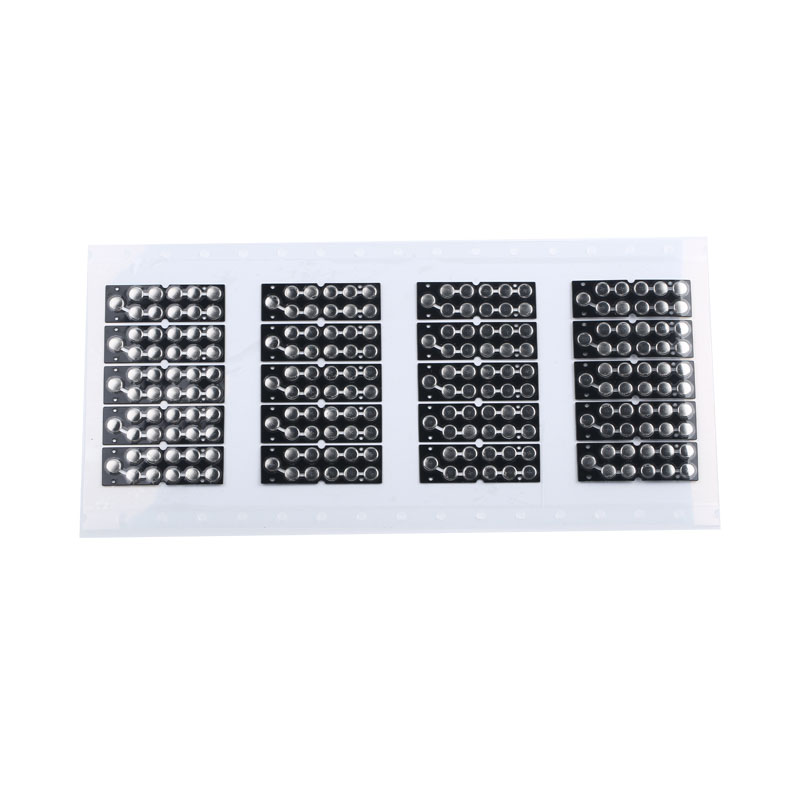
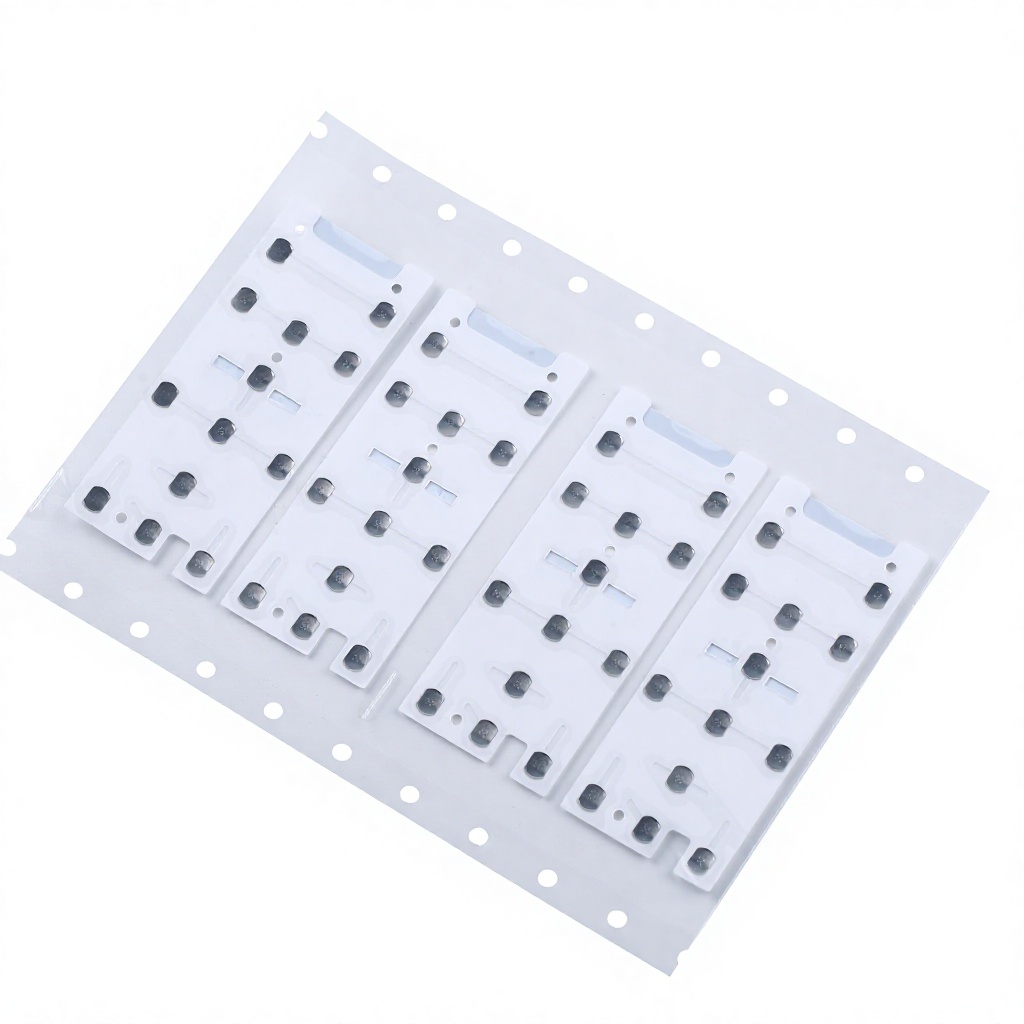
Precision die-cut adhesive spacers utilize genuine 3M materials. We specify 3M 467MP for smooth stamped aluminum, 3M 468MP for textured cast alloys, and 3M 300LSE for challenging Low Surface Energy (LSE) polymers such as polypropylene and powder coatings.
Global electronics original equipment manufacturers are pivoting toward seamless hygiene, combined capacitive-tactile feedback, and optimized total cost of acquisition.
Post-pandemic regulations across medical diagnostic equipment, dental controls, and public kiosks require silver-ion antimicrobial films compliant with ISO 22196. These coatings inhibit 99.9% of bacterial colonization and withstand daily washdowns with quaternary ammonium compounds and hospital-grade sodium hypochlorite.
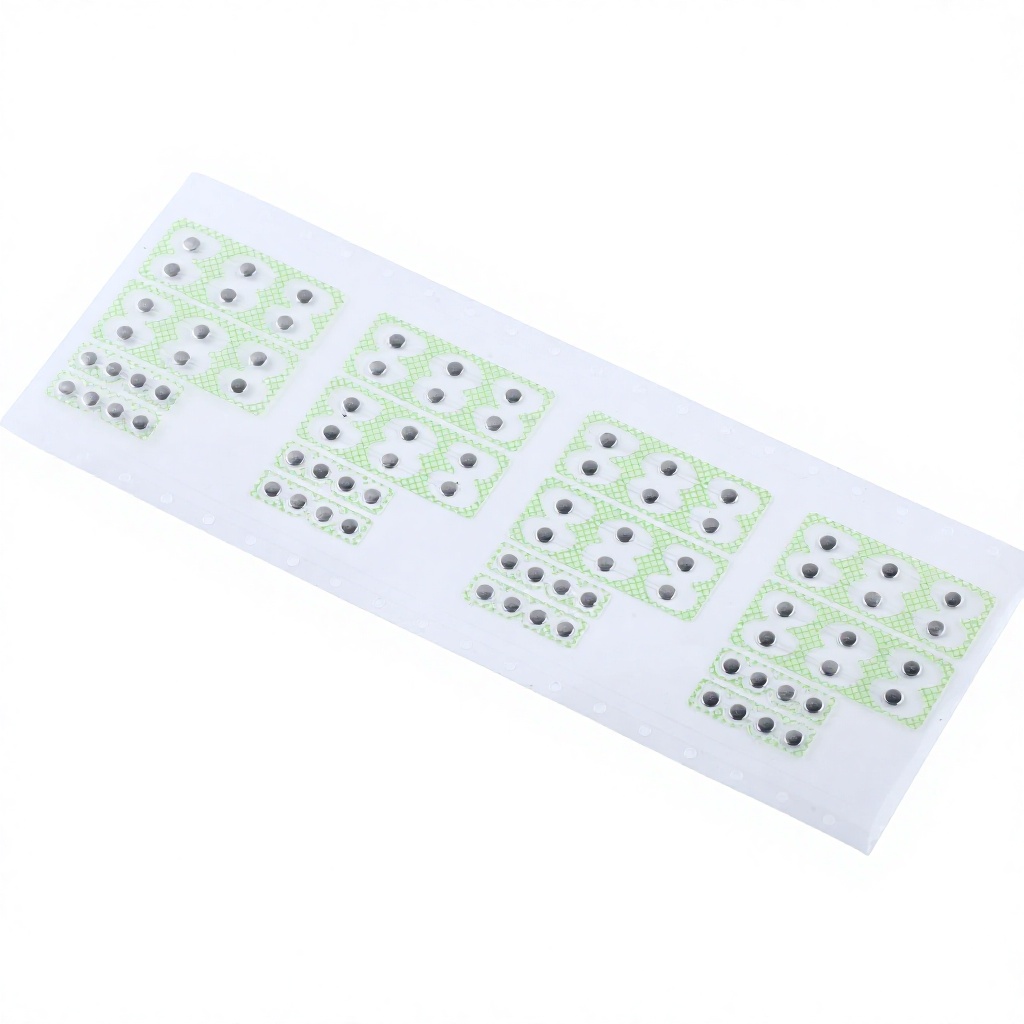
Procurement teams are shifting away from standalone mechanical switches toward hybrid architectures. Designers overlay capacitive slider sensing circuits directly onto printed silver or copper flex layers beneath an unbroken graphic panel, combining zero-crevice aesthetics with the tactile click of stainless steel metal snap domes.
Conventional bulky LED arrays suffer from hotspotting and high power drain. Future-proof graphic overlay designs incorporate micro-etched optical light guide films (0.125mm to 0.25mm) that side-couple light from 2–4 side-firing SMD LEDs, spreading uniform luminance across complex key arrays and brand logos with minimal profile depth.
Experienced sourcing managers recognize that the unit piece price of a graphic overlay represents only a fraction of its true cost. Premature delamination, ink flaking, or high electrical contact resistance on unverified parts can halt an OEM assembly line or cause field service recalls costing hundreds of thousands of dollars.
By partnering directly with an audited Chinese manufacturer possessing ISO 9001 certified in-house laboratories, overseas procurement teams secure volume pricing while guaranteeing traceable material certificates (such as raw batch RoHS, REACH, UL94 flammability ratings, and genuine 3M adhesive documentation). Standardizing on common dome footprints (e.g., 8.4mm, 10mm, 12mm 4-legged cross domes) further shortens prototyping tooling lead times down to under one week.
Every custom graphic overlay order traverses a rigorous seven-stage quality pipeline inside our Dongguan facility, ensuring zero mechanical deviation.
CAD engineers examine vector layouts (AI, DXF, Gerber), confirming minimal trace clearances, venting relief routes, and bleed tolerances before committing to tooling.
Multi-color printing in a Class 10,000 cleanroom using automated screen printers. Every ink layer is heat-cured or UV-polymerized for maximum cross-linked adhesion.
Hardened CNC-machined steel male/female dies form uniform tactile keys, rim contours, or LED indicator windows with repeatable height profiles (±0.05mm).
Laser cutting tables and automated punch presses trim internal display apertures, connector exit tail slots, and perimeter outlines with microscopic edge accuracy.
Graphic skins, 3M pressure-sensitive adhesives, selective air-vent spacers, and dome arrays are laminated under pneumatic roller pressure to eradicate micro-bubbles.
Optical alignment cameras drill locating guide holes. 100% electrical continuity, insulation resistance, and tactile force actuation are verified on automated rigs.
Anti-static protective release liners protect both sides. Overlays are shrink-vacuumed with desiccant in reinforced corrugated cartons for safe air/sea shipping.
Each batch is cataloged with inspection sheets, adhesive lot codes, spectrophotometer delta-E records, and retention samples archived for repeat production runs.
Actionable technical guidance to accelerate your custom graphic overlay and membrane switch procurement lifecycle.
To provide an accurate quotation and DFM assessment, we recommend providing vector graphic artwork in Adobe Illustrator (.AI), CorelDRAW (.CDR), or Vector .PDF with text converted to curves. Mechanical layer profiles, adhesive die-cut cutouts, and embossing outlines should be provided in CAD formats (.DXF or .DWG). Please specify target Pantone Formula Guide (Solid Coated) or RAL color codes, required surface finish (velvet, matte, glossy), and environmental exposure parameters.
Waterproof sealing is attained through continuous perimeter gasket adhesive die-cuts that surround the active switch cavity. We utilize closed-cell acrylic foam tapes or specialized high-cohesion 3M transfer adhesives (such as 3M 468MP or 3M 300LSE). Furthermore, internal venting channels are routed through internal tail conduits toward dry enclosure interiors, preventing external moisture ingression during ambient pressure and temperature swings.
SUS301 stainless steel metal snap domes (such as 4-legged cross domes or round domes with gold/nickel plating) offer an actuation lifespan exceeding 1,000,000 to 5,000,000 operational cycles with crisp mechanical snap and high tactile ratios (>45%). Polydomes (embossed polyester blister switches with silver conductive contacts) deliver roughly 100,000 to 500,000 cycles with a softer, silent tactile actuation.
Yes. We apply selectively printed transparent or tinted optical inks behind the substrate. Clear windows are engineered with anti-glare or glossy finishes for 7-segment, OLED, and TFT LCD screens. Dead-front windows use calibrated optical density inks that completely conceal hidden warning icons until back-mounted LEDs illuminate the specific zone.
We support low-volume high-mix (HMLV) engineering programs. Prototyping quantities for graphic overlays start at just 10 to 50 pieces, while full custom membrane switch assemblies typically start at 100 pieces. Rapid laser-cut, digitally printed prototypes can be delivered in 3 to 5 business days, with hard-tooled mass production shipments completed in 10 to 14 days.
We integrate dedicated conductive shielding layers directly into the membrane switch stack-up. Options include screen-printed conductive carbon or silver grids, aluminum foil barriers, or vapor-deposited ITO conductive polyester films grounded directly via a connector pin or chassis tab, successfully shunting ESD strikes up to 15kV away from sensitive host electronics.
Connect directly with Cevra's technical team in Dongguan. Submit your CAD drawings, key legends, or environmental specifications to receive comprehensive DFM review, stack-up optimization, and an itemized factory quotation within 24 hours.