16+
Years of Manufacturing Precision
2,600㎡
ISO 9001 Factory Infrastructure
100%
Circuit & Dome Actuation Audited
SGS
Onsite Audited & Tier-1 Global Exporter
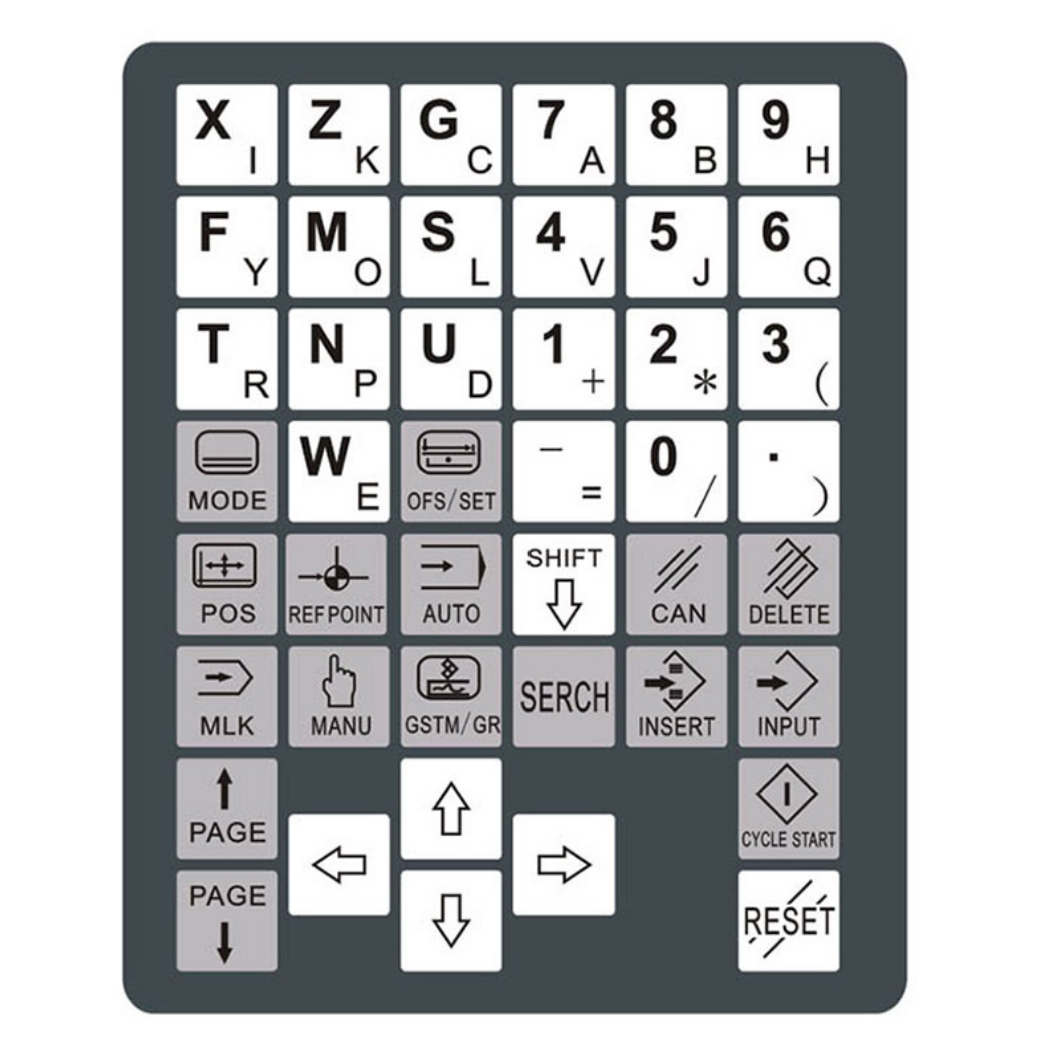
Factory-Direct Catalog
Engineered Industrial Membrane Switches & Switch Components
Configured for extreme duty cycles, ingress safety, and crisp tactile actuation across severe industrial settings.

White Paper & Engineering Insights
Engineering Specifications, Layer Topologies & Material Science
A rigorous review of structural stack-up, mechanical dynamics, and material endurance for mission-critical interfaces.
An industrial membrane switch is not merely a visual fascia; it is a meticulously layered, electro-mechanical human-machine interface designed to operate flawlessly under conditions where electromechanical toggle switches and commercial touchscreens degrade. From automated medical analyzers and petroleum dispensing units to CNC user controls and outdoor agriculture telemetry, modern industrial environments impose harsh demands: chemical washdowns, extreme temperature variations, electrostatic discharge (ESD), and mechanical fatigue over millions of continuous operations. Selecting an enterprise-grade wholesale manufacturer in China necessitates examining the granular engineering disciplines underpinning custom membrane keypad production.
1. Precision Layer Stack-Up Architecture
The operational longevity of a membrane switch relies on a multi-layer composite system bonded with precision acrylic adhesives. A typical industrial assembly manufactured in our Dongguan facility incorporates the following six distinct functional strata:
The Engineered Stack: Graphic Overlay (Autotype PET/Lexan PC) → Overlay Adhesive (3M 467MP/468MP) → Circuit Spacer Layer → Tactile Metal Dome Layer (SUS301 Stainless Steel) → Conductive Screen-Printed Circuit (Conductive Silver/Carbon Inks) → Rear Adhesive Substrate.
In high-reliability variants, an ESD/EMI/RFI Shielding Layer (either aluminum foil or selectively printed carbon grid) is laminated directly beneath the graphic overlay. This layer diverts electrostatic charges up to 15kV away from sensitive microcontrollers and back to earth ground, preserving circuit integrity and operator safety.
2. Material Selection Guide: Polyester (PET) vs. Polycarbonate (PC)
Material specification dictates the chemical resistance, flexural lifespan, and environmental survivability of the user interface. International procurement teams frequently debate between Polycarbonate (PC) and Biaxially Oriented Polyethylene Terephthalate (PET):
| Performance Parameter | Polycarbonate (PC) Film | Polyester (PET) Film (e.g., Autotex) |
|---|---|---|
| Flexural Endurance (Actuations) | ~100,000 to 200,000 cycles | > 5,000,000 cycles (Superior elastic recovery) |
| Chemical Resistance | Vulnerable to aromatic hydrocarbons, ketones, brake fluids | Exceptional resistance to solvents, alcohols, IPA, cleaning acids |
| Optical Clarity / Hardness | High natural clarity; easily scratchable (2B-HB pencil) | Hard-coated grades achieve up to 3H pencil hardness |
| Embossability | Readily thermoformed and embossed; low memory | Requires high-tonnage precision dies; retains structural dome profile |
| Primary Application Fit | Static faceplates, display overlays, low-actuation controls | Heavy-duty industrial keyboards, medical sanitization panels |
3. Tactile Dynamics: Precision Metal Dome Engineering
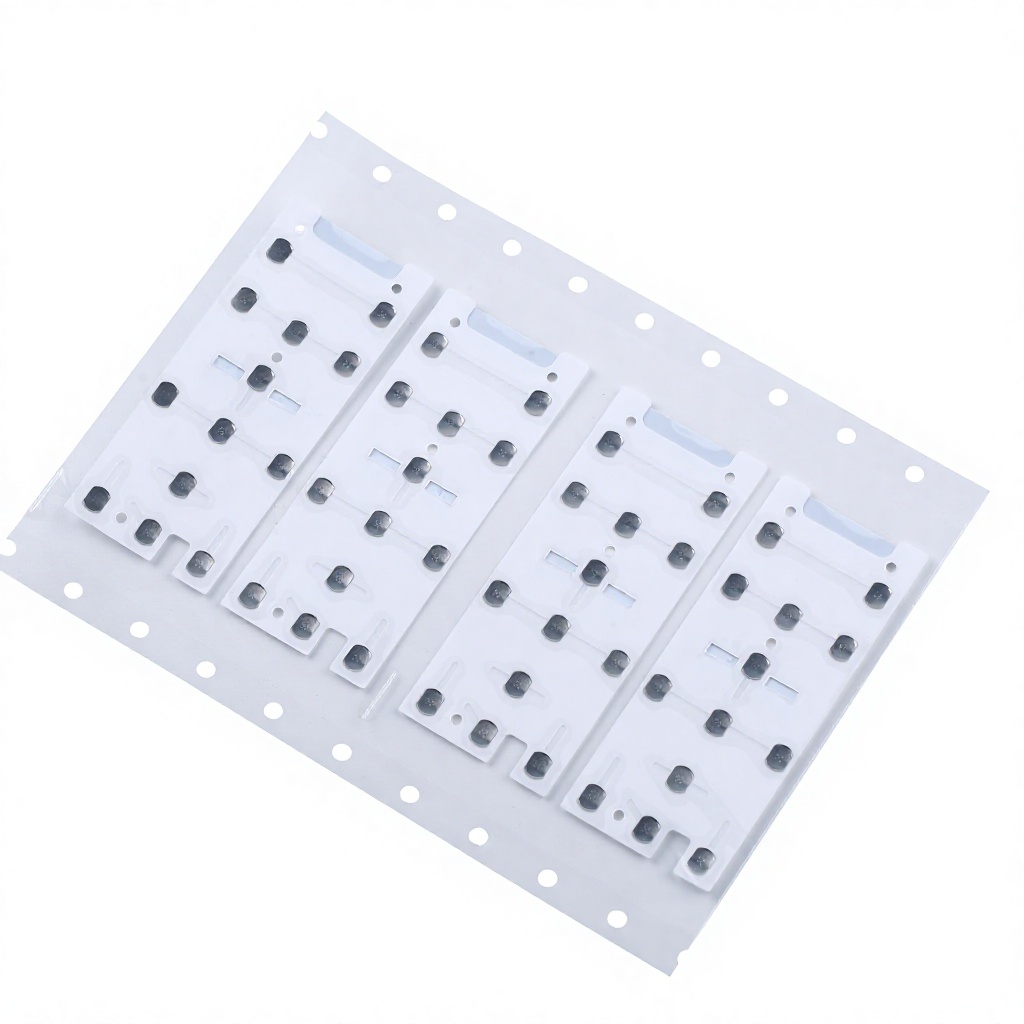
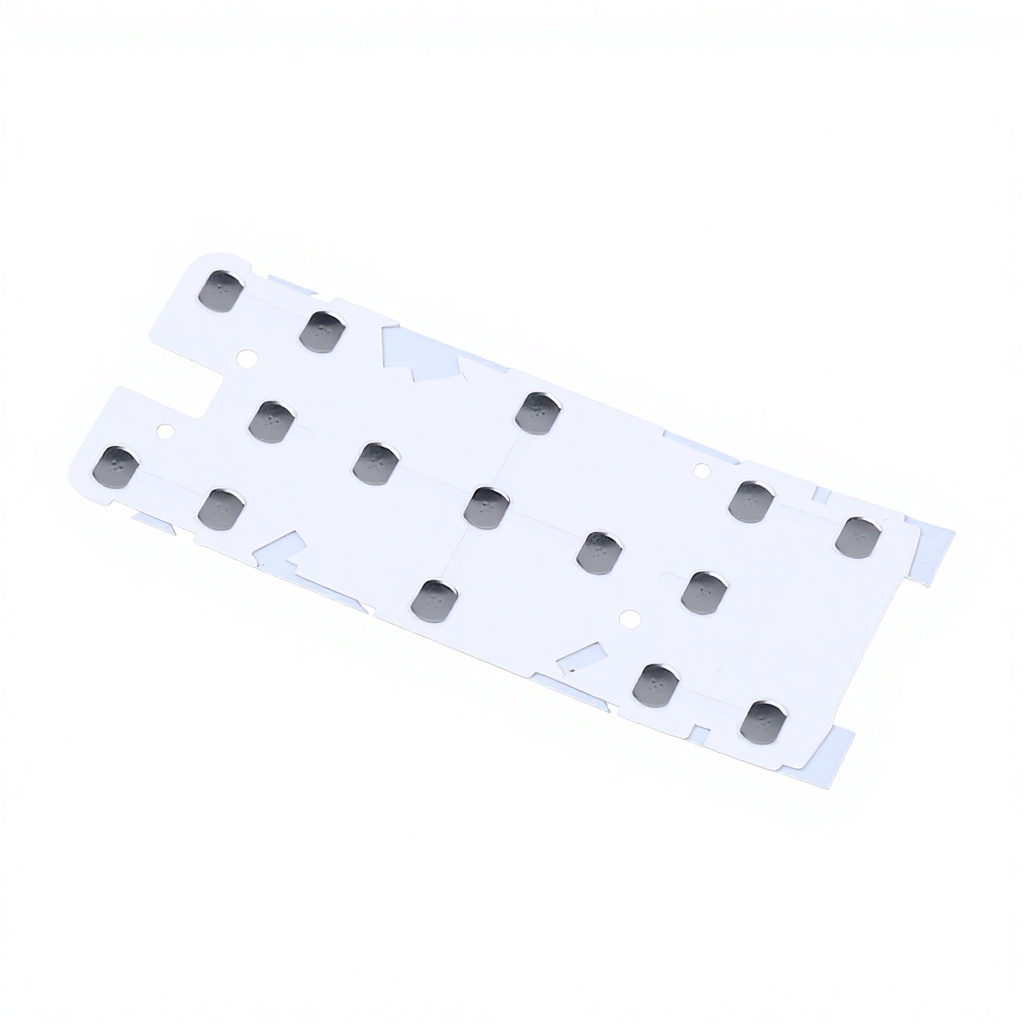
The tactile feedback of an industrial membrane switch directly influences user efficiency and operational safety, particularly when operators wear thick protective gloves. We manufacture 4-legged cross domes, round snap domes, and oblong configurations using heat-treated SUS301 stainless steel. Trip forces typically span from 220g to 500g, engineered to yield an explicit snap ratio of 40% to 60%. This structural feedback confirms circuit actuation prior to the bottoming out of the dome, eliminating redundant key presses in hazardous industrial settings.
Strategic Procurement
Future Sourcing Trends in Industrial Membrane Switches
How forward-looking procurement managers and OEM design engineers are optimizing costs, lead times, and reliability through 2026–2030.
FPC & Rigid PCB Circuit Backing Transition
While screen-printed silver-ink flexible PET circuits remain cost-effective for standard matrix switches, high-vibration automotive, medical, and defense applications are shifting toward Flexible Printed Circuits (FPC) or rigid copper-clad FR4 PCBs. Copper traces eliminate silver migration under sustained humidity and permit dense surface-mount assembly (SMT) of multi-color bi-color LEDs, resistors, active IC controllers, and ultra-miniature ZIF connector tails directly onto the switch layer.
Uniform Light Guide Film (LGF) Integration
Traditional discrete surface-mount LEDs frequently create bright focal spots and inconsistent light distribution across wide graphic legends. Modern procurement mandates thin-profile Light Guide Films (LGF). By channeling side-emitting LEDs through micro-etched optical dot matrix films beneath the graphic layer, LGF guarantees perfectly uniform chromatic backlighting with thicknesses below 0.8mm, minimizing overall unit depth while slashing quiescent battery draw in handheld diagnostic gear.
IP67/IP68 Hermetic Sealing Technologies
Moisture ingress remains the chief root cause of electrical short-circuits in field-deployed keypads. Progressive engineering designs employ custom perimeter gasket die-cuts utilizing modified high-tack acrylic foams (such as 3M VHB Series) paired with internal perimeter breathing channels routed through desiccated venting membranes. This equalization path balances internal and external barometric pressure without permitting the siphonage of fine aerosols or fluid under IP67 submersion protocols.
Antimicrobial & Anti-Glare Surface Treatments
Post-pandemic healthcare regulations and automated food-handling plants mandate front-line interfaces that inhibit bacterial colonization. Next-generation PET graphic films feature micro-encapsulated antimicrobial silver-ion additives extruded directly into the polymer substrate rather than topically sprayed. This construction survives aggressive hospital-grade wipes, bleach, and quaternary ammonium compounds over years of repeated scrub cycles without fogging display windows.
Factory Verifiable Capabilities
Why International OEMs Partner with Cevra Electronic Technology
A true custom manufacturer delivering end-to-end process control from raw coil conversion to final automated verification.
Established in March 2009 in Dongguan, Guangdong—the core hub of global electronics manufacturing—Dongguan Cevra Electronic Technology Co., Ltd. has established an integrated production infrastructure spanning 2,600 square meters. Operating in strict conformance with our certified ISO 9001 Quality Management System and verified on-site by SGS Group, our facility bridges the critical divide between rapid agile prototyping and automated, high-yield mass manufacturing.
Unlike trading entities that outsource sequential processes across disparate job-shops, Cevra centralizes the entire fabrication envelope under one roof. Our facility houses high-precision semi-automatic and fully automatic screen printing cleanrooms, automated multi-layer laminators, CCD vision-guided alignment drilling systems, precision die-cutting presses, laser machining lines, and automated metal dome assembly machines. This integrated setup provides complete trace-level process custody, shortening DFM design cycles and expediting global export deliveries.
In-House Mechanical & Electrical Lab
Every production batch undergoes exhaustive verification: Dome Load Force & Snap-Ratio Testers, High/Low Thermal Cycling Cabinets (-40°C to +85°C), 180° Peel Adhesive Strength Testers, Holding Tack Testing Rigs, and Electric Scratch Hardness testing up to 3H.
Engineering Consultation & Low MOQs
We provide full DFM (Design for Manufacturability) analysis, layer thickness balancing, trace resistance routing, and custom tooling turnarounds within 5 to 7 working days. Low MOQ sample trial runs (from 10 to 100 units) streamline new product introduction pipelines.
Verified Export Reliability
Exporting across North America, Europe, Australia, and East Asia, we support international commercial protections, Trade Assurance, robust anti-static moisture-barrier packaging, and comprehensive batch lot traceability across every shipped sub-assembly.
Procurement Due Diligence
Frequently Asked Questions: Industrial Membrane Switch Sourcing
Technical and commercial answers addressing common engineering queries prior to project kick-off.
What engineering documentation is required to initiate a custom prototype quotation?
To generate an accurate mechanical stack-up proposal and quote, our engineering team requires:
1) Vector artwork containing visual graphics, key layouts, cutouts, and Pantone/RAL color codes (format: Adobe Illustrator .AI, .PDF, or .EPS).
2) Mechanical CAD drawings defining exterior dimensions, embossing profiles, cutout tolerances, and tail exit locations (format: AutoCAD .DWG or .DXF).
3) Schematic netlist identifying switch matrix outputs or common-bus pinouts, connector pitch (e.g., standard 2.54mm or 1.0mm ZIF), LED chromatic specs, and target actuation force (grams).
How do you prevent silver migration and open circuits in humid industrial operating zones?
Silver migration occurs when moisture bridges high-voltage potential differences across adjacent silver traces. We counter this through three rigorous manufacturing protocols:
First, maintaining rigorous track-pitch spacing rules (>1.0mm wherever layout permits).
Second, applying a continuous, void-free cross-linked carbon or dielectric overcoat over all screen-printed silver circuitry.
Third, providing Flexible Printed Circuit (FPC) copper-polyimide alternatives for environments exhibiting sustained 95% relative humidity and condensing vapor.
What adhesive backings are recommended for low-surface-energy (LSE) plastic enclosures?
Standard powder-coated castings, polypropylene, or textured polyethylene housings present low surface energy where standard transfer adhesives may delaminate. For these installations, we recommend 3M 300LSE (such as 3M 9472LE) or high-tack modified acrylic transfer tapes. For smooth sheet metal, aluminum, and bare ABS enclosures, standard 3M 200MP adhesives (e.g., 3M 467MP or 468MP) provide reliable shear strength, high peel values, and broad thermal resistance up to 150°C.
What is the difference between non-tactile, polydome, and stainless steel metal dome keypads?
Non-tactile switches feature flat printed contacts activated by direct compression (requiring light force, 0.5–1.5mm actuation stroke) with zero auditory click, relying on external visual displays or audio beepers.
Polydomes emboss the polyester overlay or circuit film directly into a spring-action dome; they provide a moderate tactile response at lower component cost, but experience elastic fatigue over 500,000 cycles.
Stainless steel metal domes (SUS301) utilize precision stamped snap domes placed between the spacer and contact pads, yielding a crisp, unambiguous mechanical click and supporting over 1,000,000 to 5,000,000 actuations across wide temperature extremes.
What typical lead times apply to custom tooling prototypes versus volume mass production?
Upon final sign-off on our DFM design proofs and color matches, rapid tooling and functional first-article prototypes are typically completed and dispatched within 7 to 10 working days. Following prototype testing and client design freeze, standard volume mass production requires approximately 15 to 20 working days, depending on raw material sourcing (such as specialized hard-coated Autotex films or proprietary micro-pitch connectors) and total batch quantity.
How does Cevra ensure 100% electrical and functional compliance before global export?
Every membrane switch manufactured at our Dongguan facility undergoes 100% automated electrical continuity testing using custom bed-of-nails program testers. We test for open circuits, intermittent continuity, trace resistance limits (Ohms), LED forward voltage drops, and reverse leakage. Concurrently, CCD vision systems inspect printing registration, window clarity, and punch-to-edge tolerances, ensuring full field reliability prior to vacuum-sealed anti-static packaging.
Ready to Engineer or Source Your Next Custom Membrane Interface?
Connect directly with our Dongguan engineering team. Receive detailed Design for Manufacturability (DFM) feedback, stack-up diagrams, and transparent volume quotations within 24 hours.
Inquire Now