A Membrane Keypad may look like a simple printed panel, but its construction shapes every press, sound, and response. Some designs feel smooth and quiet. Others provide a small tactile snap beneath the fingertip. That difference matters on a factory control panel, a medical instrument, or a handheld device used with gloves.
Human-interface design expert Don Norman wrote, “Good design is actually a lot harder to notice than poor design, in part because good designs fit our needs so well that the design is invisible.” His observation offers a useful lens for comparing keypad types: the best choice should suit the task without distracting the user. Yet no single construction fits every environment. A flat, non-tactile keypad can be easy to wipe clean, while tactile or metal-dome designs give clearer feedback. Add backlighting, and buttons become easier to locate in dim conditions—but the lighting also affects power use and panel complexity.
This guide examines the top types of membrane keypads, including their feel, structure, and practical trade-offs. It considers details such as dome response, printed graphics, illumination, and resistance to dust or moisture. Small details matter. A raised key can guide a finger; a crowded layout can slow it down. Some categories overlap, too, so labels alone may not tell the whole story. That is worth remembering. Compare the actual requirements, materials, and operating conditions before choosing a design.
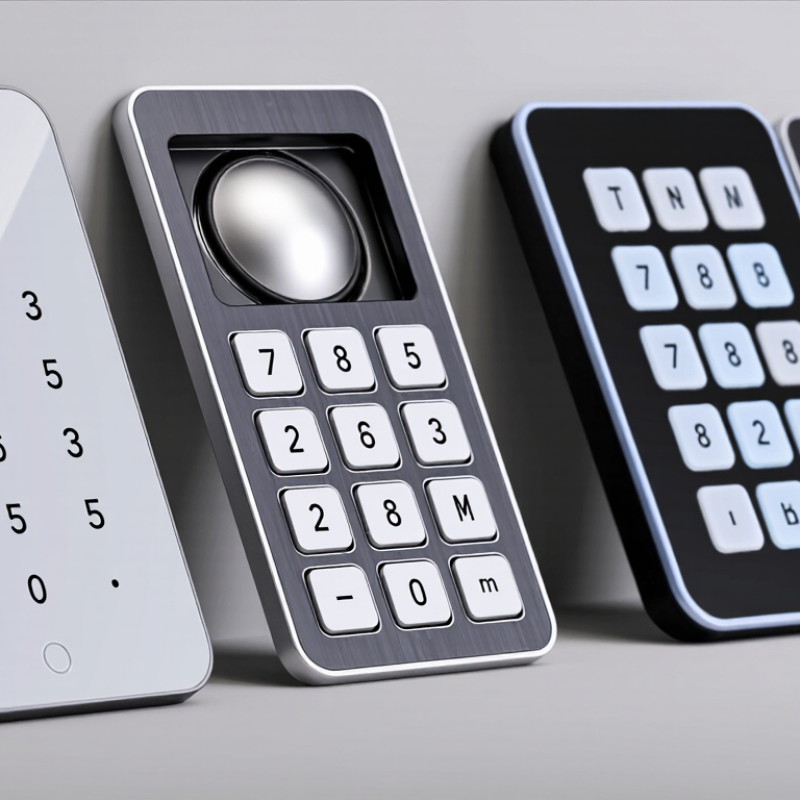
A membrane keypad is usually built as a compact 4–5-layer stack: a printed graphic overlay, one or two circuit layers, a spacer, and a rear adhesive or support layer. The exact count varies when circuit and adhesive functions share a substrate. That count can mislead. What matters is how the layers align around each key. A spacer opening lets the upper circuit flex toward the lower contact when pressed. In a typical design, travel is shallow—often only a fraction of a millimeter—so small changes in spacer thickness or dome shape can alter the feel.
Grand View Research’s Membrane Switch Market report estimated the global market at about US$4.8 billion in 2023, reflecting broad use across equipment and control interfaces. That figure describes the market, not a guaranteed performance standard. In practical design reviews, engineers should check actuation force, tactile feedback, contact layout, and sealing needs together. A keypad that feels crisp on a sample panel may feel less distinct after installation on a flexible housing. There is a trade-off: short travel supports a thin profile, but it can make key presses harder to judge by touch alone. Testing the assembled unit matters.
These are representative functional-layer counts, not fixed standards. A typical stack combines a graphic overlay, spacer, printed circuit layers, and adhesive or backing; tactile domes or backlighting can add components. Membrane keypads generally have short key travel, with the feel depending on the design.
Flat membrane keypads use smooth, level key areas with little or no physical feedback. Operators rely on printed labels and visual alignment, so clear contrast matters under dim control-panel lighting. They suit sealed surfaces that need wiping, but rapid data entry can feel less certain.
Small difference. Real impact.
Embossed keypads raise selected keys or borders above the overlay. A fingertip can locate a key by touch, even when the operator is wearing gloves or watching a machine. Raised profiles may improve orientation, though their feel depends on the emboss shape, material, and underlying switch design. They are not automatically easier for every user.
Grand View Research reported a global membrane switch market value of USD 5.7 billion in 2022 and forecast a 10.2% compound annual growth rate from 2023 to 2030. This market figure shows broad industry demand; it does not prove one key profile outperforms another.
In practice, prototype both styles with the actual overlay and lighting. A raised key can feel reassuring in a sample, then become tiring during a long shift.
That detail is easy to miss.
Metal-dome keypads add a small formed metal dome beneath each membrane key. Pressing the key flexes the dome until it snaps against a contact layer, closing the circuit. The return produces a distinct tactile click. For an operator wearing light gloves, that feedback can help confirm a press without looking away from a display. A crisp click.
Some designs are rated for up to 1 million cycles per key. That figure is a useful reference, not a promise for every installation. Dust, moisture, excessive force, and repeated impacts may affect service life. Dome shape and actuation force also change how a keypad feels. A firmer dome can resist accidental presses, while a lighter one may reduce effort during frequent entry. Small differences matter.
These keypads suit control panels, test equipment, and other interfaces where clear press feedback is valuable. They can also be paired with printed graphics and sealed overlays, though sealing depends on the full assembly—not the dome alone. During evaluation, test the actual overlay, mounting, and operating conditions. Bench samples can feel excellent. Real use may be different, and I would not judge durability by sound alone.
LED backlighting uses discrete emitters beneath or around a keypad’s graphic layer. It supports bright symbols, color choices, and simple dimming. Poor spacing can create bright spots, though. Diffusers and careful layout help produce even light. The U.S. Department of Energy’s Energy Saver guidance says LEDs use up to 90 percent less energy and last up to 25 times longer than incandescent bulbs. That comparison concerns lamps, not complete keypads; circuit losses, operating hours, and heat still affect actual performance.
Electroluminescent backlights use a thin phosphor layer to create broad, even illumination. Their low profile suits compact panels where uniform glow matters more than intense brightness. They need an inverter, which adds design complexity, and output can fade with operating time. Cold conditions may also reduce brightness. These trade-offs deserve testing in the actual enclosure, not just on a bench.
Fiber-optic backlighting carries light from a remote source through thin fibers. It can keep heat and electrical components away from the keypad surface, and it produces smooth, controlled illumination. But the light source, fiber routing, and coupling points need space. A tight bend may weaken output. This option is elegant, but not automatically simpler. In practice, the best choice depends on symbol visibility, available depth, ambient light, and expected service life.
A sealed membrane keypad rated IP67 is designed to keep dust out and withstand temporary immersion. Under IEC 60529, the “7” rating corresponds to immersion in water up to 1 metre deep for 30 minutes under specified test conditions. The “6” indicates dust-tight protection. A short test. Not a promise of unlimited underwater use.
For a keypad, the rating depends on the complete assembly—not just its printed membrane. The overlay, adhesive seals, housing, cable exit, and connector can all create paths for water. Imagine a control panel splashed during cleaning, then briefly submerged in a shallow basin: IP67 may suit that risk, provided the finished unit has been tested accordingly. It does not automatically cover hot water, high-pressure jets, damaged seals, or operation while submerged. Those conditions need separate evaluation. IEC 60529 describes the enclosure test, but real installations add wear, chemicals, and temperature changes. That gap is easy to underestimate. Specify the test depth, duration, and assembled configuration with the supplier, and verify performance after repeated use.
Most use four or five layers: a graphic overlay, circuit layers, a spacer, and a backing layer. Some functions share one substrate. Layer alignment matters more than the count.
Pressing a key flexes the upper circuit through an opening in the spacer. It touches the lower contact and closes the circuit. The travel is shallow.
Short travel helps keep the panel thin, but offers less movement under the finger. A flexible housing may also change the feel after installation. Test the assembled unit.
A small metal dome snaps against a contact when pressed, creating a tactile click. That feedback can help operators wearing light gloves. Sound alone is not enough.
Some designs are rated for up to one million cycles per key. That is a reference, not a guarantee. Dust, moisture, force, and impacts can affect service life.
It indicates dust-tight protection and resistance to immersion in water up to one metre for 30 minutes under specified test conditions. Not unlimited underwater use.
No. The overlay, adhesive seals, housing, cable exit, and connector all affect protection. A weak cable opening can let water in.
Test the actual overlay, mounting, actuation force, and operating conditions. Check seals after repeated use, too. I would not assume a good bench sample tells the whole story.
A Membrane Keypad is built from a compact stack of layers, typically four or five, including a graphic overlay, circuit layers, and a spacer. Its keys have short travel, making the design slim and easy to integrate into equipment. Flat versions provide a smooth surface and generally non-tactile operation, while embossed versions use raised key profiles to help users locate controls by touch.
Different configurations suit different operating needs. Metal-dome switches add a distinct tactile response and can be rated for up to one million cycles. For low-light environments, backlighting may use LEDs, electroluminescent materials, or fiber optics. Sealed designs can also help protect the keypad from dust and moisture; an IP67 rating indicates protection against dust and temporary immersion in up to one meter of water for 30 minutes. Choosing among these types depends on the desired feel, visibility, durability, and exposure conditions.